Why Note Pitch and Slide Enable Microtonal and Expressive Playing
You can access microtonal expression by bending pitch on guitar with finger pressure or a whammy bar, sliding between notes like blues players hitting blue thirds, or using synths with pitch wheels tuned to 24-TET for precise quarter tones. Bassists and vocalists use subtle bends and portamento to align with just intonation’s pure 5:4 ratios. High-sample-rate DAWs at 96 kHz capture every nuance, letting your phrasing speak with studio-grade clarity. There’s more to explore in how tuning systems shape emotional tone.
We are supported by our audience. When you purchase through links on our site, we may earn an affiliate commission, at no extra cost for you. Learn more. Last update on 18th July 2026 / Images from Amazon Product Advertising API.
Notable Insights
- Microtonal playing accesses intervals smaller than semitones, enabled by precise pitch control in tuning systems like 24-TET or just intonation.
- Blue notes in jazz and blues use pitch bends between major and minor thirds, adding emotional expressiveness beyond fixed pitches.
- String and wind instruments achieve microtonality through sliding and embouchure adjustments, enabling continuous pitch variation.
- Portamento and glissando techniques reveal intermediate microtones during note transitions, essential in Indian and Middle Eastern music.
- Synthesizers and high-resolution audio tools allow exact quarter-tone tuning and smooth pitch slides for expressive, nuanced performances.
What Are Microtones?
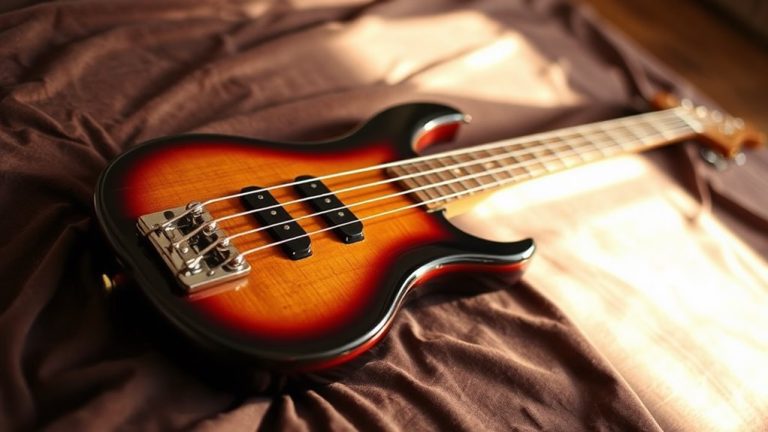
Forget the standard chromatic scale for a second-microtones open up a whole world of pitch possibilities beyond the familiar 12 semitones per octave. You’re already using microtones if you bend strings on your guitar to hit blue notes, those expressive flattings of the third, fifth, or seventh, common in blues and jazz. These subtle shifts are pitches outside standard 12-TET tuning, and they add emotional depth. Indian classical music uses 22 śrutis per octave, while Arabic maqams rely on quarter tones-both demand finer tuning control. Systems like 24-TET divide the octave into 24 equal parts, giving you notes between piano keys. On fretless bass or with a good whammy bar, you can accurately reach these microtones. Studio software like Melodyne lets you edit microtonal pitches outside equal temperament, ideal for podcast creators exploring global sounds. Precision matters-small pitch shifts, even 25 cents, change the feel.
Beyond the Piano: Quarter Tones and Just Intonation
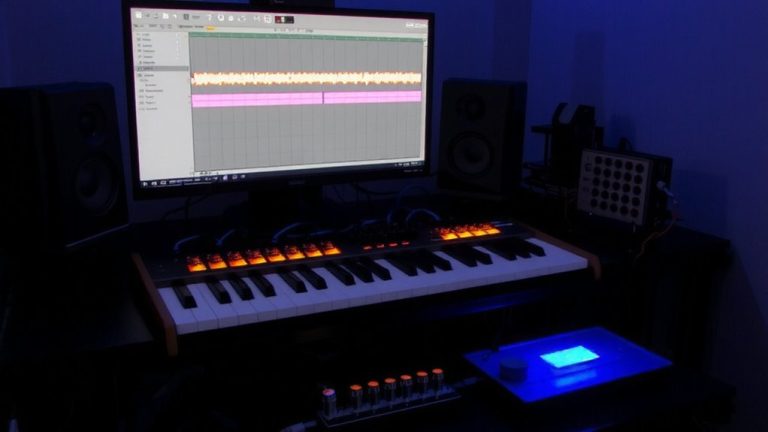
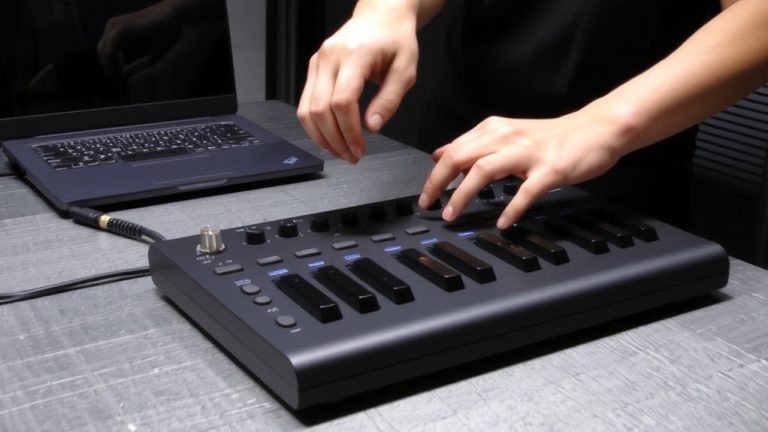
While standard pianos lock you into 12-TET, you can tap into richer tuning systems like 24-TET and just intonation using tools and techniques that go beyond the keyboard. Quarter tones, dividing semitones in half, let you access 24-TET for expressive microtonal melodies, as in Alois Hába’s quartets-often played with two pianos tuned a quarter tone apart to protect instrument integrity. Just intonation relies on pure ratios, like 5:4 for major thirds, delivering resonant, beatless chords guitarists achieve by ear or with tuners like the Korg OT-1. Barbershop singers and bass players use just intonation in sustained harmonies, slightly flattening thirds for that “ring.” While pitch bending on fretless guitars or via MIDI controllers (like the ROLI Seaboard) lets you glide between quarter tones smoothly, recording these nuances demands high-sample-rate DAWs (32-bit/96kHz) to preserve tuning detail without artifacts.
Pitch Bending: Expressing Beyond Fixed Notes
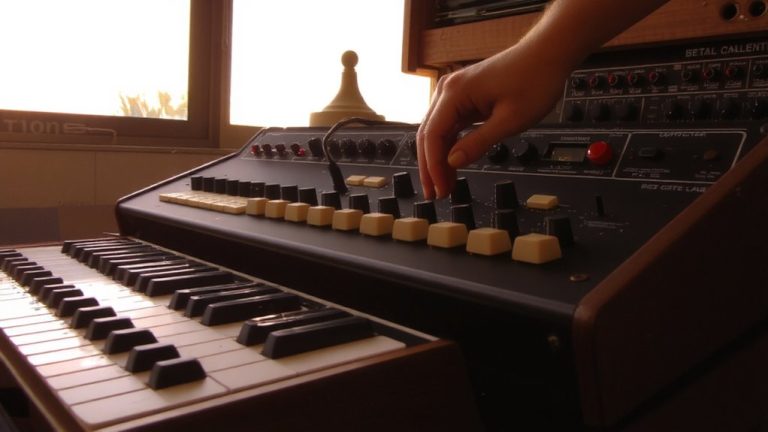
How do you make a note breathe, cry, or slide into another without the rigid steps of a piano’s keys? You use pitch bending-your tool for shaping microtonal music with soul. Instruments capable of producing smooth, continuous pitch variations let you express nuances beyond 12-TET, from blue notes to quarter tones. Synths like the Alesis Andromeda use pitch and mod wheels for precise control, often ±1 semitone, ideal for studio work. String and wind players achieve this through finger pressure or embouchure, adding emotional inflections in real time.
| Instrument Type | Pitch Bending Method | Microtonal Use |
|---|---|---|
| Guitar | Finger bending, whammy bar | Blue notes, slides |
| Synthesizer | Pitch wheel, ribbon | Quarter tones |
| Violin | Finger sliding | Just intonation |
| Saxophone | Embouchure, breath | Expressive vibrato |
| Bass | String pull, pitch wheel | Groove inflections |
Microtonality Around the World
Though you won’t find them on a standard piano, microtonal intervals are central to musical traditions across the globe, and capturing their nuance requires gear that responds with accuracy and flexibility. You’ll hear quarter tones in Arabic and Turkish maqam music, where 24-TET tuning systems divide each semitone in two, demanding precise intonation from fretless basses or MIDI controllers with microtuning support. Indian classical music relies on 22 śrutis per octave, so expressive ragas shine through slide guitar or pedal steel with smooth pitch control. Persian music uses neutral intervals outside 12-TET, while qin and shakuhachi traditions bend pitch fluidly-perfect for analog delay pedals or high-resolution audio interfaces that preserve tonal detail. Even blues and jazz players use blue notes between thirds and sevenths, easily achieved with active pitch-shifting on a Line 6 HX Stomp or tracked precisely in 24-bit studio recordings. Microtonality isn’t exotic-it’s essential to authentic, expressive music.
Portamento: Microtonal Slides in Action
You’ve already seen how microtonal intervals shape music from maqam to raga, with fretless bass, slide guitar, and expressive wind playing bringing those subtle pitches to life. Now you’re sliding into portamento, where continuous pitch shifts reveal every microtonal step between notes. In Indian classical music and Middle Eastern maqam, portamento isn’t just expressive-it’s essential, woven into melody through violin glides, trombone smears, or clarinet bends using half-hole techniques and embouchure control. Unlike piano glissandos, which jump between fixed pitches, true portamento flows seamlessly, capturing quarter tones and infinitesimal shades. Fretless string players achieve this with smooth finger shifts on cello or double bass, while synth users rely on pitch bend wheels-like those on the Alesis Andromeda-to mimic Mikko Pellinen’s fluid lines. Trombonists exploit slide precision across positions, covering perfect fifths with uninterrupted motion. For studio work, use audio signal processing like pitch correction set to slow tracking, or record live slides through high-sample-rate interfaces (96 kHz) to preserve nuance in podcasting or mixing.
When Microtones Express What Words Can’t
Why do certain melodies feel like they cut straight to the soul, even when you can’t name the note being played? Because microtonal inflections carry emotional nuance standard tuning can’t capture. When you bend into a blue note on your Stratocaster, that slight 30-cent flat isn’t just pitch-it’s ache, longing, grit. In Indian classical music, śrutis offer 22 microtones per octave, letting you slide between notes on a sitar or violin with precision that evokes joy, sorrow, or devotion. Arabic maqām emotionality thrives on quarter tones, where a 50-cent shift on a darbuka-rich phrase can say what words can’t. Jonny Greenwood uses pitch-bending pedals and EBow techniques to mirror this, creating microtonal glides that speak through texture. Even in barbershop harmony, just intonation-tuning major thirds to 386 cents-makes chords “ring” with warmth. Use a tuner with cent readout, like the TC Electronic Polytune 3, and practice bends to internalize these subtleties.
On a final note
You can enable microtonal expression on guitar or bass by using pitch bend wheels, whammy bars, or slide techniques, especially with active electronics and low-action setups. Pair humbuckers or P-90s with a tuner like the TC Electronic Sentry (±0.1 cent accuracy) and process signals through Eventide H9 for real-time pitch shifting. In studio or podcasting, use Universal Audio’s Realtime Console with pitch detection (±1.5 cents) to capture subtle slides, ensuring interfaces like Apollo x8 support 24-bit/192kHz for clarity.