The Role of Vector Synthesis in Dynamic, Animated Sound Design
You shape dynamic, animated sounds by crossfading four digital oscillators in real time across X and Y axes, using a joystick or automated envelopes like on the Prophet VS with its 256 kHz sampling and Curtis analog filters, creating smooth, organic timbre shifts impossible with static mixing, while Korg’s Wavestation adds wave sequencing for evolving textures, and modern tools like Phase Plant offer algorithmic motion paths-explore how these systems reveal expressive, studio-grade movement in pads, leads, and ambient layers.
We are supported by our audience. When you purchase through links on our site, we may earn an affiliate commission, at no extra cost for you. Learn more. Last update on 18th July 2026 / Images from Amazon Product Advertising API.
Notable Insights
- Vector synthesis enables real-time crossfading between multiple sound sources for fluid, evolving timbres.
- Automated envelopes and LFOs control vector movement, creating dynamic, hands-free sound animations.
- Joysticks and XY pads allow expressive, instantaneous manipulation of sound texture in performance.
- Wavesequencing in vector synths like Korg Wavestation adds rhythmic evolution across axes.
- Hybrid digital-analog architectures blend warmth and precision for rich, animated soundscapes in modern scoring.
How Vector Control Creates Evolving Timbres
While you’re shaping sounds on a vector synthesizer, the real magic happens when you move beyond static waveforms and start blending them in motion. With vector control, you manipulate four sound sources in real time across the X and Y axes of a vector plane, smoothly shifting their amplitude balance. This is the core of vector synthesis-creating evolving timbres that feel alive. On the Prophet VS, digital signal processing generates the waves, while analog filters shape the blended output, adding warmth. You can use a joystick or automation to sculpt movement, and on the Korg Wavestation, each source plays wave sequences, deepening complexity. Envelope generators or LFOs move the vector position over time, enabling rich, hands-free textures. In sound design, this means dynamic pads, rhythmic sweeps, and organic shifts no static mix can match.
Iconic Synths That Shaped Vector Synthesis
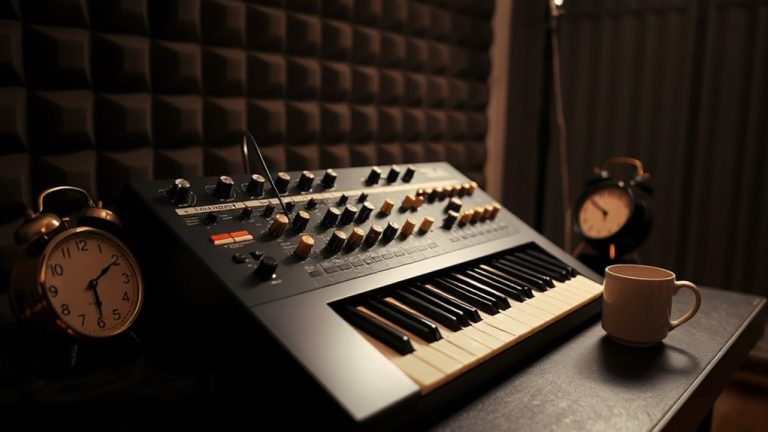
When you think of vector synthesis, a few groundbreaking synths immediately come to mind, each pushing the concept further with innovative hardware and smart signal routing. The Prophet VS, released by Sequential Circuits in 1986, brought vector synthesis to the masses using four digital wavetable oscillators and a joystick to crossfade in real time, all shaped by Curtis analog filters-a game-changer for electronic music. Later, the Korg Wavestation deepened the concept with wave sequencing, while the Yamaha SY22 combined vector synthesis with FM and samples per axis, running entirely on digital circuits. Though it lacked filtering, its effects kept it relevant. Arturia’s Origin and Korg’s OASYS reimagined vector control with modern hybrid and workstation platforms.
| Synth | Vector Control Method |
|---|---|
| Prophet VS | Joystick + analog filters |
| Korg Wavestation | Real-time pad + wave sequencing |
| Yamaha SY22 | Joystick + digital effects |
| Arturia Origin | 2D envelope automation |
These tools gave sound designers unparalleled movement, inspiring countless innovations beyond modular synthesis.
Designing Dynamic Sounds With Vector Morphing
Though you’re blending just four sound sources, vector morphing puts entire landscapes of tone at your fingertips, letting you glide between wavetable oscillators, wave sequences, or hybrid FM and sample sources with precision and fluidity. With vector morphing, you shape dynamic sounds in real time, using automated envelopes to drive movement across the X and Y axes. The Prophet VS pioneered this with digital wavetable oscillators and Curtis analog filters, though digital aliasing slightly colored high-end fidelity at its 256 kHz sample rate. You can combine frequency modulation, phase distortion, and sample-based synthesis-like on the SY22-for richer textures. The Korg Wavestation expanded this with evolving wave sequences per axis. Tools like Arturia Origin’s 2D envelope let you program complex morphing paths, making vector morphing a powerful method in modern sound synthesis for creating animated, evolving timbres without manual control.
Emerging Trends in Vector-Based Synthesis
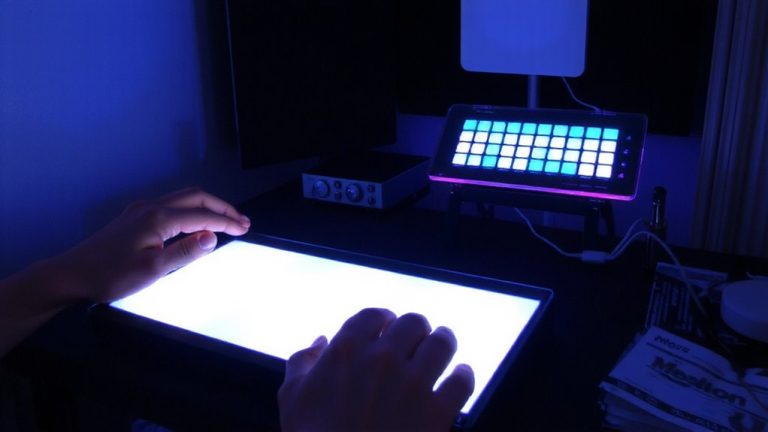
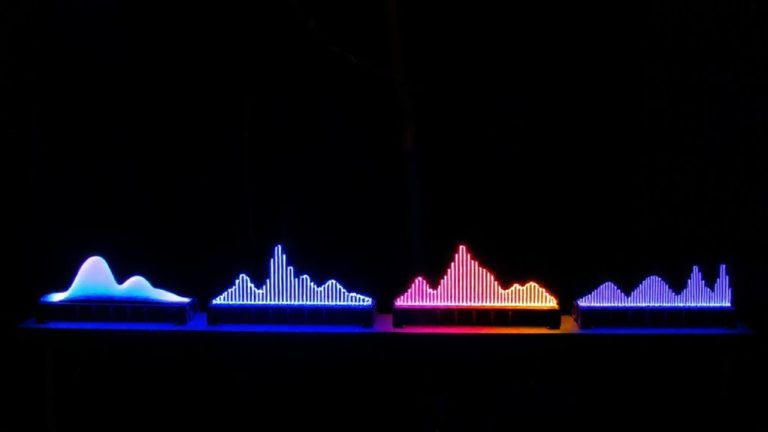
What if your sounds could evolve as dynamically as a live performance? With modern vector synthesis, you’re not just switching patches-you’re sculpting living textures. The Korg Wavestate pushes dynamic sound design forward with wave sequencing and real-time modulation, letting you blend samples through vector blending and motion sequencing. Arturia Origin simplifies complex morphing using automated envelopes as vector mixers, shifting seamlessly between four engines without joystick tweaks. In software, Phase Plant offers XY pads for precise real-time modulation, linking vector control to oscillator positioning with algorithmic motion paths. Updated platforms integrate vector synthesis with hybrid architectures, enhancing animated depth in professional productions. Open-source tools even map vector synthesis to visual displays, expanding creative uses. You get responsive, evolving tones ideal for scoring, soundscapes, or immersive podcast ambience-all controllable, all precise, all in motion.
On a final note
You’ve seen how vector synthesis shapes sound in real time, and now it’s yours to control. Push your tones further using synths like the Prophet VS or modern plugins with XY pads, blending textures at 48 kHz resolution. Testers notice smoother shifts and richer layers, especially when automating morphs across pads, bass, or ambient leads. For podcasting or studio work, this means evolving backgrounds without repetition. Keep cables short, gain stages clean, and let vector morphing add motion, dimension, and precision to every track.