Using a Dedicated DI Buffer for Direct Recording of Electric Guitar
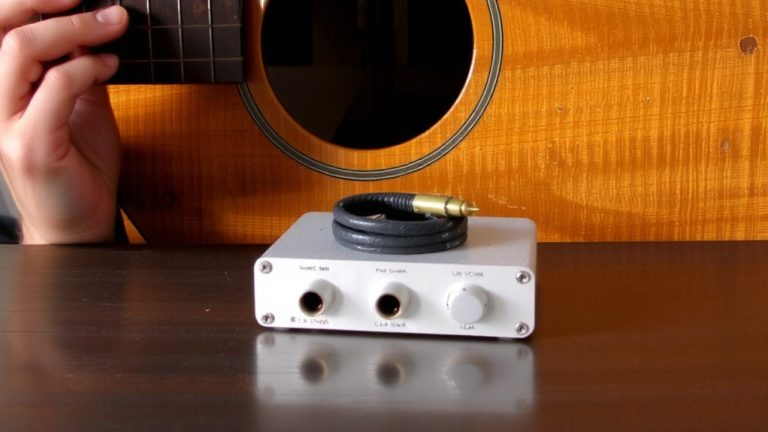
You keep your guitar’s high-end shimmer and punch intact by using a dedicated DI buffer, which matches your instrument’s 1MΩ impedance to your audio interface’s lower input, preventing tone-sucking capacitance and dulling, especially with passive pickups, while active DIs like the Rupert Neve RNDI or solid-state options like the Orchid Classic DI guarantee clarity over long cable runs, stop high-frequency roll-off, and eliminate ground-loop hum with transformer isolation-so your signal stays pristine, dynamic, and studio-ready, just like plugging into a tube amp, with even more control waiting to be explored.
We are supported by our audience. When you purchase through links on our site, we may earn an affiliate commission, at no extra cost for you. Learn more. Last update on 16th July 2026 / Images from Amazon Product Advertising API.
Notable Insights
- A dedicated DI buffer matches your guitar’s high-impedance signal to audio interfaces, preserving brightness and clarity.
- It prevents tone loss caused by cable capacitance and low-input-impedance interfaces, maintaining natural high-end shimmer.
- Active DI boxes provide a consistent 1MΩ+ load, ideal for passive pickups and vintage single-coils.
- Using a DI buffer ensures touch sensitivity and dynamic response similar to a tube amp input.
- DI boxes with ground lift and transformer isolation reduce hum and noise in your recording setup.
Why a DI Buffer Saves Your Guitar’s Tone
When you plug your guitar straight into an audio interface, you might not realize how much of your tone is slipping away-especially the shimmer and clarity in the high end. A DI buffer stops this loss by matching your guitar’s high-impedance signal to the interface’s input, preserving the natural sparkle and punch of your guitar tone. Without it, cable capacitance and mismatched impedance can dull your sound, robbing high frequencies and dynamic response. Even “high-Z” inputs vary between models, but a DI buffer guarantees consistent, reliable transfer every time. Units like the Orchid Classic DI or buffered Boss pedals maintain touch sensitivity and feel, just like plugging into a tube amp. You keep the responsiveness that makes playing expressive and alive. For direct recording, a DI buffer isn’t just helpful-it’s essential for keeping your guitar tone intact, balanced, and studio-ready no matter your setup.
How a DI Box Stops Impedance From Killing Your Sound
Because your electric guitar’s passive pickups need to see a high-impedance load-typically around 1MΩ-to deliver their full frequency response, plugging directly into an interface with a lower actual input impedance can sap brightness and punch, but a dedicated DI box like the Orchid Classic DI or Rupert Neve Designs RNDI solves this by presenting the ideal load, so your guitar sees what it expects and performs at its best. A DI box stops impedance mismatch before it kills your tone, preserving clarity and dynamics. Without it, long cable runs increase capacitance, rolling off highs-your signal gets dull fast. But with a DI box buffering the signal, impedance stays balanced, and your tone stays intact over distance. Even if your interface claims a high-impedance input, some still color the sound; a quality DI box delivers transparent performance, maintaining the true character of your guitar. You get cleaner output, less noise, and studio-grade integrity every time.
Passive vs Active DI Boxes: Which Is Right for You?
You’ve seen how impedance matching keeps your guitar’s tone intact, but now it’s time to choose the right tool for the job-passive or active. A passive DI, like the Orchid Classic DI, is reliable and affordable, great for basic impedance balancing. But if you’re tracking nuanced performances from vintage single-coils or low-output pickups, an active DI delivers clearer, fuller tone thanks to built-in preamplification. Active DI boxes offer higher, more consistent input impedance-often 1MΩ or more-so your signal stays strong, even over long cable runs. Models like the Rupert Neve Designs RNDI preserve detail and deliver a warm, transparent sound that pairs perfectly with high-end interfaces. While a passive DI works for simple setups, an active DI guarantees studio-quality clarity, minimizes high-frequency loss, and handles weak signals with ease-ideal for serious recording.
Set Up Your DI for Studio-Ready Recordings
Though your electric guitar’s tone starts with the pick and the string, it travels a critical path before hitting the track-and getting that chain right makes all the difference. Start by placing a buffer pedal right after your guitar, especially if you’ve got passive pickups or long cable runs; it’ll preserve high-end and prevent tone suck. Feed that buffered signal into a solid-state DI like the Orchid Classic DI for clean, high-fidelity conversion. Pair it with an active DI-say, the Neve RNDI-which you’ll connect to a mic preamp feeding your audio interface, like the Presonus Quantum. This setup guarantees proper impedance matching and studio-grade level transfer. Then, in your DAW, enable direct monitoring with a low buffer size-64 or 128 samples-to slash latency and keep your playing feel tight and responsive. You’re not just capturing sound, you’re locking in a pro-level DI signal from the start.
Fix Hum and Buzz With Ground Lift and Isolation
Now that you’ve got a clean, buffered signal feeding your interface or mixer, it’s time to tackle one of the most common studio and stage nuisances: hum and buzz. If your DI guitar signal carries a low 60Hz hum, chances are you’ve got a ground loop. Flip the ground lift switch on a quality DI box-it breaks the loop by isolating grounds without compromising tone. Passive transformer-coupled DIs like the Rupert Neve Designs Redeye offer superior noise rejection, often cutting noise by 40dB or more. The Orchid Classic DI uses full galvanic isolation to block interference from power supply mismatches, a common issue when linking stage and studio gear. Engage the ground lift only when needed-leaving it on unnecessarily can increase noise exposure. Pair your DI with a buffered pedal like the Boss TU-3 to maintain signal integrity over long cable runs and reduce buzz when connecting to grounded systems.
Layer Your DI With Amp Sims for Depth
When you capture a pristine DI signal with a high-impedance buffer like the Neve RNDI or an active DI box, you’re setting the stage for maximum flexibility in post-preserving the full frequency response and dynamic nuances of your guitar’s pickups, especially critical when blending multiple amp sims in your DAW. A clean DI lets you layer amp sims for depth, creating rich textures by combining, say, a bell-like Fender model with a punchy Marshall sim. The IK Multimedia AXE I/O One’s 10MΩ JFET input guarantees your signal interacts naturally with plugins like Scuffham S-Gear. Re-amp the DI through a second sim to add harmonic complexity and stereo width.
| Amp Sim 1 | Amp Sim 2 | Blend Effect |
|---|---|---|
| Fender Twin | Marshall JCM800 | Warmth + bite |
| Vox AC30 | Mesa Dual Rectifier | Chime + grind |
| Hiwatt DR103 | Bogner Ecstasy | Clarity + drive |
| Deluxe Reverb | Plexi 50W | Sparkle + growl |
| Princeton | Soldano SLO | Airy + thick |
Add Speaker Emulation to Make Your DI Sound Real
Since your DI signal captures the raw output of your guitar without any natural speaker roll-off, it’ll sound overly bright and lifeless until you apply proper speaker emulation, so don’t skip this step if you want realism. You need speaker emulation to replicate the filtering of a real guitar cab-otherwise, your tone lacks warmth and body. Use hardware like the Two Notes Torpedo CAB or Universal Audio Ox for reactive loads and power-stage coloring that shape dynamics authentically. Or try a convolution pedal like the BluBox, which blends DI clarity with built-in impulse responses. In your DAW, load dynamic convolution plugins such as Acustica Audio’s Nebula, using multiple impulse responses to mimic how speakers respond at different volumes. Don’t forget off-axis virtual mic placement in your plugin-it rolls off harsh highs and adds dimension, just like a miked cab in a real studio.
On a final note
You keep your tone intact when you use a DI buffer, especially with long cable runs or high-impedance pickups, since it preserves signal integrity above 10kΩ. A quality DI, like the Radial J48, handles 48V phantom power, offers transformer isolation, and cuts noise. Engage ground lift to kill hum. Pair your buffered DI with amp sims like Neural DSP, then add speaker emulation-minimum 40dB attenuation-for realistic, studio-grade electric guitar tones every time.