How to Optimize Buffer Placement for Guitars With Vintage Wiring
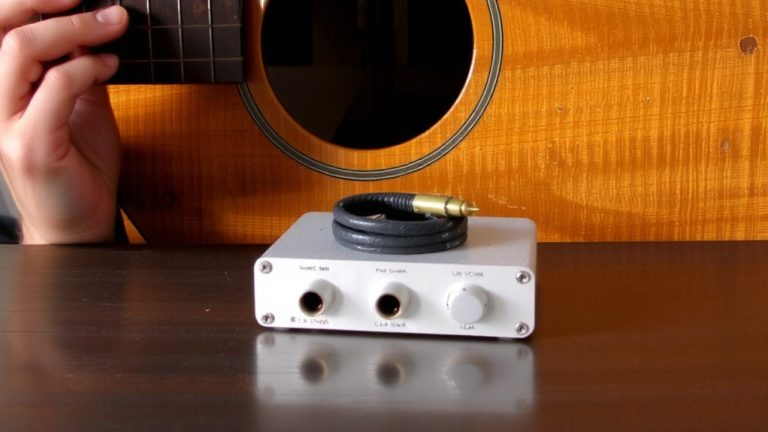
Plug your guitar into a high-quality Class A buffer with a 1MΩ input right after the instrument to preserve tone, especially with vintage wiring that relies on high impedance. This prevents cable capacitance-30–50pF per foot-from dulling your highs, particularly on long or daisy-chained pedal runs. Always place the buffer before your pedalboard but avoid putting it before fuzz or wah; those crave your pickup’s raw signal. You’ll keep dynamics, resonant peaks, and studio-grade clarity, just like players testing with oscilloscopes confirmed. There’s more to get right when matching buffers to true bypass chains and vintage gear.
We are supported by our audience. When you purchase through links on our site, we may earn an affiliate commission, at no extra cost for you. Learn more. Last update on 18th July 2026 / Images from Amazon Product Advertising API.
Notable Insights
- Place a buffer early in the chain to preserve high-end clarity with vintage wiring and passive pickups.
- Avoid placing a buffer before vintage fuzz pedals to maintain proper high-impedance interaction and tone.
- Position germanium fuzz or wah pedals first, directly after the guitar, for optimal response and dynamics.
- Use a high-quality Class A buffer after fuzz or wah to drive long cables without tone loss.
- Test volume roll-off behavior to ensure buffered signals retain brightness and resonant peak integrity.
Start With a Buffer After Your Guitar
You’ll want to start your signal chain with a buffer right after your guitar, and here’s why: passive pickups perform best into a 1MΩ load, and a high-quality buffer delivers exactly that, preserving the resonant peak and high-end clarity that makes your guitar sing. Your guitar pickup outputs a high impedance signal, which is vulnerable to cable capacitance-typically 30–50pF per foot-that rolls off highs and causes tone loss. Long cable runs or daisy-chained true bypass pedals worsen this, stacking capacitance past 100pF. A buffer as your first pedal solves it, actively driving the signal. It also guarantees proper input impedance for vintage gear, like a Binson Echorec’s 47kΩ input. Use one high-quality Class A buffer at the start; it minimizes degradation, maintains dynamics, and keeps your signal chain transparent, especially with passive pickups.
Place It Before Your Pedals, Not Before Fuzz
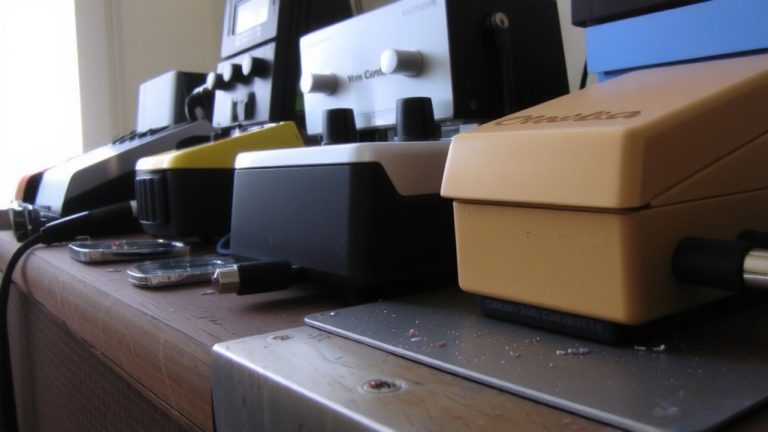
While your signal chain might seem flexible, putting a buffer before vintage-style fuzz pedals like the Fuzz Face can rob them of their essential character, because these germanium-based circuits depend on a high-impedance source-ideally around 1MΩ-to interact properly with your guitar’s pickups. That high input impedance lets your guitar pickups breathe, preserving their resonant peak and dynamic response. When you place a buffer too early, its low output impedance damps that interaction, making your Germanium Fuzz sound thin and buzzy. For ideal buffer placement, run your Fuzz Pedal first in the pedal chain, directly after your guitar, to maintain signal integrity. Then place a buffer after the fuzz to drive long cables and power other effects. This keeps your vintage fuzz rich and responsive while cleaning up the rest of your signal path.
Test Your Volume Roll-Off Smoothly
Ever notice how your guitar’s tone thins out suddenly when you roll back the volume? That uneven volume roll-off in vintage-wired guitars often comes from high output impedance meeting a low input impedance, especially with long cable length. Your guitar cable acts as a filter, sapping highs when impedance mismatches occur. Test the signal taper using a 1MΩ buffered input versus a standard 250kΩ amp input-you’ll hear brighter bleed at lower settings. A 100pF treble bleed mod helps maintain tone clarity up to 85% volume reduction. Use a frequency sweep or oscilloscope to spot resonant peak shifts between 2kHz–5kHz, revealing non-linear drop-offs. Engage a true bypass looper to A/B test with buffer pedals in and out. Placing the buffer after the volume control stabilizes the signal, preserving natural taper and cutting cable-induced tone loss.
Don’t Put the Buffer Before Fuzz or Wah
Because vintage-style fuzz and wah pedals depend on your guitar’s natural high-impedance signal to shape their tone, placing a buffer before them can severely dull their response, robbing you of the dynamic feel and harmonic complexity you’re after. A buffer lowers the output impedance, creating an impedance mismatch that dampens your pickup’s resonant peak, typically in the 2kHz–5kHz range, leading to a thin, lifeless fuzz tone or a wah without its signature sweep. Germanium fuzz pedals especially suffer, losing compression and richness. Keep that vintage mojo intact by sending your pickup signal straight to the pedal.
| Pedal Type | Needs High Impedance? | Resonant Peak Effect |
|---|---|---|
| Fuzz | Yes – or tone turns thin | Reduced articulation |
| Wah | Yes – for mid sweep | Dull, less expressive |
On a final note
You’ve got this: put the buffer right after your guitar to preserve high-end clarity over long cable runs, ideally within 18 inches of the output jack. Keep it before your tuner and delay/reverb pedals, but never before fuzz or wah-those need your guitar’s natural tone. Test with your volume knob rolled back to 7; if the tone stays full, you’re good. Real players report smoother taper and no high-frequency loss with buffers like the MXR Micro Amp or Boss BD-2 in clean mode driving the chain.