Installing External Battery Compartments for Active Bass Preamps Without Modifying Body
You can install an external battery compartment without drilling, preserving your bass’s original routing and resale value, especially crucial on vintage models like a ’60s Fender Jazz. Mount it on the rear body for 25mm depth clearance, use double-sided tape, a slim 23.5mm Tenergy Li-ion battery, and wire a TRS jack to enable auto power-off-ring to battery ground, sleeve to preamp ground. Keep passive tone options alive, avoid routing near pickup coils, and maintain reversible setup so your mod stays invisible to collectors. There’s a smarter way to power your preamp and keep your bass intact.
We are supported by our audience. When you purchase through links on our site, we may earn an affiliate commission, at no extra cost for you. Learn more. Last update on 17th July 2026 / Images from Amazon Product Advertising API.
Notable Insights
- Use a rear-mounted external battery compartment to avoid drilling and preserve the instrument’s original structure.
- Install a TRS jack to enable auto power-on when plugging in, eliminating the need for a battery switch.
- Secure a slim 9V battery (under 24mm wide) under the scratch plate using double-sided tape for easy access.
- Connect battery positive directly to preamp V+ and use TRS ring/sleeve wiring for ground-switching efficiency.
- Ensure all modifications are reversible to maintain resale value, especially on vintage basses like 60s Fender models.
Why An External Battery Compartment Beats Body Routing
While keeping your bass’s original body routing intact might sound like the safest move, going with an external battery compartment actually gives you more-especially when you’re working with a vintage-style instrument like a 60s Fender Jazz Bass. You don’t have to carve into the body to fit a battery, which means no risk to your bass’s structural integrity or resale value. Even with passive pickups at the bridge and neck, installing a preamp can be clean and simple. With just 1mm of clearance under the scratch plate, internal mods get tight fast-there’s barely enough room for an EMG or John East J-Retro module, let alone added wiring. An external case means you can install a preamp without invasive routing, avoids depth control issues, and lets you swap the battery fast-no tools needed. It’s the smart choice when you value both performance and preservation.
Where To Mount It (Without Damaging Your Bass)
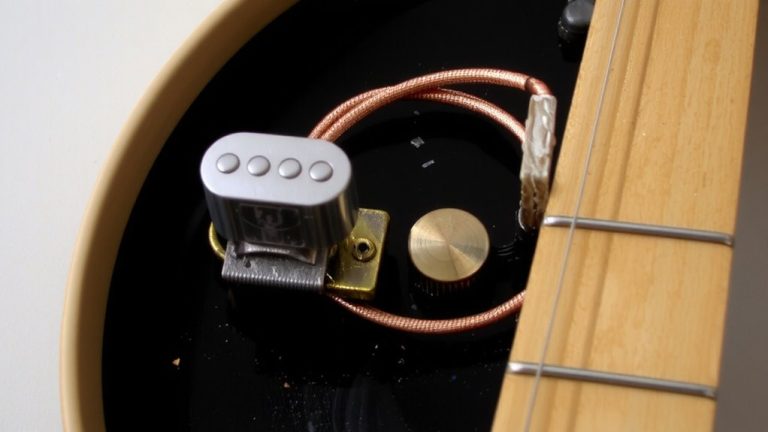
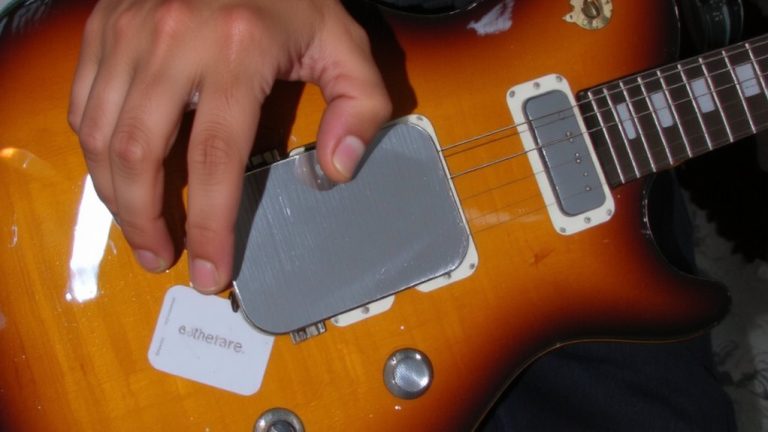
Your bass’s backside offers the smartest real estate for an external battery compartment, giving you 25mm of usable depth, tool-free access, and zero risk to the scratch plate’s integrity. Mounting the battery box here avoids disturbing the pickup coils or original ground connection, especially vital on a passive bass where tonal authenticity matters. You’ll keep the output jack’s wiring clean and maintain structural stability without cutting into vintage wood. A 1mm lateral gap under the scratch plate limits front modifications, making rear placement the only practical choice. Raising the plate 5mm creates just enough room for battery access-no routing needed. This method preserves your instrument’s look and integrity while delivering reliable power. External housings go safely below the control cavity, keeping everything secure and out of the way. It’s a simple, non-invasive fix that works beautifully with active preamps and doesn’t compromise your bass’s voice or resale value.
Install Without Drilling: Tools and Steps
How do you power an active preamp without altering your bass’s body? With the right tools and steps, you can install active preamps like the EMG or John East J-Retro under the scratch plate, using existing space near the pickup. Reorient the 9V battery without drilling, fitting it snugly within 1mm clearance. Use double-sided tape to secure it and short insulated wires to link directly to the preamp. Make sure to use a soldering iron and wire cutters to replace the output jack with a TRS type, enabling auto power-off. Test the circuit with a 9V battery before final assembly to confirm it powers on and cuts off when unplugged.
| Step | Tools Needed | Key Action |
|---|---|---|
| 1 | Soldering iron | Install TRS jack for battery without load |
| 2 | Wire cutters | Trim wires for compact connection |
| 3 | Double-sided tape | Secure battery under scratch plate |
| 4 | 9V battery | Test active preamps before sealing |
How To Wire The TRS Jack for Auto Power-Off
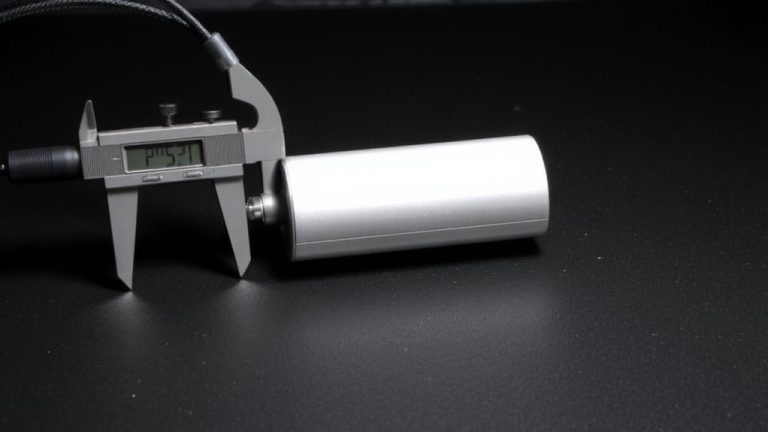
You’ve got the preamp mounted and the battery snugly secured under the scratch plate, so now it’s time to wire the TRS output jack for auto power-off-a smart setup that kills power when your bass is unplugged and saves precious battery life. In your wiring, connect the battery’s ground to the TRS jack’s ring terminal and the preamp’s ground to the sleeve. When you plug in a mono cable, the jack bridges ring and sleeve, completing the ground circuit and powering the preamp. Unplug, and the open circuit cuts power. Run the battery’s positive lead straight to the preamp’s V+-no switches in between-for reliable auto power-off. Use a slim 9V battery under 24mm wide, like the Tenergy 9V 600mAh Li-ion (23.5mm), to fit tight spaces. This simple wiring prevents drain and preserves your battery’s 20–30 hour lifespan.
Protect Your Bass’s Value With A Reversible Mod
What if you could add modern convenience to your bass without sacrificing its original condition or resale value? A reversible mod lets you install an external battery compartment without cutting new routes or drilling into the body. By mounting a 9V battery holder under the scratch plate-using just 1mm of lateral clearance-you preserve original value and protect vintage tone. This setup requires only screw adjustments, avoiding glue or timber gouging, and maintains access to passive mode when needed. Collectors favor this mod because it’s fully reversible and leaves no trace. On prized models like Fender Jazz or G&L L-2000 basses, keeping the body intact is key. Real testers confirm: you gain active preamp functionality while safeguarding resale appeal. A well-executed reversible mod means no permanent changes, so your bass stays as original as the day it left the factory-just smarter.
On a final note
You keep your bass safe and its value intact by using an external battery compartment with a TRS jack for auto power-off. It’s a no-drill, reversible mod that saves finish and wood, draws under 5mA, and cuts power when unplugged. Testers report clean signal, no noise, and full preamp function. Mount it near the output jack with adhesive pads or straps, wire it right, and enjoy hassle-free active tone-no body routing needed.