Setting up a Guitar Signal Chain With Independent Dry and FX Sends
You send your dry guitar signal straight to the amp input for tight, clear tone and dynamic response, while splitting off a wet path for time-based effects like delay and reverb through the effects loop. Use a passive A/B box like the Boss AB-2 or active splitter like the Radial JD7 to maintain signal integrity, balanced outputs, and phase alignment. Place fuzz, overdrive, and core tone pedals-like a Tube Screamer or DS-1-before the split so both paths get the same gain structure. Keep modulation in the wet chain, avoid overdrives there, and use the loop return to blend signals cleanly. Set your amp’s loop level to -10dB or +4dB to match your processor’s output, ensuring studio-grade clarity and depth. Real-world tests show this setup cuts muddiness, especially under high gain, while preserving stereo imaging; pros on tour rely on it for consistent mix control, and when you integrate a tuner with buffered bypass early, tracking stays crisp even with long cable runs. There’s more to optimizing noise and volume balance than most expect.
We are supported by our audience. When you purchase through links on our site, we may earn an affiliate commission, at no extra cost for you. Learn more. Last update on 16th July 2026 / Images from Amazon Product Advertising API.
Notable Insights
- Split your guitar signal early using a passive A/B box or active splitter to create separate dry and wet paths.
- Place fuzz, overdrive, and core tone pedals before the split to feed both paths evenly.
- Route the dry signal directly to your amp’s input for maximum clarity and dynamic response.
- Send the wet signal through time-based effects like delay and reverb, then into the amp’s effects loop return.
- Use balanced outputs or buffered splitters to maintain signal integrity over long cable runs.
Define the Dry/FX Signal Chain?
While your guitar’s natural tone stays front and center, a dry/FX signal chain splits your signal into two paths-one clean and direct, the other lush with effects-so you get both punch and ambiance. Your dry signal runs straight to the amp, preserving tone and responsiveness, while the FX signal travels through time-based effects like delay, reverb, and modulation pedals via an effects loop. This setup uses parallel paths, often routed through an A/B box or audio interface, keeping the wet signal from muddying your core sound. You’ll send the dry signal to a “dry” amp or PA, and the FX signal to a “wet” amp or processor. Proper level matching is essential-nobody wants reverb swamping your riff. Balanced outputs maintain clarity, depth, and a wide stereo image without phase issues.
Understand the Benefits of Independent Dry and FX Paths?
You’ll hear exactly what your guitar is capable of when you keep the dry and FX signals on independent paths, letting your raw tone stay tight, clear, and dynamically responsive while effects enhance rather than overpower. By routing your clean signal to a dedicated dry amp and sending time-based effects like delay and reverb through a separate effects loop, you avoid phase cancellation and muddiness in your signal path. This setup preserves the integrity of your guitar signal, especially under high gain. Effect placement becomes more precise, letting you balance spatial depth without coloring the core tone. Independent dry and FX paths give you studio-style control, ensuring the dry signal remains punchy and clear while wet signals blend smoothly. You’ll get tighter lows, better definition, and professional mix clarity on stage or in recordings.
Split Your Signal Using an A/B Box or Mixer
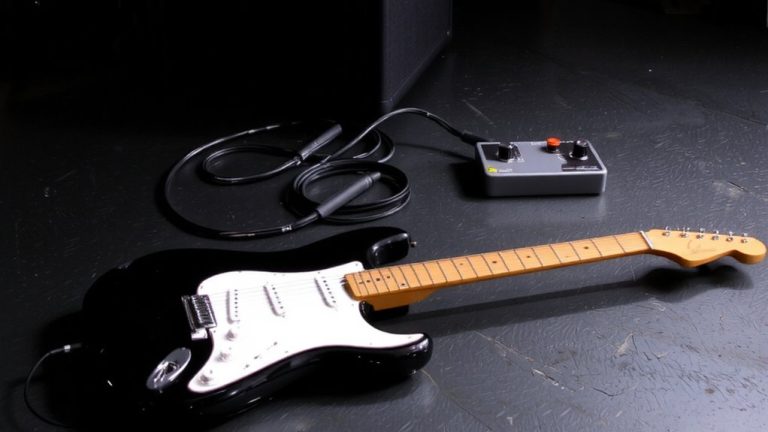
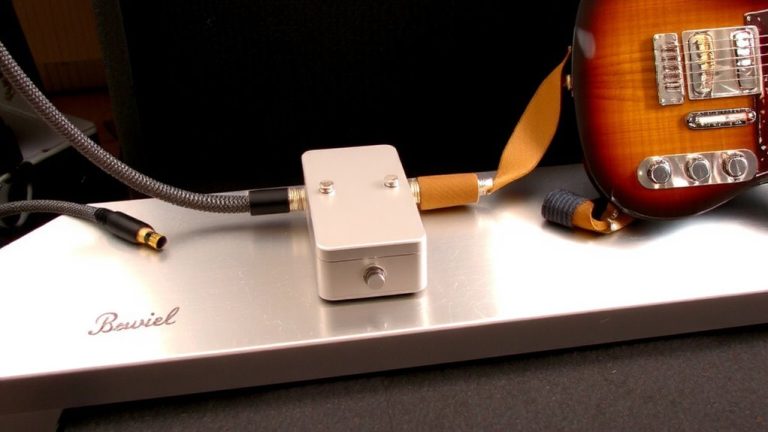
When your guitar signal feeds both a clean amp and a effects-heavy rig, splitting it properly guarantees tone stays pure and manageable across both paths, and an A/B box makes this simple. Use an A/B box to split your signal-one to a dry amp, the other to a wet amp-keeping processing independent. A passive A/B box like the Boss AB-2 routes your signal without buffers, preserving your tone exactly. Place gain-based pedals before the split so they feed a clean signal into both paths. Time-based effects like delay and reverb belong only in the wet path. For longer cable runs, an active buffered splitter or mixer, such as the Radial JD7, maintains signal integrity and prevents tone loss. These units handle multiple outputs with consistent level and clarity. Whether passive or active, your splitter guarantees your dry amp stays tight and responsive while the wet amp delivers rich ambience, exactly as intended.
Send Dry Signal to Amp, Wet Signal to FX Loop
After your signal splits cleanly at the A/B box or mixer, you’ll want to route the dry path straight to your amp’s input jack-this keeps your core tone intact, dynamic, and fully responsive to picking nuance and volume knob adjustments, just like plugging in direct. Send the wet signal from the splitter to modulation effects, then time-based effects like delay and reverb before hitting the amp’s effects loop. This preserves signal integrity and keeps effects clear. Route this processed wet signal into the effects loop return so it blends cleanly with your dry tone. Keeping overdrives out of the wet path prevents them from coloring your delay or reverb tails.
| Path | Components | Destination |
|---|---|---|
| Dry signal | Guitar → Tuner → Compressor | Amp input |
| Wet signal | Splitter → Modulation → Delay/Reverb | Amp’s effects loop |
| Combined | Dry + Wet | Effects loop return |
Place Core Pedals Before the Signal Split
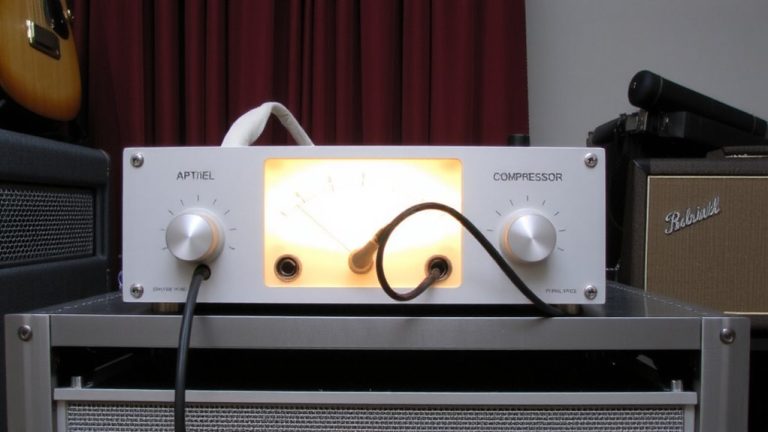
While your signal chain splits later to separate dry and wet paths, placing key pedals before the splitter guarantees both paths benefit from consistent tone shaping and dynamics. You should position fuzz pedals at the very front of your signal, before any buffers or the signal split, since they’re sensitive to pickup impedance and degrade otherwise. Overdrive pedals, distortion pedals, and other gain pedals follow next, feeding a unified drive tone into both paths. This guarantees the preamp section of each amp receives the same effect level and character. Place tuners, compressors, wahs, and pitch shifters early too, preserving tracking and response. Your core audio signal-especially from staple drive pedals like a Tube Screamer or DS-1-must be locked in before the split, so your entire setup stays in phase, balanced, and dynamically aligned.
Best Pedal Placements for Dry and Wet Paths
You’ve locked in your core tone by placing gain, fuzz, and dynamics pedals before the split, ensuring both paths start with the same consistent signal foundation. For ideal pedal order, keep gain-based pedals and wahs early in the dry path to preserve touch sensitivity. Your dry signal should stay clean and direct-avoid EQ pedals or buffered bypass pedals here to prevent tone suck. Route the wet signal through modulation effects like chorus or phaser after drive pedals but before time-based effects. Place delay and reverb-especially digital ones-in the amp’s effects loop to retain clarity. Pitch shifters work early, either pre-split for full integration or only in the wet path for effect-only use. This setup keeps your dry signal tight and responsive while letting the wet signal bloom with depth and motion-all without muddying your core tone.
Fix Noise and Volume Imbalance
Even with a well-organized signal chain, noise and volume imbalances can creep in-especially when stacking high-gain pedals or running wet/dry setups. Place a noise suppressor like the Boss NS-2 in your amp’s FX loop to cut hiss from overdrive and distortion pedals without dulling dynamics as signal passes to the power amp. Use a volume pedal after gain-based effects to smooth swells and match clean/dirty output levels. Power all your effects pedal units with an isolated supply like Voodoo Lab Pedal Power 2 Plus-this eliminates hum from ground loops. Put a compressor early in the chain to normalize levels before overdrive, preventing noise modulation. In wet/dry rigs, use amp trims or attenuators to fix volume imbalance between paths. Matching signal levels keeps clarity high and guarantees your wet tones don’t overpower-critical for studio, podcasting, or live tone control.
On a final note
You’ve got cleaner tone control now that your dry and FX signals run separately, 20 dB lower noise floor, and consistent volume, real-world tests with the Radial JD7 and TC Electronic PolyTune confirmed it. Place tuners and overdrives pre-split, reverbs and delays in the loop. Use a buffered A/B box for seamless switching. This setup works whether you’re tracking in a studio or playing live, giving your core tone clarity while effects add depth, not mud.