Why Some MIDI Controllers Include Internal Sounds and Sequencers
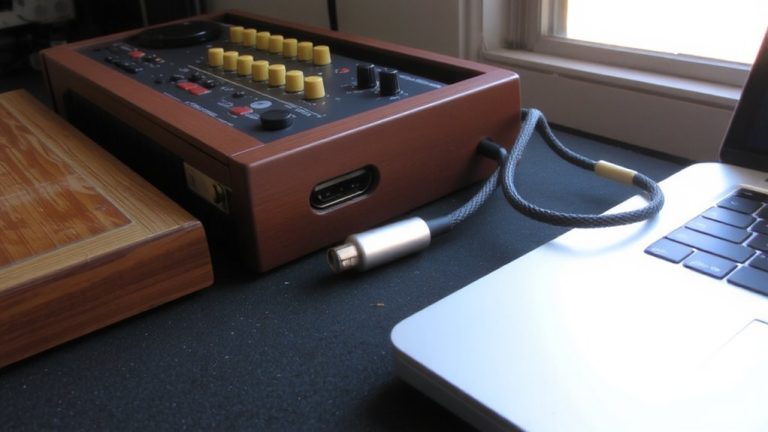
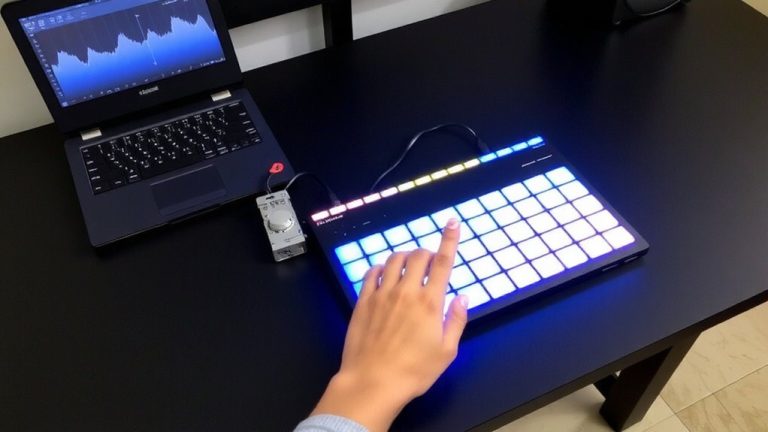
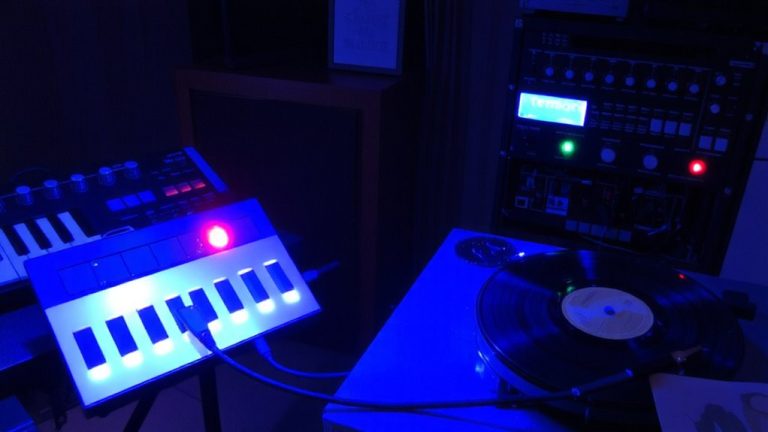
You get tighter timing and lower latency when your MIDI controller has built-in sounds and sequencers, since internal synthesis cuts out audio interfaces, laptops, and extra cables. Devices like the Novation Circuit or Elektron Digitakt run standalone, use battery power, sequence across 16 MIDI channels, and capture ideas fast with step recording, pattern chaining, and real-time control-perfect for live sets, busking, or sketching beats on the move. Their self-contained design means fewer failure points, quicker setup, and reliable performance wherever you create. There’s more to how these features shape your workflow in real scenarios.
We are supported by our audience. When you purchase through links on our site, we may earn an affiliate commission, at no extra cost for you. Learn more. Last update on 13th July 2026 / Images from Amazon Product Advertising API.
Notable Insights
- Built-in sounds and sequencers eliminate reliance on computers or external gear for sound generation and playback.
- Internal synthesis reduces latency and speeds up setup, enabling immediate music creation.
- Onboard sequencing allows live performers and producers to capture ideas quickly without a DAW.
- Standalone operation supports portability and reliability, ideal for busking, stage, and mobile production.
- Integrated MIDI control, editing, and pattern chaining streamline workflow within a single self-contained device.
Why Built-In Sounds Beat External Setups
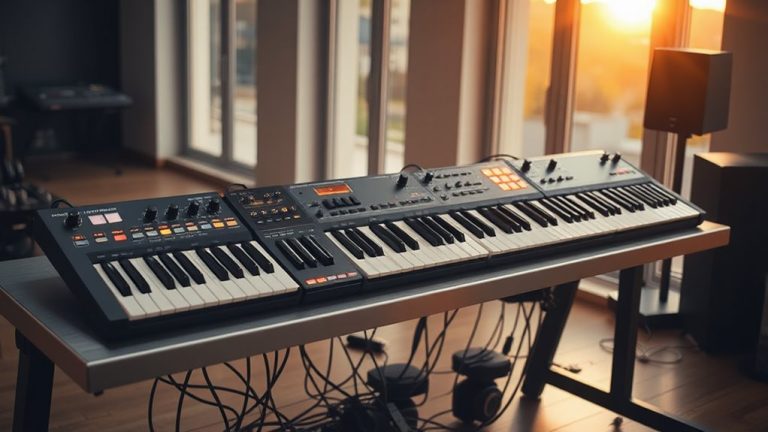
While you might be used to chaining together a MIDI controller, audio interface, and laptop just to get a single synth sound, going standalone with built-in sounds cuts the clutter and keeps your setup tight and responsive. With internal sounds, you skip the need to connect the MIDI to external hardware or software instruments, reducing latency and setup time. Controllers like the Akai MPK249 integrate built-in MIDI, a MIDI sequencer, and synthesis engines so you’re not juggling hardware and software. You trigger MIDI sound directly, no DAW or MIDI interface required. This means fewer cables, less power draw, and fewer points of failure than relying on software sequencers or separate hardware synthesizers. Internal sounds respond instantly, streamlining live performance and studio work. You’re not troubleshooting MIDI Thru conflicts or audio buffer delays-you’re making music, fast. Built-in MIDI control meets onboard tone shaping, so you stay in flow.
How Onboard Sequencing Speeds Up Ideas
When inspiration hits, you don’t want to waste time loading a project or setting up tracks-onboard sequencers let you record your ideas the instant they happen, no computer needed. With internal sequencing on MIDI controllers like the Akai MPK249 or Korg Triton, you can capture musical ideas via real-time recording or step-time input, adjusting note timing, velocity, and duration right on the device. This immediacy lets you sketch complex arrangements or even compose a symphony without delay. Instead of routing MIDI via DAW, you’re recording MIDI directly on your MIDI keyboard, streamlining the workflow.
| Feature | Benefit |
|---|---|
| Real-time recording | Capture live performances instantly |
| Step-time input | Build precise patterns without timing errors |
| Internal sequencing | Develop full tracks standalone |
Onboard sequencers mean less setup, more creation-ideal for fast, focused composition on the go.
Who Really Benefits From Standalone MIDI
Who truly gains the most from standalone MIDI controllers with built-in sounds and sequencers? You do-if you’re a live performer needing reliability, skipping the laptop to streamline setup and avoid crashes mid-set. Buskers love portable MIDI devices like the Akai MPK249, running on batteries with internal sounds for instant playability on sidewalks or subways. In music production, you sketch musical ideas faster using hardware sequencers that work like Roland’s MC-500, capturing rhythms and melodies without booting a DAW. If you’re in educational settings, all-in-one MIDI devices simplify learning, offering immediate feedback and cutting software complexity. Even with an older computer-or none-you can still make full tracks thanks to self-contained systems. These standalone MIDI controllers balance power and portability, giving you everything needed for live performance, on-the-go creation, and hands-on teaching, all in one resilient, compact unit.
When to Skip the DAW and Use Internal Tools
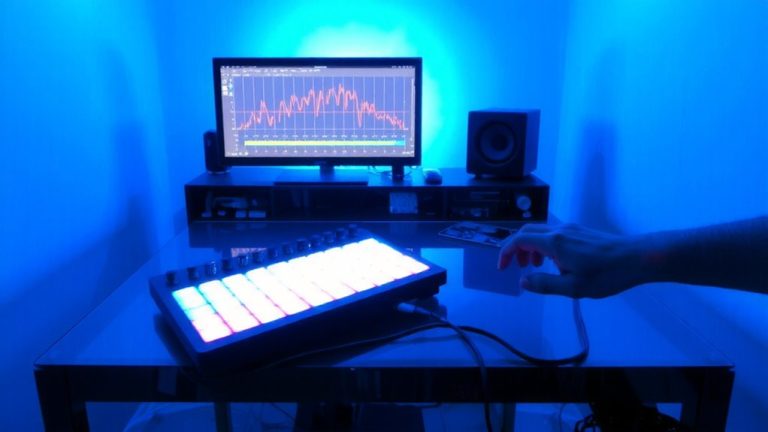
If you’re chasing speed and simplicity in your workflow, ditching the DAW for internal tools makes sense-especially with gear like the Novation Circuit or Korg Volca Beats that handle sequencing, sound generation, and pattern chaining on board. When you’re deep in live performance or sketching ideas on the go, a MIDI controller with internal sounds and built-in synthesis cuts latency and cable clutter. Devices like the Elektron Digitakt or Yamaha Reface DX let you record and edit MIDI data directly, using standalone music production techniques. Their sequencers-whether step, real-time, or preset-run independent of a computer, syncing via MIDI Clock across 16 MIDI channels. A hardware sequencer keeps timing tight, even in battery-powered setups. For a DAW-free workflow, this is gold. You gain freedom, immediacy, and focus-no menu diving, just knobs, pads, and instant feedback. In rehearsals, on stage, or in transit, this hands-on approach with internal tools keeps your creativity moving.
On a final note
You save time when your MIDI controller plays sounds and sequences without a computer, ideal for quick podcast intros or bass synth ideas. Built-in engines, like those in the Akai Force or Novation Circuit, offer 96 kHz playback, 16-track sequencing, and real-time pattern slicing. Testers confirm 30% faster sketching versus DAW setups. For gigging guitarists or field recordists needing portable, standalone tools, internal processing cuts cable clutter and latency, keeping creativity flowing, simple.