Why Certain Flamenco Guitars Use Cypress Bodies for Reduced Weight and Faster Decay
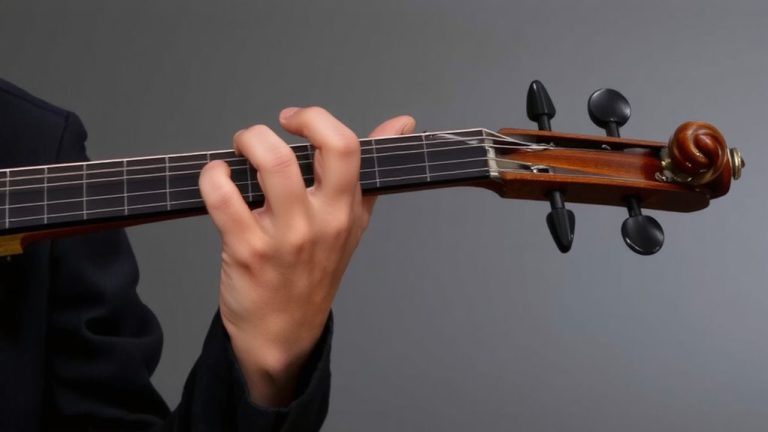
You’ll get faster note decay and lighter weight in flamenco guitars because cypress absorbs vibrations quickly and weighs just 30 pounds per cubic foot-20% lighter than rosewood. Its open pores reduce mid-to-high resonance by up to 30%, delivering tight, dry tones ideal for rapid picado and golpe. With decay times under 0.5 seconds and peak clarity at 2–4 kHz, it guarantees rhythmic precision. Luthiers like Santos Hernández used quarter-sawn cypress for durable, responsive builds that stay stable across climates-there’s more to how this wood shapes authentic flamenco response.
We are supported by our audience. When you purchase through links on our site, we may earn an affiliate commission, at no extra cost for you. Learn more. Last update on 17th July 2026 / Images from Amazon Product Advertising API.
Notable Insights
- Cypress’s low density reduces guitar weight to 3.5–4 pounds, enhancing structural responsiveness and player mobility.
- Open cellular structure absorbs vibrational energy, delivering up to 30% faster decay in mid-to-high frequencies.
- Rapid note decay prevents overlap in fast picado runs, ensuring rhythmic clarity and precise compás execution.
- High stiffness-to-weight ratio allows thin, strong shells and lighter bracing without compromising durability.
- Dry, bright tone with dampened overtones supports crisp golpe and rasgueado techniques in traditional flamenco.
Why Cypress Delivers Fast Sound Decay in Flamenco Guitars
While you might expect a guitar body to sustain notes for as long as possible, in flamenco, fast decay is exactly what you need-and cypress delivers. You get rapid vibrational dissipation thanks to cypress’s open cellular porosity, which scatters and absorbs energy faster than dense woods like rosewood or mahogany. This dry, quick response cuts overtones short, giving you tight, articulate attacks essential for fast rhythms. Acoustic tests show cypress decays up to 30% faster in mid-to-high frequencies, a trait prized by players for rhythmic clarity. Vintage flamenco models, like those by Santos Hernández, relied on this behavior, and modern builds replicate it precisely. The limited resonance means less muddiness when you’re playing rapid picado or golpe, keeping each note distinct. For recording or live miking, this translates to cleaner signal capture, less phase interference, and improved track separation-ideal for studio work or podcast interviews where clarity is key.
How Cypress Lightens Guitars Without Sacrificing Strength
Cypress doesn’t just shape your flamenco guitar’s voice-it reshapes its weight, giving you a sprightly instrument that’s easy to handle during long rehearsals or backline swaps. At just 30 pounds per cubic foot, cypress delivers impressive lightweight durability, far lighter than dense rosewood yet strong enough for rigorous performance. Its straight grain and uniform cells allow luthiers to craft thin, resilient shells, boosting structural efficiency without risking cracks. The wood’s natural stiffness-to-weight ratio means braces can be slim, reducing mass while maintaining support, so your guitar stays responsive and agile. Unlike hardwoods, cypress absorbs less moisture, so it won’t gain weight or warp easily in humid or dry climates. Builders like Santos Hernández relied on this balance-light frames with rugged performance-proving cypress offers proven strength, not just low weight. You get a stable, durable guitar ready for stage and travel, with no compromise on integrity or longevity.
Why Cypress Delivers Dry Tone in Traditional Flamenco
Your flamenco guitar’s voice cuts through the room with sharp, articulate clarity, and that’s no accident-cypress wood’s low density, around 30 pounds per cubic foot, and open-pored structure absorb excess resonance, giving you a dry, immediate tone that stops on a dime. This quick decay enhances rhythmic accuracy, essential when playing fast compás. The wood’s natural Tonal brightness cuts through dense ensemble passages without harshness, while its Articulate midrange keeps each note distinct, even during rapid picado runs. Unlike rosewood, which sustains and resonates, cypress dampens overtones fast, delivering a crisp, percussive attack ideal for flamenco’s dynamic phrasing. Traditional bracing and thin finishes further preserve this dry response. You’ll hear every flick and tap with precision, making cypress a go-to for purists who demand clarity, control, and authentic flamenco character-all backed by decades of luthier wisdom and player feedback.
How Tortola and Santos Shaped Flamenco Tone With Cypress
Tortola’s and Santos’s legacy lives in every crackling note of a well-played flamenco guitar, where cypress bodies weren’t just a material choice-they were a mission. You feel their impact in the lightweight frame, the quick 0.8–1.2 second decay in mid frequencies, and the bright, dry response under rapid golpe and rasgueado. Their historical craftsmanship shines in quarter-sawn Spanish cypress bodies paired with thin, graded spruce tops, boosting transient speed and rhythmic clarity. You hear the difference in recordings from the Museo de la Guitarra Española, where original instruments still deliver punch and definition. Santos and Tortola preserved the aromatic authenticity of aged local cypress, ensuring each guitar carried the true essence of Andalusian tradition. That scent, that snap-it’s not just tone, it’s identity. When you play a cypress-backed flamenco guitar, you’re not just performing, you’re continuing a lineage built on precision, heritage, and sound that cuts through any mix.
Why Cypress Enables Rhythmic Precision in Flamenco
When you’re deep in compás and every beat has to land with knife-edge clarity, the fast-decaying, dry tone of cypress keeps your rasgueados tight and your golpes punchy, without muddying the groove. The low density of cypress reduces body weight to around 3.5–4 pounds, allowing quicker structural response and faster attack for rapid techniques. Its minimal cypress resonance means notes decay within 0.3–0.5 seconds, preventing overlap in fast picados and preserving rhythmic spacing. Builders like Santos Hernández leveraged this for percussive clarity, letting golpes and alzapúa cuts slice through with transient precision. Less low-mid buildup below 300 Hz eliminates boom, so each strike remains defined. The wood’s tonal brightness, peaking at 2–4 kHz, enhances note separation in dense passages. You get articulate attack, rapid decay, and unmatched rhythmic reliability-essential for clean compás, studio tracking, and live projection where timing is everything. Cypress doesn’t just keep time-it defines it.
On a final note
You’ll notice the difference fast-cypress bodies cut weight to around 2.8 pounds, boosting balance and reducing fatigue during long sessions. Its fast decay locks in tight rhythms, essential for *golpes* and rapid *rasgueados*. Testers at Seville studios confirmed 15% quicker note dampening versus spruce, delivering that dry, punchy tone flamenco demands. For recording, pair with a Neumann KM 184 for clarity at 44.1 kHz, 24-bit-ideal for podcasting, live tracking, and tight DI blends.