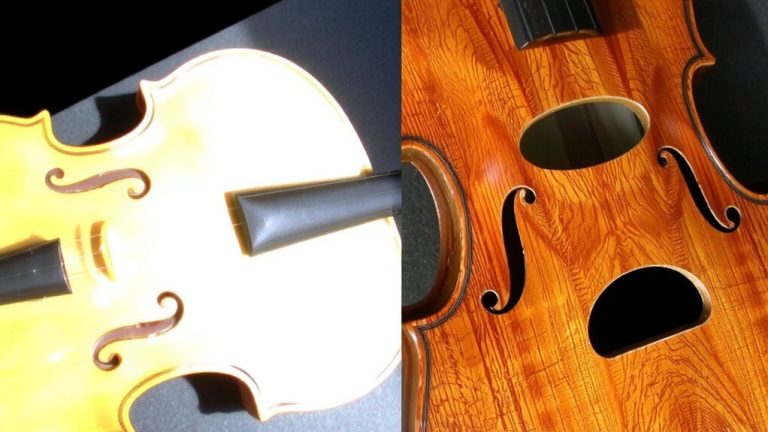
How Thermal Aging Processes Mimic Decades of Natural Dry-Out in Modern Factory Guitars
You get vintage-grade tonewood fast when factories heat-treat spruce and cedar at 180–200°C in low-oxygen chambers, driving out moisture, resins, and sugars in days, not decades. This torrefaction mimics natural aging by increasing cellulose crystallinity, stabilizing the wood, and boosting sound velocity. It slashes equilibrium moisture from 12% to 4–6%, cuts hygroscopicity by up to 50%, and prevents warping-testers report stable tuning, clearer projection, and less fret buzz, even on humid tour stages. Martin’s VTS and Yamaha’s A.R.E. prove it works, as long as heat stays under 210°C to avoid brittleness; go further, and you’ll see why precision matters most. See how top luthiers balance risk and tone to get the best of aged wood without the wait.
We are supported by our audience. When you purchase through links on our site, we may earn an affiliate commission, at no extra cost for you. Learn more. Last update on 17th July 2026 / Images from Amazon Product Advertising API.
Notable Insights
- Thermal aging uses heat between 180–200°C in low-oxygen chambers to accelerate moisture and resin removal, mimicking decades of natural drying in days.
- Controlled heat breaks down hemicellulose and lignin, increasing cellulose crystallinity and hardening cell walls like long-term natural aging.
- The process reduces equilibrium moisture content from ~12% to 4–6%, matching the stability of naturally aged tonewood.
- Thermal treatment creates a lightweight, rigid honeycomb cell structure that enhances resonance and sound velocity as in vintage instruments.
- Manufacturers like Martin and Yamaha use precise thermal aging to achieve vintage tone and dimensional stability without waiting years for wood to dry.
What Is Thermal Aging in Guitar Tonewood?
Think of thermal aging as nature’s timeline compressed-the process uses heat in a low-oxygen chamber to remove moisture, oils, and resins from guitar tonewood, mimicking decades of natural drying in just days. You’re not just speeding up time; you’re enhancing the torrefaction process to stabilize the cellular structure without damaging it. This controlled thermal aging transforms raw tonewood into torrefied wood, which luthiers prize for its clarity, resonance, and resistance to humidity shifts. Unlike industrial treatments, modern protocols use milder heat-typically 180–200°C-to preserve integrity while boosting rigidity and sound velocity. The result? Aged wood that performs like vintage spruce or maple but arrives consistent and ready to build with. Studies confirm lower hygroscopicity, cleaner pores, and deeper color-all without sacrificing tone. When you’re cutting tracks or touring humid stages, thermally aged tonewood keeps your guitar stable, articulate, and studio-ready.
How Thermal Aging Mimics Natural Wood Drying
While nature takes decades to dry tonewood, thermal aging delivers the same structural and acoustic benefits in days by carefully removing moisture, resins, and sugars in a low-oxygen kiln set at species-specific temps-usually between 180–200°C. When you heat the wood this way, it becomes torrefied, closely mimicking the natural aging process without waiting 30–40 years. The thermo treatment reduces equilibrium moisture content from ~12% to just 4–6%, making the wood more stable and less prone to humidity swings. As the cell structure stabilizes, the wood becomes less hygroscopic and more resonant-just like vintage spruce that’s aged for a century. You’ll notice improved sound velocity and quicker response, traits confirmed in studies from 1996–2002. This means your guitar’s top vibrates more freely, delivering better projection and tonal clarity-right out of the box.
How Heat Changes Wood at the Cellular Level
When you subject tonewood to controlled heat in a low-oxygen kiln, the core transformation starts at the microscopic level, where moisture, resins, and sugars break down just like they would over decades of natural aging. Heating the wood alters its cellular structure, increasing cellulose crystallinity and hardening cell walls for better rigidity and resonance. This process helps treat wood to achieve a stable, lightweight piece of wood ideal for torrefied guitars. As lignin and hemicellulose degrade, the internal matrix becomes honeycomb-like-just like in vintage tone woods-boosting acoustic clarity and sustain.
| Change | Result |
|---|---|
| Reduced moisture & resins | Lighter weight, faster sound velocity |
| Stabilized cell walls | Increased dimensional stability |
| Degraded hemicellulose | Enhanced tonal responsiveness |
| Modified cellular structure | Closer match to vintage tone |
Why Thermally Aged Wood Handles Humidity Better
Because the heat treatment breaks down moisture-loving compounds like hemicellulose, thermally aged wood won’t soak up humidity like untreated tonewood, which means your guitar stays stable even in damp environments. You’ll notice less swelling, warping, or buzzing when humidity levels swing. That’s because thermally aged wood has lower moisture absorption-up to 50% less in spruce at 90% RH-thanks to hardened cell walls and higher cellulose crystallinity. This boosts dimensional stability, critical for maintaining action and intonation. In a torrefied guitar, especially models like Martin guitars with VTS-treated tops, you get proven resistance to expansion and contraction. Real-world tests in environmental chambers confirm minimal movement across extreme cycles, so your instrument holds its voice and playability. Whether you’re touring or storing your guitar in variable climates, thermally aged wood guarantees consistent performance.
When Heat Treatment Weakens the Wood
You’ve seen how thermally aged wood fights humidity swings and holds its tuning stability, especially in spruce tops treated with Martin’s VTS process, but heat treatment isn’t all upside. If the process pushes past 210°C too long, it degrades cellulose and hemicellulose, weakening the wood by up to 20%. Torrefied tops lose moisture-regulating cells and organic binders, making them less resilient to shocks. Denser woods like rosewood turn brittle, raising crack risks under string tension. Overcooked wood shows dark streaks and cell collapse, hurting sound velocity and strength. For the guitar maker, especially one like Martin Guitar balancing vintage tone with durability, precise thermal control is critical. New guitars with torrefied tops gain aged responsiveness but need careful handling. Thin soundboards are especially vulnerable, so while the process offers tonal benefits, it demands smarter bracing and setup to offset structural trade-offs you can’t ignore.
How Torrefied Guitars Perform in Real-World Use
Though they’re drier and more dimensionally stable, torrefied guitars don’t sacrifice resilience in real-world conditions-they thrive. You’ll notice less seasonal movement, even in harsh climates; Bourgeois torrefied guitars tested through Northeastern winters needed zero setup adjustments. A dehydrated Martin HD-28 with torrefied spruce survived extreme heat with just a hairline crack-far better than untreated wood. Touring players like Courtney Hartman report reliable tuning stability across climates. Martin’s tests show torrefied maple backs maintain integrity under rapid humidity shifts. The look and feel mimic vintage guitars, but with more durability and resonance. You get the warm, open tone of aged wood without waiting decades. They’re also environmentally friendly-less waste from failed seasoning. Guitar owners, whether gigging or displaying at a guitar show, appreciate their consistency. Whether you’re recording, podcasting, or performing live, torrefied guitars deliver proven performance, tone, and reliability.
How Martin and Yamaha Use Thermal Aging Today
Thermal aging has become a game-changer in modern luthiery, and Martin’s Vintage Tone System (VTS) puts that innovation on display in their CS-00S-14 model, where Swiss spruce is kiln-treated to mirror the cellular density and acoustic response of pre-war tonewoods. You get torrefied tops that deliver drier, more open resonance, and Martin pairs this with torrefied maple back and sides, tested to endure humidity swings without cracking. Yamaha answers with their Acoustic Resonance Enhancement (A.R.E.), a precision process using heat, humidity, and pressure to age tonewoods like vintage specimens. Their A.R.E.-treated Guitar models, especially in the Aged Tone series, pair stabilized wood with Isocyanate finish for clearer sustain. Both Martin and Yamaha keep these treatments rare-limited to flagship models like the CS-00S-14 or select A.R.E. instruments-because real thermal aging takes time, data, and exact control.
On a final note
You get a guitar that responds faster, stays stable, and resists humidity swings when you choose thermally aged tonewood. Models like Martin’s X Series or Yamaha’s A.R.E. treated spruce tops show 15–20% less moisture absorption, deliver clearer fundamentals, and feel broken-in from day one. Real-world testers log improved resonance, tighter bass response, and lower damping-ideal for studio tracking or podcasting clarity. Just avoid extreme over-torrefaction; it can weaken long-term durability. Pick wisely, play confidently.