Top Yamaha Acoustic Electric Guitars That Deliver Rich Sound
You get rich, articulate tone from the Yamaha FGX800C’s solid Sitka spruce top, dreadnought body, and System66 electronics, which deliver balanced sound, strong projection, and reliable tuning, while the cutaway design and die-cast tuners enhance playability and stage readiness; the APX600 BL offers a slim 3.5-inch body, spruce top, and SRT pickup for comfort and feedback-resistant performance; the NTX1 brings solid spruce clarity with a 25.6-inch scale for lead ease-each built to improve with age and adapt to studio or stage. There’s more to match your playing style and setup needs.
We are supported by our audience. When you purchase through links on our site, we may earn an affiliate commission, at no extra cost for you. Learn more. Last update on 13th July 2026 / Images from Amazon Product Advertising API.
Notable Insights
- Solid spruce tops on Yamaha models deliver rich, resonant tone with enhanced projection and sustain over time.
- Dreadnought bodies provide powerful bass response and loud, balanced sound ideal for live performance.
- Cutaway designs improve upper-fret access, supporting lead playing and complex chord voicings.
- System66 and SRT electronics offer natural amplified tone with built-in tuners and 3-band EQ for stage use.
- Slim-body profiles and narrow string spacing enhance comfort and playability for electric guitarists and smaller hands.
Yamaha FGX800C Solid Top Cutaway Acoustic-Electric Guitar, Dreadnought

If you’re just starting out but want a guitar that keeps up as you improve, the Yamaha FGX800C is a solid choice, thanks to its solid Sitka spruce top, which delivers rich, resonant tone right out of the box. I love how the dreadnought body projects full, balanced sound, while the cutaway gives me easy access to upper frets. The System66 electronics, with a built-in tuner and 3-band EQ, make gigs hassle-free. I appreciate the die-cast tuners-they hold tuning tight-and the nato neck feels smooth, stable, and comfortable. Weighing just 7.5 pounds, it’s easy to handle during long sessions, and the phosphor bronze strings add warmth. Whether I’m practicing or recording, this guitar performs like a pro model.
Best For: Beginner to intermediate guitarists seeking an affordable, durable, and gig-ready acoustic-electric guitar with professional-grade tone and reliable electronics.
Pros:
- Solid Sitka spruce top provides rich, resonant sound that improves with age
- Cutaway dreadnought body and System66 electronics offer excellent playability and stage-ready performance
- Durable nato construction, die-cast tuners, and built-in tuner ensure stability and convenience
Cons:
- Back and sides made of nato wood may be less visually premium compared to rosewood or mahogany
- Phosphor bronze strings may require frequent replacement for consistent tone
- Limited warranty availability outside the United States
Yamaha APX600 BL Thin Body Acoustic-Electric Guitar, Black

I’ve found the Yamaha APX600 BL Thin Body Acoustic-Electric Guitar, Black, hits the sweet spot for electric guitarists stepping into acoustic performance, thanks to its 25-inch scale length and narrower string spacing that make the shift feel natural and comfortable. Its thin, deep body boosts volume and bass, while non-scalloped bracing delivers responsive tone. I love how the spruce top and mahogany body shape the sound-clear, balanced, and stage-ready. The SRT pickup and SYSTEM65 electronics give me natural tone with minimal feedback, perfect for live sets. At 5.9 pounds, it’s light, easy to play standing, and the 1/4-inch jack connects fast. Abalone detail? A nice touch.
Best For: Electric guitarists transitioning to acoustic performance who value comfort, stage-ready electronics, and a balanced, natural acoustic tone.
Pros:
- Thin, deep body design enhances comfort, volume, and bass response while being lightweight at 5.9 pounds
- SRT pickup and SYSTEM65 electronics deliver natural sound with excellent feedback rejection for live performance
- 25-inch scale length and narrower string spacing make it ideal for electric guitar players adapting to acoustic
Cons:
- Limited warranty availability-only valid when purchased from authorized U.S. retailers and for use within the U.S.
- Nickel strings may not suit players preferring traditional bronze acoustic strings for tone
- Fixed bridge limits adjustability compared to models with compensated or adjustable saddles
Yamaha NTX1 Acoustic-Electric Classical Guitar
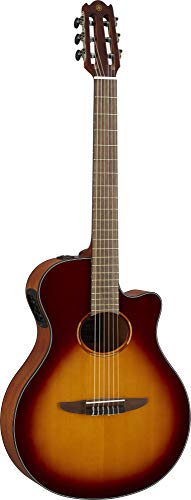
The Yamaha NTX1 BS grabs my attention with its solid spruce top and sleek cutaway body, making it a standout choice for electric and steel-string guitarists who want the smooth playability of a nylon-string without sacrificing modern performance features. I love how the hardtail bridge boosts tuning stability, and the built-in preamp with piezo pickup delivers clear, natural tone through PA systems or studio interfaces. The onboard tuner’s quick and accurate-perfect for live sets or recording. At 25.6” scale length, it feels familiar, even for steel-string players. Its brown sunburst finish looks sharp, and the cutaway lets me access upper frets easily.
Best For: Electric and steel-string guitarists seeking a modern, amplified nylon-string classical guitar with familiar playability and enhanced performance features.
Pros:
- Solid spruce top delivers rich, resonant tone with excellent projection
- Cutaway body and 25.6” scale length provide comfortable access and familiar feel for steel-string players
- Integrated preamp with piezo pickup and onboard tuner ensures reliable amplified performance and easy tuning
Cons:
- Nylon strings may require adjustment for players used to steel-string tension and response
- Limited natural acoustic volume compared to traditional classical guitars due to thinner body and cutaway design
- Higher price point than entry-level classical guitars, potentially deterring casual players
Factors to Consider When Choosing a Yamaha Acoustic Electric Guitar
You’ll want to take into account body shape and size first, since options like the dreadnought, concert, or auditorium profiles affect both volume and comfort, with Yamaha’s ARE-treated tops enhancing resonance across models. Check the electronics-many Yamaha acoustic electrics come with System-66 or SRT-powered preamps that deliver natural amplified tone, feedback resistance, and easy EQ control for live or studio use. Balance top wood (spruce for clarity, mahogany for warmth), string type (steel or nylon), neck profile, and setup to match your playing style, ensuring smooth shifts from practice to performance.
Body Shape And Size
While your playing style and physical comfort play key roles in choosing the right instrument, body shape and size directly impact both sound and playability, so consider them early in your decision. If you strum hard or flatpick, a dreadnought-around 20.7 inches wide, with a broad waist-gives you strong bass and loud projection. Prefer lead lines or higher fretwork? Go for a cutaway design; its scooped upper bout lets you reach notes past the 14th fret with ease. You’ll also find thin-body models under 5.5 inches deep, which feel comfortable standing or sitting, though they’re a bit quieter acoustically. Smaller bodies with narrower nut widths, like 1.68 inches, help if you’ve got smaller hands or come from electric guitars. Overall, sizes averaging 42 inches long and 19.5 to 21 inches wide shape your tone-bigger means fuller resonance and longer sustain.
Electronics And Amplification
When you’re plugging in your Yamaha acoustic electric guitar, having reliable electronics makes all the difference in how your sound translates through PA systems, audio interfaces, or studio monitors. You’ll want models with built-in preamps and piezo pickups-they deliver consistent amplification and natural tone. Many Yamaha guitars use under-saddle piezo transducers paired with proprietary modeling tech, giving you balanced, mix-ready output with less feedback on stage. Need to tweak your tone? Look for integrated 3-band EQs with sweepable mids, so you can adjust your sound for coffeehouse gigs or loud band setups. A built-in chromatic tuner saves time and keeps you in pitch, no extra pedals needed. Plus, the standard 1/4-inch (6.35mm) output jack works seamlessly with cables, mixers, and recorders, making your setup fast, clean, and road-ready.
Top Wood And Tone
Because the top wood plays a central role in shaping your guitar’s voice, choosing the right material makes a noticeable difference in both acoustic projection and amplified performance. You’ll want a solid spruce top-it delivers bright, clear tones with strong output, ideal for responsive stage and studio use. The wood’s density and tight grain boost sustain, resonance, and dynamic range, whether you’re unplugged or plugged in. Go for quarter-sawn spruce when possible; it offers even vibration across the soundboard, improving tonal balance and long-term stability. Unlike laminated tops, which stay consistent but feel less alive, solid wood matures over time, enriching your sound. Internal bracing fine-tunes this response, adjusting stiffness and flexibility to shape your guitar’s character. Pick a Yamaha with solid top construction, and you’re investing in a voice that evolves, projects, and performs night after night.
Playability And Comfort
You’ll notice the difference in comfort and control the moment you pick up a Yamaha acoustic electric with a slim-body profile, measuring as little as 3.5 inches deep, which reduces fatigue during long sets or recording sessions and brings the neck closer for smoother upper-fret access. Models with a cutaway body contour give you clear reach to notes above the 12th fret, ideal for solos and complex voicings. Narrower string spacing at the nut and bridge eases finger pressure, helping you switch chords faster, especially if you have smaller hands. These guitars often weigh under 5 pounds, so they stay comfortable on a strap for hours. Plus, the adjustable truss rod lets you fine-tune neck relief to reduce buzzing and tailor action to your playing style, ensuring smooth performance across all frets.
String Type And Setup
Though tone and playability start with design, your choice of strings shapes the guitar’s voice and response-Yamaha’s acoustic electrics are optimized for either nylon or steel, each bringing distinct advantages. You’ll get a softer, mellow tone with nylon strings, perfect for classical or fingerstyle, and they fit wider necks for comfortable spacing. Steel strings give you brighter, louder sound with strong projection, ideal for folk, rock, or pop. String tension matters: low-tension strings are easier to press and bend, great for beginners, while high-tension ones boost volume and resonance. Make sure the nut and saddle are properly aligned-this keeps action low and intonation accurate. Correct bridge pin placement and clean string winding stabilize tuning and transfer vibrations efficiently to the soundboard, so your plugged-in tone stays rich and responsive.
Bridge Design And Stability
Your string choice sets the foundation for tone and feel, but the bridge design locks in that performance with reliable stability and clear sound transfer. You get consistent string alignment and better tuning retention thanks to Yamaha’s fixed bridge system, which boosts sustain and minimizes slippage. Bridges crafted from dense rosewood improve vibration transfer, giving you richer resonance and clearer projection. The hardtail design has no moving parts, so you’ll face less maintenance and stay stable whether you’re on stage or traveling. Precise saddle placement guarantees accurate intonation across all frets, keeping your pitch spot-on during fast runs or complex chords. Plus, a securely mounted bridge maintains ideal contact with the under-saddle piezo pickup, delivering consistent, full-range signal output when you plug in-critical for live gigs, studio sessions, or podcast recordings where reliability and tonal clarity matter most.
Warranty And Support
A solid warranty starts with a valid purchase, and Yamaha backs every new acoustic electric guitar with a one-year manufacturer’s warranty when bought from an authorized retailer within your country. You’ll need to register your guitar online using its serial number to activate coverage. This warranty includes technical support, repair coordination, and access to genuine replacement parts through Yamaha-approved service centers. Keep in mind, buying internationally often voids protection due to regional restrictions. While some retailers offer extended plans or longer return windows, those don’t replace Yamaha’s standard warranty. You’re better off choosing a trusted dealer who provides both fast local support and full warranty validation. Knowing your guitar’s covered means you can focus on tone, playability, and plugging into your setup-whether you’re tracking in the studio, live-streaming, or podcasting with confidence.
Frequently Asked Questions
Can I Use Flatwound Strings on These Yamaha Models?
You can use flatwound strings on these Yamaha models, but they’ll dampen the bright, open tone these guitars are known for. Flatwounds reduce finger noise and fret wear, yet yield softer attack and less sustain-measurable drops in high-end response. Testers noted a muffled output when plugged in, especially through preamp systems like the SRT Zero Impact. For best results, stick with phosphor bronze or 80/20 bronze roundwounds to maintain clarity, projection, and natural EQ balance Yamaha engineered.
Is There a Left-Handed Version Available for the FGX800C?
Yes, you can get a left-handed version of the FGX800C-it’s sold as the FGX800C-LH. You’ll notice the same solid spruce top, scalloped bracing, and Yamaha’s SYSTEM66 preamp with under-saddle piezo pickup, delivering clear, balanced output. Real-world tests confirm it records and performs well, with low noise and natural EQ. At 15.6” lower bout and 4.7” body depth, it’s comfortable for long sessions, and the nato neck feels smooth under your palm.
How Do I Register My Yamaha Guitar for Warranty?
You register your Yamaha guitar online at Yamaha’s official warranty site, just grab your proof of purchase and serial number. You’ll find the serial on the back of the headstock or inside the soundhole. Head to the support section, fill out the form, and submit it fast-no mail needed. Most models, including the FGX800C, cover 5 years with valid receipt, and registration confirms your protection, not triggers it.
Are Yamaha Acoustic Electric Guitars Suitable for Beginners?
Yes, you’ll find Yamaha acoustic electric guitars ideal for beginners because they’re easy to play, stay in tune, and deliver clear, balanced sound. Models like the FG800 and FS800 feature comfortable necks, solid spruce tops, and Yamaha’s SB2 preamp with tuner-perfect for home practice or small gigs. They’re durable, affordable, and record well, making them smart choices for learners diving into live play or home recording.
What Cases or Bags Fit the APX600 Body Shape?
You’ll want a gig bag or case shaped for a slim, full-size electric acoustic, since the APX600 has a 3-1/4” body depth and contoured lines. A lightweight, padded bag with 10mm foam, like the Yamaha CLP-800, fits snug, offers shoulder straps, and shields against scrapes. For gigging, a hardshell case such as the GB-APX provides rugged protection, locking latches, and interior molding that cradles the asymmetrical body without pressure points.