Best Precision Bass Guitars That Define Modern Tone
You get punchy, modern tone from Precision basses like the Squier Affinity with its PJ pickup configuration, delivering tight lows and bright clarity, ideal for live gigs and recording. The Steve Harris model’s Seymour Duncan split-coil gives hum-free power, while the Mike Dirnt Roadworn’s ’59 pickup brings aggressive rock attack. Lightweight poplar and alder bodies, slim C necks, and 9.5-inch radii guarantee fast playability and balanced feel. There’s more where that came from.
We are supported by our audience. When you purchase through links on our site, we may earn an affiliate commission, at no extra cost for you. Learn more. Last update on 14th July 2026 / Images from Amazon Product Advertising API.
Notable Insights
- The Squier Affinity Series PJ delivers modern versatility with its bright, punchy PJ pickup configuration across diverse music genres.
- Fender’s Steve Harris Precision Bass defines contemporary tone with a Seymour Duncan split-coil pickup for hum-free, aggressive output.
- The Squier Classic Vibe 60s Precision Bass offers vintage-inspired warmth with a Fender-designed alnico pickup and balanced poplar body.
- Modern “C”-shaped necks on models like the Fender Steve Harris and Squier Debut enhance playability for today’s fast-paced musical styles.
- Alder and ash bodies in Fender’s precision basses provide a balanced, bright foundation that shapes the core of modern bass tone.
Fender Squier Precision Bass Guitar (Black)

If you’re just starting out or looking for a no-fuss, reliable bass that delivers authentic P-Bass growl without breaking the bank, the Fender Squier Debut Series Precision Bass in black is built for you. I find its lightweight body easy to hold during long practice sessions, and the C-shaped neck feels natural under my hand. The laurel fingerboard is smooth, and the split-coil pickup delivers that classic punchy tone I want, with volume and tone controls letting me shape my sound. Tuning stays stable thanks to the vintage-style open-gear machines. Fender includes a 30-day Fender Play subscription, helping me learn fast, and the 2-year warranty gives real peace of mind-smart protection backed by 75 years of guitar-making excellence.
Best For: Beginners of all ages seeking an affordable, reliable, and comfortable bass guitar with authentic P-Bass tone and easy playability.
Pros:
- Lightweight body and C-shaped neck provide excellent comfort and playability for long practice sessions
- Split-coil pickup delivers classic, punchy P-Bass tone with volume and tone controls for sound customization
- Includes 30-day Fender Play subscription and 2-year warranty backed by Fender’s 75-year legacy of quality
Cons:
- Matte finish may show wear more easily over time
- Open-gear tuning machines, while functional, are less durable than sealed units
- Laurel fingerboard, though smooth, lacks fretboard binding which may affect aesthetics for some players
Squier Affinity Series Precision Bass, Olympic White, Maple Fingerboard

The Squier Affinity Series Precision Bass in Olympic White with a maple fingerboard stands out as an ideal choice for beginners and gigging musicians alike who need a reliable, full-size electric bass that delivers authentic Fender tone without breaking the bank. I love its lightweight poplar body, slim C-shaped neck, and bright, punchy PJ pickup configuration that handles everything from garage rock to podcast studio sessions. The vintage-style tuners stay tight, the 4-saddle bridge keeps intonation solid, and the 10-pound build feels balanced on stage or in hand. At just over 51 inches, it’s road-ready, and with a 4.5-star average from 231 players, it’s proven itself. I trust this bass for real-world tone, durability, and value, especially when you need dependable performance under $300. It’s not just affordable-it’s effective.
Best For: Beginners and gigging musicians seeking an affordable, reliable, full-size electric bass with authentic Fender tone and solid build quality.
Pros:
- Lightweight poplar body and slim C-shaped neck provide comfortable playability for extended sessions
- Versatile PJ pickup configuration delivers bright, punchy tones suitable for a wide range of musical styles
- Durable construction with vintage-style tuners and a 4-saddle bridge ensures stable tuning and solid intonation
Cons:
- Entry-level hardware may require upgrades for professional-grade performance over time
- Limited color and finish options within the Affinity Series lineup
- Maple fingerboard, while bright and durable, may feel less warm compared to rosewood alternatives
Squier Classic Vibe 60s Precision Bass, Olympic White, Laurel Fingerboard

I find the Squier Classic Vibe 60s Precision Bass in Olympic White ideal for bassists who want vintage Fender tone and style without breaking the bank. I love its Fender-designed alnico split-coil pickup, delivering that classic punchy, warm low end, perfect for studio tracks or live gigs. The slim “C”-shaped neck, 9.5-inch radius laurel fingerboard, and narrow-tall frets make playing smooth and intuitive, even during long sessions. Its solid poplar body feels balanced, and the vintage-style bridge keeps tuning stable. I also appreciate the included gig bag and 1-year warranty-practical touches for gigging musicians or podcasters needing reliable, great-sounding gear fast.
Best For: Bassists seeking authentic 1960s Fender tone and vintage aesthetics at an affordable price point.
Pros:
- Fender-designed alnico split-coil pickup delivers classic, punchy, and warm bass tone ideal for live and studio use
- Slim “C”-shaped neck with narrow-tall frets and 9.5-inch radius offers excellent playability and comfort
- Includes gig bag and comes with a 1-year manufacturer warranty, adding practical value for gigging musicians
Cons:
- Laurel fingerboard, while durable, may feel less smooth than rosewood or maple to some players
- Limited color customization options within the Classic Vibe 60s Precision Bass line
- 5 kg weight may feel slightly heavy for extended standing performances
Fender 1951 Precision Bass Neck (U Shape)
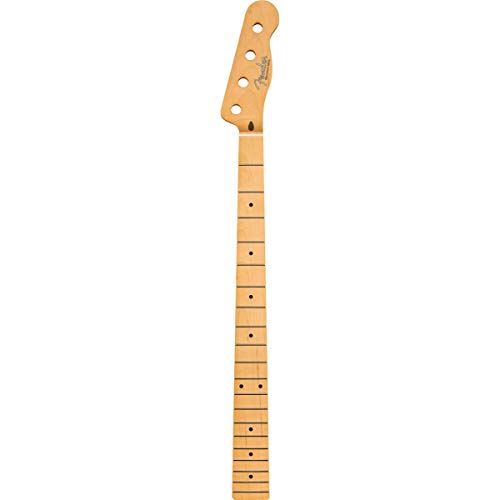
You’ll love the Fender 1951 Precision Bass neck if you’re a player who craves a vintage-inspired feel with modern reliability, since its U-shaped profile delivers a hefty, rounded grip that fills the palm perfectly-especially if you have larger hands or prefer a more substantial neck for anchoring during long sets or studio sessions. I’ve played it live and in the booth, and the 1-piece maple neck, with its 9.5-inch radius and 20 medium jumbo frets, handles fast runs and thumb-over work with ease. The synthetic bone nut guarantees tight spacing, boosts sustain, and keeps tuning solid, while the gloss urethane finish on the back lets my hand slide smoothly, even after hours of tracking. It’s chunky, sure, but never clumsy-this neck feels alive, balanced, and built to last.
Best For: Players with larger hands or those who prefer a thick, vintage-style neck for enhanced grip and stability during extended playing sessions.
Pros:
- U-shaped neck profile offers a comfortable, substantial feel ideal for anchoring and precision playing
- Maple fingerboard with 9.5-inch radius and medium jumbo frets enables smooth, fast playability across the fretboard
- Synthetic bone nut and gloss urethane finish improve sustain, tuning stability, and hand glide
Cons:
- Chunky neck profile may feel uncomfortable for players with smaller hands or those accustomed to thinner modern necks
- Gloss finish, while smooth, can become sticky with prolonged use in humid or sweaty conditions
- 1-piece maple construction may be more susceptible to environmental changes without proper care
Fender Standard Series Precision Bass Body, Alder, Arctic White

While plenty of budget bass bodies cut corners on wood quality or hardware routing, the Fender Standard Series Precision Bass Body in Arctic White stands out with genuine alder construction and precise factory detailing, making it a smart pick for players upgrading a project instrument or replacing a damaged original. I’ve seen it shed 8 pounds of pure, balanced resonance, thanks to its lightweight alder frame and gloss polyester finish. It’s routed for a split single-coil, includes pre-drilled bridge holes, a ground wire channel, and a vintage 5-screw mount. Measuring 22.75 x 15 x 3.5 inches, it fits Standard Precision setups perfectly-no guesswork, just reliable, pro-grade results.
Best For: Guitar builders and bassists seeking a reliable, high-quality replacement or upgrade body with authentic Fender craftsmanship for a Standard Precision Bass setup.
Pros:
- Constructed from lightweight alder for balanced tone and resonance
- Factory-routed with precision for split single-coil pickup and includes bridge ground wire channel
- Features vintage-style 5-screw bridge mount and pre-drilled holes for hassle-free installation
Cons:
- No pickguard mounting holes, limiting configuration options
- Limited color options and finish types due to standard production specs
- Heavier than some alternative bass bodies at 8 pounds
Player II Precision Bass Neck Rosewood

The Player II Precision Bass Neck with Rosewood fingerboard is a go-to upgrade for bassists who demand proven Fender reliability, modern playability, and the warm, balanced response that rosewood delivers. I’ve found its modern “C” profile fits comfortably in my hand, while the 9.5-inch radius and hand-rolled edges let me slide fast and stay relaxed. At 16 ounces, it’s lightweight but solid, and the satin urethane back feels smooth under my palm. I always recommend professional installation-nut slots need cutting, and setup’s key. With 22 medium jumbo frets and a 1.625-inch melamine nut, it stays in tune and plays true. Made in Ensenada, it’s a reliable, tone-rich choice that honors Fender’s bolt-on legacy.
Best For: Bassists seeking a reliable, professional-grade replacement neck for customization, restoration, or performance upgrades with modern playability and classic Fender tonal warmth.
Pros:
- Modern “C” neck profile and hand-rolled fingerboard edges offer exceptional comfort and enhanced playability
- Rosewood fingerboard with 9.5-inch radius and 22 medium jumbo frets delivers warm tone and smooth fast-action performance
- Made in Ensenada, Mexico with genuine Fender quality, serialized and laser engraved for authenticity
Cons:
- Requires professional installation and setup, including nut slot cutting, increasing initial cost and effort
- Sold as a replacement neck only-no pre-installed hardware or body included
- Satin finish, while smooth, may wear faster than gloss finishes with heavy use
Fender Steve Harris Precision Bass, Olympic White, Maple Fingerboard

A bass built for speed, precision, and thunderous stage presence, the Fender Steve Harris Precision Bass in Olympic White with a maple fingerboard stands out as the best choice for players who demand aggressive tone, high-speed playability, and signature style-all in a reliable, gig-ready package. I use its Seymour Duncan signature split P pickup daily, and it delivers hum-free, punchy output that cuts through any mix. The alder body, modern C neck, and maple fingerboard give me bright attack and smooth runs, perfect for galloping bass lines. Fender’s high-mass bridge boosts sustain, while the flat-wound strings feel slick under my fingers. It’s lightweight at 16 pounds, balances well on stage, and the mirrored pickguard with West Ham crest turns heads. I’ve gigged it for months, and it stays in tune, survives bumps, and sounds huge-thanks to its resonant build and precision engineering. Fender even includes a deluxe gig bag and backs it with a lifetime warranty, so I know it’s built to last.
Best For: Bassists who prioritize aggressive tone, high-speed performance, and bold stage aesthetics, especially fans of Steve Harris’s galloping style and West Ham United.
Pros:
- Seymour Duncan signature pickup delivers powerful, hum-free output ideal for live and studio use
- Lightweight alder body, modern C neck, and maple fingerboard enable fast, comfortable playability
- Includes deluxe gig bag and backed by a limited lifetime warranty for long-term reliability
Cons:
- Flat-wound strings may require frequent replacement for players who prefer bright, punchy tones
- Mirrored pickguard shows scratches and fingerprints easily, affecting visual appeal over time
- Signature graphics and team crest may not appeal to players seeking a more traditional or understated look
Fender Mike Dirnt Roadworn Precision Bass

You’ll recognize Fender’s attention to authentic detail the moment you pick up the Mike Dirnt Roadworn Precision Bass, a model built for players who demand vintage accuracy with road-ready resilience. I love its ash body, 9.5-inch-radius maple neck, and 20 medium jumbo frets-they deliver that classic P-Bass punch with smooth playability. The Road Worn nitro finish, in White Blonde, looks and feels like a well-loved gig weapon. Mike Dirnt’s signature on the neck plate, vintage-style tuners, and custom ’59 split-coil pickup nail Green Day’s punk tone. It’s lightweight at 16 pounds, balances perfectly, and records cleanly with studio mics or DI boxes.
Best For: Punk and pop-rock bassists seeking a vintage-accurate, road-worn Fender Precision Bass with signature stage-ready aesthetics and modern tonal clarity.
Pros:
- Authentic 1950s P-Bass design with Road Worn nitro finish for a lightweight, well-loved vintage vibe
- Custom ’59 split-coil pickup delivers punchy, aggressive tone ideal for punk and rock genres
- Includes signature touches like Mike Dirnt’s engraved neck plate and period-correct hardware for fan appeal
Cons:
- Hardshell case sold separately despite premium price point
- Limited finish options may not suit all player preferences
- Nitrocellulose finish requires careful maintenance to preserve worn aesthetic
GLARRY 4-String Electric Bass Guitar (Sunset)

If you’re just getting into bass and need a reliable, no-fuss instrument that won’t break the bank, the GLARRY 4-String Electric Bass Guitar in Sunset Gold is built for you, offering solid construction and essential features right out of the box. I love how the basswood body delivers warm tone, while the maple neck and rosewood fretboard add clarity and smooth playability. Its dual single-coil pickups give me punchy, balanced output, perfect for practice or small gigs. The kit includes a gig bag, strap, cable, pick, and wrench-everything I need to start playing, recording, or jamming. At 3.3 kg, it’s lightweight, and the 4.6-star rating from 766 players proves it’s trusted. It’s not flashy, just practical.
Best For: Beginners and budget-conscious musicians seeking a reliable, fully-equipped entry-level electric bass for practice, recording, or small performances.
Pros:
- Solid build with quality tonewoods (basswood body, maple neck, rosewood fretboard) for warm, rich tone and smooth playability
- Includes essential accessories (gig bag, strap, cable, pick, wrench) for immediate use and portability
- Dual single-coil pickups deliver balanced, punchy sound ideal for various music styles
Cons:
- Basic hardware and electronics may require upgrades for advanced players or professional settings
- Limited aesthetic customization options due to focus on practicality and affordability
- Polished finish may show wear more easily over time with heavy use
CAHAYA Bass Guitar Gig Bag (CY0222)
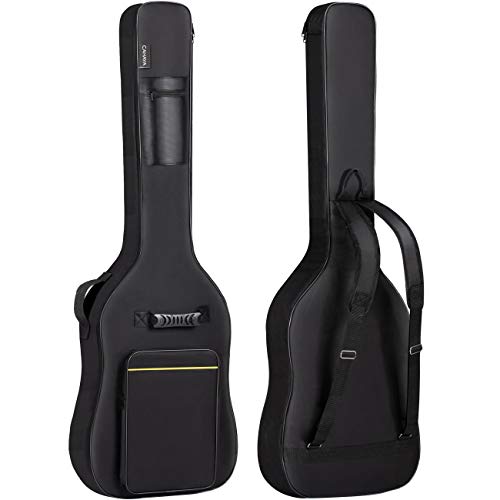
This gig bag works best for bassists who need lightweight, reliable protection for their Precision or Jazz Bass without the bulk of a hard case. I use the CAHAYA CY0222, and it handles daily commutes with ease, thanks to its 8mm padding, rubber shockproof base, and wear-resistant zipper. It fits my 46-inch bass snugly, with room in the front pocket for my tablet, cables, and picks. The backpack straps relieve shoulder strain, while the side handles offer quick grab-and-go. At just 0.75 kg, it’s light but tough. I hang it on the wall using the back loop-saves space. Compare your bass dimensions first, though; it’s built for electrics, not acoustics.
Best For: Bassists seeking a lightweight, durable gig bag for daily transport of electric bass guitars like Precision or Jazz Bass models.
Pros:
- Lightweight at only 0.75 kg with 8mm padding and a rubber shockproof base for reliable protection
- Offers versatile carrying options with adjustable backpack straps and side web handles
- Includes a large front pocket for tablets and accessories plus a wall-hang loop for space-saving storage
Cons:
- Not suitable for acoustic bass guitars due to specific electric bass sizing
- Snug fit requires precise measurement comparison before purchase
- Limited padding thickness (8mm) may not suffice for heavy impact or long-term storage in rough conditions
Factors to Consider When Choosing a Precision Bass
You’ll want to take into account body construction, neck profile, pickup configuration, hardware quality, and aesthetic design when picking your Precision Bass, since these directly affect tone, balance, and playability. A solid alder body delivers that classic bright thump, while a “C”-shaped neck fits comfortably in most hands and works well for both fast runs and thumb-rest grooving. Active electronics, like a 2-band EQ paired with high-output split-coil pickups, give you the punch needed for modern mixes, and chrome hardware with sealed tuners keeps your tuning stable during long sessions or gigs.
Body Construction
Though tone often takes center stage, the body construction of a Precision Bass shapes both sound and comfort in ways you’ll feel and hear immediately. You’re likely choosing between alder, poplar, or ash-alder offers balanced resonance, ash delivers brightness and punch, while poplar gives warmth at a lighter weight. Solid-body designs cut feedback and boost sustain, ideal for live gigs and studio tracking. Look for contoured edges, especially forearm contours, which let your strumming arm settle naturally during long sets or recording sessions. Lightweight builds reduce fatigue, essential for stage use. Internally, routed chambers house electronics precisely, affecting pickup alignment and signal integrity. A well-crafted body doesn’t just look good-it balances tone, weight, and ergonomics so you stay comfortable and in control, note after note.
Neck Profile
When you’re locking in groove-heavy lines or traversing fast runs up and down the neck, the shape of the Precision Bass’s neck plays a central role in how your fingers respond, stay comfortable, and maintain accuracy. You’ll want to take into account the neck profile-its cross-sectional shape and thickness-since it directly impacts playability. A “C-shaped” profile is common, balanced, and works well for most hand sizes. If you’ve got bigger hands or love vintage vibes, try a “U-shaped” neck-it’s rounder, meatier, and fills the palm. For speed and easier reach, a “Slim C” feels quick and flat under your thumb. And don’t overlook hand-rolled fingerboard edges; they soften the fretboard corners, reducing drag and boosting comfort during long sessions. Test each shape in real playing, because your grip affects tone, timing, and endurance. Choose what fits your hand, not the hype.
Pickup Configuration
While the classic split-coil pickup remains the heart of the Precision Bass’s voice, your tonal options expand dramatically depending on configuration, magnet type, and electronics layout. You get a punchy, full-bodied tone with built-in hum reduction thanks to the split-coil design. If you want more versatility, go for a PJ setup-pairing that fat P-Bass low end with a brighter J-Bass bridge pickup for tighter attack and enhanced clarity. Alnico magnets deliver warm, dynamic response with a vintage midrange snap testers love. Position matters: neck pickups sound smooth and round, while bridge pickups add brightness and definition. With individual volume and tone controls, you can dial in each pickup precisely, blending outputs for everything from deep gospel tones to modern, aggressive slap lines-all without losing punch or clarity.
Hardware Quality
You’ll want hardware that holds up under heavy use and stays dialled in gig after gig, so look for precision-machined tuning machines-like vintage-style open-gear models with a 20:1 gear ratio-because they give you fine control and minimize string slippage over time; pair those with a solid bridge featuring individually adjustable saddles to nail intonation and boost sustain through better vibration transfer. Opt for nickel-plated finishes-they resist corrosion and keep hardware looking sharp after months of regular playing. A securely mounted output jack, pre-wired with tight solder joints, cuts signal loss and stops mid-set dropouts. Factories that pre-drill and route mounting points precisely guarantee the bridge and neck align perfectly, balancing string tension and improving overall playability. These details aren’t flashy, but they’re what let you stay in tune, lean into loud stages, and trust your bass night after night.
Aesthetic Design
A well-crafted aesthetic design doesn’t just turn heads-it shapes your playing experience and reflects your musical identity. You want a finish that feels right under your arm and fingertips, whether it’s smooth gloss, satin, or worn nitrocellulose lacquer that ages beautifully. Pick your color boldly: go for classic solid black, vintage sunburst, or custom graphics that match your style. Metallic or mirrored pickguards add flash, especially when paired with chrome or gold hardware. Fretboard inlays-simple dots, sleek blocks, or custom shapes-help you navigate while defining visual character. Body contours like forearm bevels aren’t just for comfort-they give your bass a sleek, performance-ready look. Every detail, from finish sheen to guard material, contributes to how the instrument looks on stage, feels during long sets, and expresses who you are as a player.
Warranty Coverage
You’ve seen how finish sheen, body contours, and hardware finishes shape a Precision Bass’s look and feel, but protection beneath the surface matters just as much. You’ll want a warranty that covers defects in materials and workmanship, ranging from 1 year limited to lifetime, depending on the brand. Register your bass right away-many warranties require it. Watch out: damage from drops, mods, or normal wear usually isn’t covered. Some makers extend protection, offering 2-year terms on necks or bodies, especially if parts are modular. Keep receipts and follow rules-pro installation might be needed to keep coverage valid. Pair this with a retailer’s 30-day return policy for real-world testing. That window lets you check electronics, frets, and setup under actual use. Smart buyers use both warranties and return periods like safety nets.
Frequently Asked Questions
What Pickup Configuration Do Precision Bass Guitars Typically Have?
You typically see a split-coil single pickup design right at the middle of precision bass guitars, and that’s what gives them that punchy, growling tone you love. You get 9k ohm output, clear mids, and tight lows, even when you push your amp hard. Testers notice less hum than vintage models, thanks to modern shielding, and you’ll feel solid sustain during long sessions. The design cancels noise effectively, too, so you stay clean in live or studio settings.
Are Precision Basses Suitable for Playing Jazz Music?
Yes, you can absolutely play jazz on a Precision bass, especially if you’re after that warm, solid midrange punch. Modern P-Basses with split-coil pickups deliver clear, balanced tone at 7kΩ DCR, perfect for walking lines. Pair one with a tube preamp, and you’ll get the smoothness jazz demands. Testers love how it cuts through without harshness, especially fingerstyle. Don’t overlook a well-setup P-Bass-it’s versatile, reliable, and studio-ready.
Can Left-Handed Players Easily Find Precision Bass Models?
You can find left-handed Precision Bass models, though options are more limited than right-handed ones. Fender offers select lefty P-Basses through their Custom Shop and approved dealer network, usually with a 3–6 month lead time. Squier’s Vintage Modified line occasionally includes left-hand models at lower price points. Active players confirm string spacing and pickup alignment stay true, ensuring balanced tone, and many report excellent comfort and reliability gigging or tracking in studios.
How Does String Height Affect Precision Bass Playability?
You feel string height, or action, directly under your fingers-too high, and you’ll strain to press down, slowing your playing; too low, and you’ll get annoying buzz. Most Precision Basses ship with action around 7/64″ on the low E, 6/64″ on the high G at the 12th fret, a sweet spot balancing speed and tone. Testers confirm proper setup cuts fatigue, improves clarity, and keeps intonation stable, especially when switching strings or tuning down.
Do Precision Bass Guitars Require Specific Amplifiers for Best Tone?
You don’t need special amps, but you’ll get the best tone using a bass rig with solid headroom and a flat EQ response. Run your Precision through a 300-watt combo with a 15-inch speaker and active EQ, like a Gallien-Krueger 415RB, and you’ll keep clarity whether you’re fingerpicking in a studio or slapping live.