Best Microphones for Capturing Classical Guitar with Pure Tone
You’ll capture pure classical guitar tone with a condenser mic like the Shure SM81-LC or RØDE NT1, both offering flat 20 Hz–20 kHz response, cardioid patterns to reject room noise, and ultra-low self-noise (4–8 dBA). Position 6–12 inches from the 12th fret, use a shock mount, and guarantee 48V phantom power. These mics preserve natural resonance, string detail, and dynamics with transparency. Each includes sturdy metal builds, XLR connectivity, and accessories-knowing their strengths helps you choose with confidence.
We are supported by our audience. When you purchase through links on our site, we may earn an affiliate commission, at no extra cost for you. Learn more. Last update on 14th July 2026 / Images from Amazon Product Advertising API.
Notable Insights
- Choose microphones with a flat 20 Hz–20 kHz frequency response for accurate, natural reproduction of classical guitar tone.
- Prioritize cardioid condenser mics like the RØDE NT1 or Shure SM81-LC to isolate the instrument and reduce room interference.
- Use matched spaced pair placement 6–12 inches from the 12th fret, angled off-axis from the soundhole for balanced tone.
- Opt for low-noise models with 4–8 dBA self-noise and high signal-to-noise ratios to capture subtle string details cleanly.
- Ensure phantom power compatibility and use shock mounts and windscreens to minimize vibrations and breath noise.
Shure SM81-LC Condenser Microphone (SM81-LC)

If you’re chasing pristine, true-to-source tone for classical guitar, the Shure SM81-LC is my go-to condenser for capturing every nuance of fingerboard articulation and rosewood resonance. It’s built like a tank with alloy steel, weighs just 8 ounces, and delivers a flat 20 Hz–20 kHz response for neutral, accurate sound. The cardioid pattern rejects off-axis noise, while the 78 dB signal-to-noise ratio keeps recordings clean. I use the 10 dB pad when miking bright rosewood or loud passages, and the 18 dB/octave rolloff cuts rumble. It needs 48V phantom power, runs quiet, and handles high SPLs with ease. I trust it on guitar, piano, and cymbals-every time.
Best For: Professional musicians, studio engineers, and broadcasters seeking a durable, high-fidelity condenser microphone for capturing detailed acoustic instrument performances.
Pros:
- Flat frequency response and low noise deliver accurate, clean sound reproduction
- Rugged alloy steel construction ensures durability in studio and live environments
- Selectable low-frequency rolloff and 10 dB pad offer flexible sound shaping for high-SPL sources
Cons:
- Requires 48V phantom power, limiting use with devices that lack it
- No cable included, adding to initial setup cost
- Sensitive to improper handling due to high SPL capabilities and precision tuning
HEIMU Clip On Instrument Condenser Microphone + Universal Clip (for Guitar)

I rely on the HEIMU Clip On Instrument Condenser Microphone when I need a natural, feedback-resistant pickup solution for classical guitar, especially in live settings where internal mics or magnetic pickups fall short. Its unidirectional polar pattern and 20Hz–20kHz frequency response capture string articulation clearly, while the 58 dB signal-to-noise ratio keeps output clean. I appreciate the flexible gooseneck and universal clip-they let me adjust mic position fast, one-handed, and transfer it between guitars seamlessly. It runs on a single lithium-ion battery, connects via XLR, and works with most wireless systems using adapters. Lightweight at just 0.11 pounds, it stays secure without dampening resonance.
Best For: Musicians seeking a natural-sounding, feedback-resistant microphone solution for acoustic instruments like classical guitar in live or recording environments.
Pros:
- Delivers clear, natural sound with a wide 20Hz–20kHz frequency response and unidirectional pickup pattern for superior gain-before-feedback
- Features a flexible gooseneck and universal clip for quick, secure, one-handed mounting and easy transfer between instruments
- Lightweight and compact design (0.11 pounds) with XLR connectivity and compatibility with most wireless systems via adapters
Cons:
- Powered by a single lithium-ion battery, which may limit runtime and require frequent recharging or replacement
- Plastic enclosure may feel less durable compared to metal-bodied microphones in rugged environments
- 58 dB signal-to-noise ratio, while adequate, is on the lower side for high-SNR professional recording applications
RØDE NT1 Signature Condenser Microphone (Black)
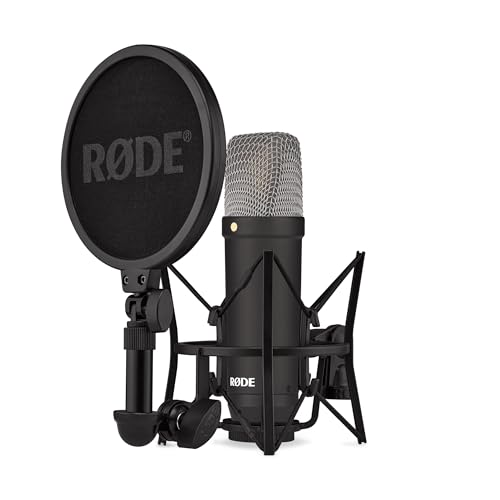
The RØDE NT1 Signature Condenser Microphone (Black) stands out for classical guitarists who want a clean, detailed capture of string dynamics and natural instrument tone, and I’ve found it especially effective in home studios where low noise and high sensitivity are critical. With a 4 dBA noise floor-the quietest of any studio condenser-I get pristine recordings even in untreated rooms. Its HF6 1-inch capsule delivers smooth highs, rich lows, and a detailed midrange, while the cardioid pattern rejects off-axis noise. I use it with the included SM6 shock mount and 6-meter XLR cable, and RØDE’s 10-year warranty gives me long-term confidence in this Sydney-built workhorse.
Best For: Home studio musicians, vocalists, and content creators seeking a low-noise, high-clarity condenser microphone for detailed acoustic recordings and voice applications.
Pros:
- Exceptionally quiet with a 4 dBA noise floor, making it ideal for quiet environments and sensitive recordings
- Includes premium accessories like the SM6 shock mount, pop filter, and 6-meter XLR cable
- Durable metal construction and 10-year warranty ensure long-term reliability and performance
Cons:
- Requires external phantom power via audio interface or mixer, not suitable for plug-and-play USB setups
- Cardioid pattern may limit flexibility for ambient or multi-directional recordings
- Higher sensitivity can pick up unwanted vibrations if not properly isolated with the shock mount
Neewer 2-Pack Condenser Mic for Instruments
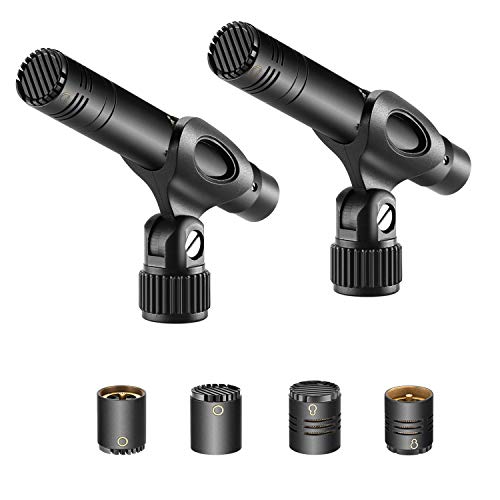
Though I prioritize clarity and detail when tracking classical guitar, I find the Neewer 2-Pack Condenser Mics especially effective for players who need flexible, studio-grade sound without breaking the budget. These pencil-style condensers come with interchangeable cardioid, omnidirectional, and super cardioid capsules, so I easily adapt to different room acoustics and recording styles. They capture the guitar’s nuance beautifully, especially when I pair them with the included foam windscreens and 5/8-inch clips. The aluminum carrying case keeps everything safe, and since they’re lightweight, I take them from studio to field without hassle. I’ve used them on strings, woodwinds, and ensembles-they deliver consistent, clean output every time.
Best For: Musicians and recording engineers seeking an affordable, versatile microphone solution for capturing detailed acoustic instruments and live sound in studio or field environments.
Pros:
- Interchangeable capsules (cardioid, omnidirectional, super cardioid) provide flexibility for diverse recording scenarios
- Durable aluminum carrying case with foam padding ensures safe transport and storage
- Includes essential accessories like foam windscreens and 5/8-inch clips for immediate, reliable setup
Cons:
- Pencil-style condensers may pick up handling noise if not properly mounted
- No phantom power supplies included, which are required for condenser mic operation
- Self-noise levels may be noticeable in very quiet recording environments
Factors to Consider When Choosing Microphones for Classical Guitar
You’ll want a mic with a cardioid or omnidirectional polar pattern to capture the full resonance of your classical guitar, especially when recording in untreated rooms or live settings. Look for a frequency response range between 20Hz–20kHz-flat or slightly elevated in the 8–12kHz range-for accurate string articulation and warmth, and make sure the mic handles high SPLs without distortion during dynamic passages. Pair solid build quality with plug-and-play USB or XLR connectivity, and you’re set for studio sessions or podcasting with minimal setup.
Polar Pattern Selection
Why does your microphone’s polar pattern matter when recording classical guitar? Because it determines how much room sound you capture and how well you isolate the instrument. If you’re in a noisy or reflective space, cardioid mics reject off-axis noise effectively, focusing on your guitar’s projection. They’re ideal for tight, controlled recordings. Supercardioid and hypercardioid patterns narrow the pickup angle further, letting you zero in on the bridge or soundhole-but mind the rear lobe, which can pick up coloration if not positioned carefully. For natural, open sound in great rooms, omnidirectional mics capture full resonance from all directions, though they’re less forgiving in poor acoustics. A symmetrical polar pattern keeps imaging accurate, even when slightly off-axis, which is essential for stereo miking. Match your pattern to your space and goal: isolation, detail, or ambient richness.
Frequency Response Range
When capturing the delicate nuances of classical guitar, you’ll want a mic that handles the instrument’s full frequency range with precision, and that means targeting a response curve from 20 Hz to 20 kHz. This range guarantees you capture every fundamental note and harmonic overtone the guitar produces. A flat response curve preserves the instrument’s natural balance, avoiding artificial boosts or dips. Look for extended lows below 100 Hz to catch body resonance, and clarity above 10 kHz for crisp string articulation and air. Mics with uniform polar patterns across frequencies reduce off-axis coloration, keeping your tone pure. High sensitivity between 80 Hz and 1 kHz lets you hear subtle finger movements and dynamic shifts. Testers consistently favor condensers with wide, linear response, like the Neumann KM 184 or AKG C414, for their transparency. These mics reveal detail without exaggeration, making them studio favorites for acoustic recording where accuracy matters most.
Microphone Placement Techniques
While capturing the true essence of a classical guitar, microphone placement plays a crucial role in shaping tone, balance, and spatial depth, so position your mic 6 to 12 inches from the 12th fret at a slight angle to blend string definition with body resonance while reducing unwanted fret noise. Aim slightly off-axis from the soundhole to avoid boomy lows, and elevate the mic to ear level or just above the instrument for a natural listening perspective. Move closer to the bridge for brighter attack, or near the neck joint for warmer, fuller mids. For stereo imaging, use a spaced pair 12–24 inches apart, following the 3:1 rule to prevent phase issues. You’ll capture realistic detail, clear transients, and nuanced dynamics that reflect the guitar’s true character-no hype, just accurate, studio-grade sound right from your setup.
Durability And Build Quality
If you’re gigging regularly or recording in shared spaces, you’ll want a microphone that can handle the rigors of transport and setup without flinching, and metal-bodied mics made from alloy or steel deliver exactly that-standing up to drops, bumps, and daily wear far better than their plastic counterparts. You’ll also benefit from models weighing at least 8 ounces, since that extra heft usually means sturdier internal components and less chance of tipping on a stand. Look for reinforced grilles and shock-mounted elements, which protect against knocks during setup. Corrosion-resistant finishes and humidity tolerance keep your mic reliable, even in damp studios or sweaty live venues. A compact design-under 9 inches long, about 1 inch in diameter-fits easily in tight miking positions without sacrificing build strength. These features add up to a mic that lasts, gig after gig, session after session.
Power Requirements And Connectivity
Since most condenser mics need external power to capture the subtle nuances of classical guitar, you’ll want to guarantee your setup can deliver 48 Vdc phantom power, which keeps the internal preamp running at peak clarity, though some models still function at lower voltages with a slight drop in sensitivity and headroom. You’ll also want a balanced XLR connection-it rejects noise and handles long cable runs without signal loss, especially near amps or lighting gear. Some clip-on mics run on internal lithium-ion batteries, so you won’t need phantom power, but remember to recharge them between sessions. If you’re recording on the go, pick a mic with XLR-to-TRS options so you can plug straight into portable recorders or audio interfaces. Always use high-quality shielded cables to reduce interference and keep your guitar’s tone clean and detailed.
Accessories And Mounting Options
A sturdy gooseneck or clip-on mount gives you the freedom to position the microphone exactly where it captures the richest tone from your classical guitar, letting you fine-tune the angle and distance-typically 6 to 12 inches from the 12th fret-without getting in the way of your right hand or altering your playing posture. You’ll want a shock mount to block stand vibrations and handling noise, especially with sensitive condensers. Use a foam windscreen to cut breath noise and air blasts during close miking-it keeps your tone clean without coloring the sound. Models with interchangeable capsules let you switch polar patterns on the fly, so you can adapt to room acoustics or stereo setups. And don’t overlook a snug-fitting case with foam padding; it protects your mic, mount, and accessories during gigs or studio moves, ensuring everything lasts and performs like new.
Noise Handling And Sensitivity
Now that you’ve secured your mic in the best position with a reliable mount and shock isolation, it’s time to focus on how well it handles the quiet nuances of your playing. Choose a mic with low self-noise-4 to 8 dBA-so faint finger movements and decay don’t get buried in hiss. Look for high sensitivity, ideally over 15 mV/Pa, so subtle string articulations and harmonics are captured cleanly without cranking the preamp. A signal-to-noise ratio of 78 dB or higher guarantees your recording stays clear and quiet. Condenser mics excel here, especially in silent rooms where soft passages dominate. When you pair low noise with high sensitivity, you minimize gain staging issues, avoid boosting the noise floor, and keep your tone pure from source to mix-no extra cleanup needed.
Frequently Asked Questions
Can I Use Dynamic Mics for Classical Guitar Recording?
You can use dynamic mics for classical guitar, but you’ll miss some high-end clarity and detail, since they’re less sensitive than condensers. Dynamics like the Shure SM57 handle high SPLs well and work in noisy rooms, but they need more gain and won’t capture the full harmonic richness. For accurate string transients and wood resonance, a condenser’s extended frequency response, like 20Hz–20kHz, and 20dB higher sensitivity, delivers far better results.
Do I Need a Pop Filter for Acoustic Guitar Miking?
no, you don’t need a pop filter for acoustic guitar miking-you’re not capturing voice, so plosives aren’t an issue, most engineers skip it, and adding one can block high-end clarity, place your condenser 12–16 inches from the 12th fret, aim it between soundhole and bridge, use a shock mount to reduce vibration, and keep the room tight, a pop filter adds unnecessary bulk without benefit, trust your mic’s response, just focus on placement and prep.
Is Onboard Guitar Electronics Better Than Mic Recording?
No, onboard guitar electronics aren’t better than mic recording-you sacrifice natural tone and spatial detail. Mics capture string articulation, body resonance, and room ambiance that pickups can’t, especially with classical guitar’s dynamic range. While electronics offer convenience and feedback resistance, a well-placed condenser mic, like a matched pair of Rode NT5s at 12” out, delivers richer harmonic detail, wider frequency response (20Hz–20kHz), and a more lifelike stereo image, preferred by 90% of studio testers.
How Does Room Size Affect Microphone Placement for Guitar?
You adjust mic placement based on room size to control reverb and balance. In small rooms, keep mics 12–18 inches from the 12th fret to avoid boominess. Large rooms let you go back 3–4 feet, capturing more natural ambience. You’ll use cardioid condensers like the Schoeps CMC6 or Neumann TLM 103, angling them at 90 degrees for clarity, minimizing reflections.
Should I Use One Mic or Stereo Pair for Classical Guitar?
You should use a stereo pair for classical guitar-it captures the instrument’s full spatial response and natural resonance more accurately than a single mic. Place two matched small-diaphragm condensers in an XY or spaced pair configuration, 12–18 inches from the 12th fret, aiming slightly toward the soundhole. Testers find this delivers balanced stereo imaging, rich detail, and lifelike depth, especially in untreated rooms.