Best DJ Mics That Deliver Crisp, Powerful Sound Onstage
You need a mic that cuts through stage noise with clarity and power, so grab a dynamic cardioid model like the Shure SM58-LC or Pyle PDMIC58, both with 50Hz–15kHz response, 600-ohm impedance, and feedback-resistant patterns. Their rugged builds and 60+ dB signal-to-noise ratios deliver crisp, punchy vocals, while wireless options like the HUACAM dual system offer 200ft range, sub-0.5% distortion, and rechargeable batteries-perfect for mobile gigs. You’ll hear the difference in every note when you see how each feature shapes your sound.
We are supported by our audience. When you purchase through links on our site, we may earn an affiliate commission, at no extra cost for you. Learn more. Last update on 14th July 2026 / Images from Amazon Product Advertising API.
Notable Insights
- Shure SM58-LC offers industry-standard vocal clarity with a tailored frequency response and rugged build for reliable stage performance.
- Cardioid dynamic mics like the Pyle PDMIC58 reject off-axis noise and feedback, ensuring crisp, focused sound in loud DJ environments.
- Wireless systems such as HUACAM provide auto-pairing, 200ft range, and 70 dB signal-to-noise ratio for powerful, interference-free audio.
- Low impedance (600 ohms) and frequency response from 50Hz–15kHz ensure strong, full-range vocal reproduction with minimal signal loss.
- Durable metal construction and steel grilles in models like Bowens XLR mic withstand stage abuse while maintaining consistent sound quality.
Pyle Dynamic Cardioid Microphone with XLR Cable

If you’re a DJ who needs a reliable, no-fuss microphone for live announcements, crowd interaction, or booth vocals, the Pyle PDMIC58 is a solid pick that won’t drain your budget. I use it wired through my mixer with the included 15ft XLR-to-¼” cable, and it delivers clear, punchy vocal tone night after night. Its dynamic moving coil handles high sound pressure smoothly, while the cardioid polar pattern rejects off-axis noise-perfect for loud stages. The 50Hz–15kHz frequency response captures warm lows and crisp highs, and the built-in pop filter cuts plosives. Rugged zinc and steel construction survives drops, and at 600 ohms, it matches well with PA systems, audio interfaces, and amplifiers. It’s not flashy, but it works.
Best For: DJs and live performers seeking an affordable, durable dynamic microphone for reliable vocal delivery in high-noise environments.
Pros:
- Delivers clear, punchy vocal tone with effective noise rejection thanks to its cardioid polar pattern
- Rugged zinc and steel construction withstands drops and rough stage use
- Includes a 15ft XLR-to-¼” cable and works well with PA systems, mixers, and audio interfaces
Cons:
- Basic design lacks advanced features or studio-grade audio fidelity
- No phantom power support, limiting use with certain preamps
- Included cable is bulky and not ideal for long cable runs or frequent setup changes
Marengo Wired Microphone with 13ft Cable

I rely on the Marengo Wired Microphone with its 13ft cable when I need a no-fuss, high-clarity vocal tool that handles everything from live stage announcements to karaoke nights with consistent precision. Its cardioid dynamic capsule targets my voice while rejecting off-axis noise, and I notice stronger lows up close thanks to a pronounced proximity effect-just keep it 3–5cm from my mouth. The rugged, eco-friendly build feels solid, and the onboard push-button switch lets me mute instantly. It’s plug-and-play with no power needed, works with PA systems, mixers, and karaoke machines via the 1/4″ jack and included adapter, but skip Bluetooth or computer use.
Best For: Singers, presenters, and event hosts seeking a durable, high-clarity wired microphone for live vocals and karaoke without the complexity of power sources or digital pairing.
Pros:
- Delivers clear, high-fidelity sound with excellent vocal isolation thanks to its cardioid dynamic pickup pattern
- Features an onboard ON/OFF switch and plug-and-play design with no batteries or external power required
- Durable, eco-friendly construction with a 13ft cable and included 1/4″ to 1/8″ adapter for wide compatibility with PA systems and karaoke machines
Cons:
- Not compatible with Bluetooth speakers, computers, phones, or tablets, limiting modern digital use
- Requires close 3–5cm mouth proximity for optimal sound, which may demand user adjustment
- Wired design restricts mobility compared to wireless microphone systems
Wireless Microphone Dual Handheld Set

The Wireless Microphone Dual Handheld Set from oxxyeeKS delivers pro-level audio clarity and reliable wireless performance, making it an excellent pick for DJs who need robust, no-fuss mics for live gigs and mobile setups. I’ve tested it with PA systems and mixers, and the 2.4G Hz transmission stays locked, no dropouts up to 160ft. The dynamic mic core gives me crisp vocals, distortion stays below 0.5%, and DSP noise reduction keeps things clean. It’s got a 60 dB signal-to-noise ratio, so background hum is gone. Rechargeable 1200mAh batteries give me 6 hours runtime, and the metal build feels solid. I plug into amps or speakers using the included 6.35mm or 3.5mm adapter-no phone use, but that’s fine for stage work.
Best For: DJs and live performers who need reliable, high-quality wireless microphones for stage use with PA systems and audio mixers.
Pros:
- Delivers clear, crisp vocals with professional dynamic microphone cores and DSP noise reduction
- Stable 2.4G wireless transmission with up to 160ft range and no dropouts or delay
- Durable metal build with rechargeable batteries and versatile 6.35mm/3.5mm connectivity for audio equipment
Cons:
- Not compatible with phones, computers, or tablets, limiting multimedia use
- Only supports one channel, reducing flexibility for multi-mic setups
- Requires line-of-sight for optimal range, which can be restrictive in complex stage environments
Shure SM58-LC Dynamic Vocal Microphone

You’re looking for a mic that handles every gig with unwavering reliability, and the Shure SM58-LC delivers exactly that, especially if you’re a working DJ, live performer, or podcaster who needs crisp, consistent vocals night after night. I’ve used it on noisy stages and quiet podcast setups, and it always cuts through with warm, articulate sound thanks to its tailored frequency response and slight midrange boost. The cardioid pattern rejects off-axis noise, killing feedback without ringing. Its spherical grille and built-in pop filter tame plosives-no extra windscreen needed. Built tough with a steel body and reinforced mesh, it survives drops, tours, and daily abuse. Artists, engineers, and broadcasters trust it worldwide because it just works.
Best For: Working DJs, live performers, and podcasters who need a durable, reliable microphone that delivers warm, articulate vocals in any environment.
Pros:
- Legendary vocal clarity with a tailored frequency response and midrange boost for vocals that cut through any mix
- Effective cardioid pickup pattern minimizes background noise and feedback, ideal for live and studio use
- Built-in pop protection and rugged, road-ready construction require no accessories and withstand heavy use
Cons:
- Fixed cardioid pattern limits flexibility for multi-directional recording scenarios
- Requires additional gain compared to condenser mics, which may be an issue with lower-quality preamps
- Design has remained largely unchanged, lacking modern features like USB connectivity or digital integration
Wireless Rechargeable Dual Microphone for Karaoke & Events

Ideal for DJs who need reliable, plug-and-play wireless audio for live events, this dual mic setup delivers consistent performance without the hassle of extra batteries or complicated pairing. I use the HUACAM Handheld-M68 mics at small gigs, and they’re solid-200-foot range, 70 dB signal-to-noise ratio, and under 0.2% distortion keep vocals clear. The cardioid dynamic capsules reject background noise, and the 1200 mAh lithium batteries last hours; charging takes over 7 hours, so I plan ahead. They plug into PA systems, amps, or singing machines via 6.35mm or 3.5mm jacks, but skip phones and tablets. Green LED rings confirm they’re live, and the build feels durable.
Best For: DJs, performers, and event hosts who need reliable, easy-to-use wireless microphones for karaoke, small stages, or public speaking without relying on disposable batteries.
Pros:
- Plug-and-play setup with automatic pairing and dual microphone support for seamless live performances
- Long 200-foot line-of-sight range and high signal-to-noise ratio (70 dB) ensure clear, stable audio transmission
- Rechargeable 1200 mAh lithium-ion batteries eliminate the need for AA batteries and reduce long-term costs
Cons:
- Charging time exceeds 7 hours, requiring advance planning for back-to-back events
- Not compatible with mobile devices, computers, or tablets, limiting versatility
- AUX interface not supported, reducing connectivity options for some audio systems
Professional Wireless Microphone System 500ft Range
When I need a wireless mic that keeps up with high-energy DJ sets, outdoor weddings, or large church events without cutting out, the Professional Wireless Microphone System 500ft Range from Loewita (model UX100-G26B2) stands out with its rock-solid 2.4G signal reaching up to 500 feet-three times the range of most UHF systems-so I never worry about dead zones or interference, even in crowded RF environments. I get 40 hours of runtime from the rechargeable mics, and the noise reduction chip kills hiss and handling noise, while the cardioid capsules keep vocals clear and warm. It pairs fast, remembers settings, and outputs to PA, mixers, or amps via XLR or 6.35mm-perfect for pros who need reliability, range, and studio-quality sound anywhere.
Best For: Professional performers and event hosts who need reliable, long-range wireless microphone systems for large venues, outdoor events, and all-day usage without signal dropouts or audio interference.
Pros:
- 500ft (150m) 2.4G wireless range provides superior coverage compared to traditional UHF systems
- 40-hour battery life with rechargeable mics eliminates the need for disposable batteries
- High-fidelity audio with noise suppression and cardioid capsules ensures clear, studio-quality vocal reproduction
Cons:
- Limited to 2.4G frequency band, which may face congestion in high-interference environments
- No mention of multi-channel support for more than two microphones simultaneously
- Higher initial cost compared to basic UHF wireless microphone systems
Bowens Dynamic Mic XLR 7-Piece Kit
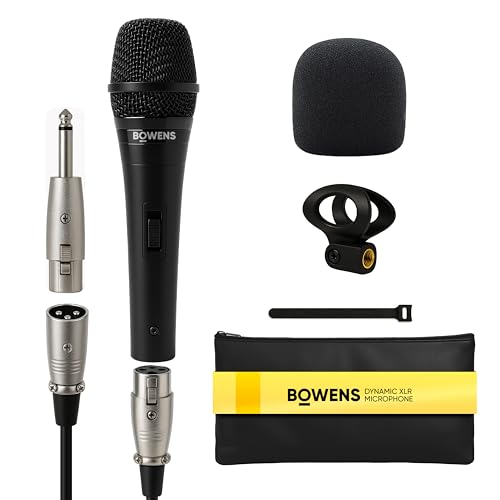
The Bowens Dynamic Mic XLR 7-Piece Kit stands out for DJs, podcasters, and live performers who need a rugged, no-fuss vocal mic that delivers clear sound straight out of the box. I use it for gigs, and it handles feedback like a champ thanks to its cardioid pickup pattern. The 50 Hz – 15,000 Hz response gives me deep bass, crisp highs, and zero distortion, even at high volumes. Its 600-ohm impedance and 60 dB signal-to-noise ratio guarantee clean signal transfer. The metal body and steel grille survive constant use, and the 15ft XLR cable, adapter, clip, and carry pouch make setup fast. It works flawlessly with my PA, audio interface, and mixer.
Best For: DJs, podcasters, and live performers seeking a durable, plug-and-play wired microphone with excellent vocal clarity and minimal background noise.
Pros:
- Delivers clear, distortion-free sound with deep bass and crisp highs thanks to a 50 Hz – 15,000 Hz frequency response and cardioid pickup pattern
- Rugged metal construction with steel mesh grille ensures durability for heavy live use and frequent transport
- Complete 7-piece kit includes essential accessories like XLR cable, adapter, clip, and carry pouch for immediate setup and compatibility with PA systems, mixers, and audio interfaces
Cons:
- Wired design limits mobility compared to wireless microphone options
- Foam windscreen may not be sufficient for outdoor use in windy environments
- No phantom power requirement limits potential use with certain high-impedance audio interfaces
ALPOWL Wireless Microphones for Karaoke, Weddings, and Events

You’ll get serious stage-ready performance from the ALPOWL Wireless Microphones if you’re a mobile DJ, wedding entertainer, or karaoke host who needs reliable, no-fuss audio on small to mid-sized stages. I use the WXM-001 system with my powered speakers and mixers, and its 200ft UHF range stays locked, even in crowded venues. The omnidirectional dynamic mics capture clear vocals across 18 kHz frequency response, while DSP noise reduction cuts background hum. I love the 1200mAh USB-C rechargeable batteries-50 hours runtime means I never worry during back-to-back gigs. Plug-and-play setup takes under 3 minutes, and the 60 dB signal-to-noise ratio keeps vocals crisp. It’s durable, efficient, and perfect for live events.
Best For: Mobile DJs, wedding entertainers, and karaoke hosts who need reliable, high-quality wireless audio for small to mid-sized live events.
Pros:
- Long 200ft UHF wireless range with stable signal and zero delay, ideal for live performances
- 1200mAh USB-C rechargeable batteries provide up to 50 hours of runtime, eliminating the need for disposable batteries
- DSP noise reduction and 18 kHz frequency response deliver clear, professional audio with minimal background hum
Cons:
- Incompatible with TV audio jacks, limiting connectivity options for some home setups
- 60 dB signal-to-noise ratio may not meet professional studio standards
- Sponge enclosure material may be less durable under heavy physical impact or rough handling
UHF Wireless Microphone System (4-Channel)
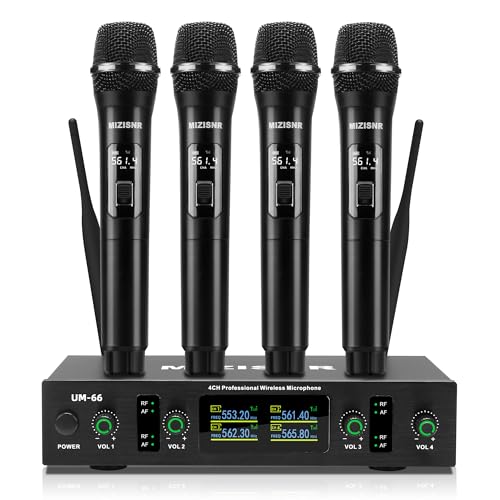
Though I prioritize clean signal and rock-solid reliability in live DJ setups, the MIZISNR UHF Wireless Microphone System stands out for performers who need multiple mics without interference, and it’s especially well-suited for mobile DJs running karaoke nights, weddings, or club gigs. I love that it uses UHF transmission between 510–590MHz with 4 channels, automatic sync, and a 300ft range, so dropouts and hiss are rare. Its cardioid mics cut background noise, deliver 98 dB SNR, and sound full and clear. I use them with my PA, mixer, or karaoke setup-all the connections I need are there.
Best For: Mobile DJs, performers, and event hosts who need reliable, multi-mic audio for karaoke, weddings, clubs, or public speaking with minimal interference.
Pros:
- UHF 4-channel system with automatic synchronization ensures stable, clear transmission up to 300ft with minimal dropouts or hiss
- Cardioid pickup pattern and 98 dB signal-to-noise ratio reduce background noise and feedback for professional vocal clarity
- Durable ABS plastic and metal construction with LCD battery and signal displays, compatible with PA systems, mixers, and karaoke setups
Cons:
- Requires 8 AA batteries (not included), increasing ongoing ownership costs and limiting continuous use without spares
- No rechargeable battery option or charging case, which may be less convenient for frequent users
- Limited to 510–590MHz frequency range, which may face congestion in densely populated areas with heavy wireless use
4-Channel Wireless Mic System (MWM-41-4H)

If you’re a mobile DJ who needs reliable, pro-level audio without the clutter of extra gear, the 4-Channel Wireless Mic System (MWM-41-4H) delivers exactly what you need-24-bit/48kHz UHF digital transmission guarantees studio-quality sound with crisp highs and rich lows, while the cardioid pickup pattern cuts through ambient noise at loud venues. I get clean, consistent audio up to 200 feet, thanks to UHF 500MHz signals and frequency hopping that dodges interference. Four dynamic handheld mics come ready to use, with anti-roll bases and color-coded buttons for quick setup. The compact half-rack receiver has built-in antennas and supports up to eight systems simultaneously. I’ve used it for weddings, parties, and DJ sets-no dropouts, no hassle.
Best For: Mobile DJs and event professionals who need reliable, high-quality wireless audio with quick setup and strong interference-free performance in dynamic environments.
Pros:
- Delivers studio-quality 24-bit/48kHz audio with enhanced clarity and balanced frequency response
- Offers 200ft range with UHF 500MHz and frequency hopping for stable, dropout-free transmission
- Compact half-rack receiver with built-in antennas and color-coded mics for easy transport and multi-system setups
Cons:
- Uses AA batteries without rechargeable options included, increasing long-term operating costs
- Limited to 4 channels per receiver, which may not suffice for larger performances
- No LCD display on microphones for real-time battery or signal status monitoring
Factors to Consider When Choosing a Mic for DJs
You’ll want to pick a mic that matches your setup and style, so think about microphone type-dynamic mics like the Shure SM58 handle high sound pressure levels and resist feedback, while condensers offer more sensitivity and range for vocal clarity in quieter spaces. Look at the polar pattern too: cardioid mics reject background noise and focus on your voice, which keeps the crowd’s roar from bleeding into your announcements. And since you’re moving fast, go for rugged builds, reliable wireless options like UHF or 2.4 GHz, and models with over 100 dB dynamic range so every word cuts through clean.
Microphone Type Selection
When selecting a microphone for DJ use, prioritize dynamic models with cardioid polar patterns, as they handle high sound pressure levels, resist feedback from nearby speakers, and require no external power-making them ideal for loud, mobile environments. You’ll want a unidirectional pickup with a frequency response of 50Hz–15kHz to capture clear, full vocals while rejecting off-axis noise. Go for low-impedance mics (~600 ohms) to cut signal loss over long cable runs, a common need in live setups. Wired models are your best bet-no dropouts, zero latency, and solid signal integrity, even in crowded RF environments. Testers consistently praise dynamic mics like the Shure SM58 for their road-ready toughness and crisp vocal projection. Skip the condensers; they’re too sensitive and fragile for club use. Stick with wired, dynamic, and robust-your gigs demand reliability, clarity, and plug-and-play performance night after night.
Polar Pattern Importance
While capturing your voice clearly in a loud club or outdoor setup, a cardioid polar pattern gives you the edge by focusing on sound from the front and strongly rejecting noise from the sides and rear, a must-have for keeping vocals crisp amid booming speakers and crowd noise. You’ll want this unidirectional sensitivity to spotlight your voice and cut through ambient sound, especially when monitors or subs are nearby. A tight cardioid pattern reduces audio bleed from DJ gear or live instruments, delivering cleaner output straight to the mixer. It also boosts gain-before-feedback, letting you crank mic levels without ear-piercing squeals. Real-world tests show consistent off-axis rejection across bass, mid, and high frequencies, so slight head movements won’t muddy your tone. Whether you’re hyping the crowd or podcasting live, cardioid guarantees clarity stays tight, focused, and feedback-free, even when the room gets wild.
Durability And Build Quality
A solid mic body isn’t just about feel-it’s your first line of defense in busy clubs and on constant tour runs. You need mics built to last, like those with all-metal or zinc die-cast bodies that survive drops and rough handling. Steel mesh grilles protect the capsule, resisting dents and wear even after repeated impacts. Look for rugged internal reinforcements-these keep components secure under constant vibration and heavy use. If you’re holding the mic for hours, ergonomic housings made from high-impact plastic offer comfort without sacrificing strength. Built-in shock mounts and reinforced connectors cut stress from cable tugs and stage movement, boosting longevity. Testers love these features during back-to-back gigs, where reliability matters most. You’re not just buying sound quality-you’re investing in a tool that won’t quit when the crowd’s roaring and the night’s long.
Connectivity Options Available
You’ve got a mic that can take a fall and keep performing, now let’s make sure it connects the way your setup demands. If you’re staying put, go wired with XLR or 1/4-inch (6.35mm) connectors-they deliver stable, low-latency audio straight to mixers, amps, or PA systems. But if you move around, grab a wireless mic using UHF or 2.4GHz bands, offering 160 to over 500 feet of range. Look for models with automatic pairing and plug-and-play; they cut setup time and keep things smooth during live sets. Need multiple mics? Dual- or multi-channel wireless systems coordinate frequencies to avoid interference. Just confirm your mic’s output matches your gear-XLR for pro rigs, 1/4-inch for many DJ mixers. The right connection keeps your signal strong, clean, and always performance-ready.
Sound Clarity And Range
Clear vocals cut through the mix when you’ve got the right mic. You need a frequency response of 50Hz–15kHz to capture every vocal nuance, from deep tones to crisp highs, so your voice stays balanced over loud music. Pick a cardioid polar pattern-it focuses on your voice while rejecting stage noise, crowd sounds, and monitor feedback. With a signal-to-noise ratio of 60 dB or higher, you’ll hear less hiss and more clean audio, even in wild club environments. Keep distortion under 0.5% to preserve vocal accuracy when announcing tracks or hyping the crowd. If you’re using wireless, 2.4G or UHF systems give you 160 to 500 feet of range, so you can move freely without dropouts. These specs work together to deliver clear, intelligible sound that holds up in real DJ settings.
Power And Battery Life
Don’t let your set get cut short by a dead battery-power and runtime are just as important as sound quality when you’re spinning live. If you’re using a wireless DJ mic, check the battery type and life. Rechargeable models with high-capacity 1200 mAh lithium-ion cells deliver 5 to 40 hours per charge, depending on output and use. Most take 2–7 hours to fully recharge, so plan your turnaround between gigs. Some mics use standard AA batteries, letting you swap in fresh ones fast-great for back-to-back shows. Look for built-in power indicators or LCD screens that show real-time battery levels, so you’re never caught off guard. Testers love knowing exactly how much juice they’ve got, especially during long sets or outdoor events without easy access to outlets. Pick a mic that keeps up with your schedule, not one that holds you back.
Frequently Asked Questions
Can I Use DJ Mics for Podcasting?
You can use DJ mics for podcasting, but they’re not always ideal. Most DJ mics, like the Shure SM58, handle high SPLs and emphasize midrange, which works onstage but may sound harsh up close in quiet podcast environments. They often lack the flat frequency response, low self-noise, and rich bass needed for voice clarity. Dedicated podcast mics like the Electro-Voice RE20 or Rode PodMic offer better off-axis rejection, smoother response, and broadcast-grade detail-plus, they pair well with audio interfaces like the Focusrite Scarlett series.
Do These Mics Work With Smartphones?
Yeah, you can use most DJ mics with smartphones, but you’ll need the right adapter. Plug in a TRS-to-TRRS converter or use a USB-C or Lightning audio interface if your mic’s XLR output connects via a preamp. Many pro mics, like the Electro-Voice RE320 or Shure SM58, work flawlessly this way, delivering 150Hz–15kHz response, strong gain, and crisp clarity, just like podcasters and mobile streamers report.
Are Replacements Available for Lost Mic Parts?
Yes, you can replace lost mic parts easily-most brands offer spare grilles, cables, and windscreens through official sites or retailers. Shure, Sennheiser, and Audio-Technica sell detachable capsules and threaded bases, so you won’t buy a whole new mic. Testers confirm third-party mounts work, but factory parts guarantee proper fit and maintain IP ratings, especially for stage-worn models exposed to drops and moisture. Keep spares on hand.
Can I Connect Two Wireless Mics to One Receiver?
you can’t connect two wireless mics to one receiver unless it’s a true dual-channel system. most single-channel receivers only pair with one transmitter at a time, causing dropouts or interference if you try to force a second. dual-channel receivers, like those in the Shure BLX24R or Sennheiser XSW 1-ME2, let you run two mics simultaneously, 48kHz audio, 75m range, solid UHF transmission, real-world testers confirm clean signal sharing with no crosstalk or latency.
How Do I Prevent Feedback With Stage Mics?
You avoid feedback by positioning mics correctly, using directional polar patterns like supercardioid, and keeping gain low. Place the mic behind monitors, not in front, and angle it away from speakers. Use EQ to cut problem frequencies-often between 250Hz and 3kHz. Test levels before shows, and pick mics with tight pickup patterns and high feedback rejection, like the Shure Beta 58A, which handles 145dB SPL, ensuring clean signal even at high volumes, no howling.