Top-Rated Matte Box DSLR Kits That Pros Trust On Set
You get pro-level flare control and filter flexibility with top-rated matte boxes like the K&F CONCEPT’s carbon fiber model, the compact SmallRig Mini Matte Box Lite, and the versatile Fotga DP3000, all trusted on set for their lightweight builds, 4×5.65-inch filter support, and secure mounting on 15mm rods or directly to lenses up to 95mm. Each balances durability, quick access, and real-world precision-ideal for run-and-gun shoots where reliability and speed matter most. See how they compare in key performance categories.
We are supported by our audience. When you purchase through links on our site, we may earn an affiliate commission, at no extra cost for you. Learn more. Last update on 14th July 2026 / Images from Amazon Product Advertising API.
Notable Insights
- K&F CONCEPT’s carbon fiber matte box supports two 4×5.65″ filters and includes adapter rings from 67mm to 95mm for wide lens compatibility.
- SmallRig Mini Matte Box Lite is ultra-portable, blocks glare with a carbon fiber flag, and accepts 4×5.65″ or threaded Φ92.5mm filters.
- Tilta MB-T15 is lightweight aluminum, clamp-on for lenses up to 85mm, and supports 4×5.65″ and stacked circular filters for gimbal use.
- Power DSLR Camera Cage integrates a matte box with 15mm rods, top handle, and 4×4 filter support for rugged run-and-gun shooting.
- Freewell Eiger features magnetic filter slots for fast swaps, fits lenses up to 95mm, and folds compactly for professional field use.
K&F CONCEPT Matte Box with Carbon Fiber Flag

If you’re a solo shooter or indie filmmaker who needs lightweight gear that won’t quit on wide-angle shots, the K&F CONCEPT Matte Box with Carbon Fiber Flag is built for your rig. I use it with my mirrorless setup, and it handles 16mm lenses without vignetting, thanks to its 34mm ultra-thin profile. The carbon fiber construction keeps it tough yet light, and the matte finish cuts reflections. It holds two 4×5.65-inch filters securely-perfect for stacking ND and UV filters. I’ve added a polarizer via the included 77mm ring, and it locks in fast. Adapter rings for 67mm to 95mm cover most of my lenses. I mount a field monitor using the cold shoe and 1/4” ports. Side rails can expand later. It ships with a pouch, though I avoid using it with my Sony 28-135mm-it doesn’t fit. The version I got was the newer model, but K&F sends either, so check carefully.
Best For: Solo shooters and indie filmmakers needing a lightweight, durable matte box for wide-angle lenses without vignetting.
Pros:
- Lightweight carbon fiber construction with a matte finish to reduce reflections
- Accommodates two 4×5.65-inch filters and includes five adapter rings for broad lens compatibility
- Features 1/4”, 3/8” threaded ports and a cold shoe mount for accessory expansion
Cons:
- Incompatible with certain lenses like the Sony FE PZ 28-135mm f/4 G OSS
- Version shipped (old or new) varies randomly, potentially affecting features or fit
- Side rail extensions and some upgrades sold separately, increasing total cost
SmallRig Mini Matte Box Lite

I rely on the SmallRig Mini Matte Box Lite when I need a compact, no-fuss solution for blocking stray light on my Sony A7S III and Canon R5 setups, and it’s best suited for indie shooters, run-and-gun operators, and travel filmmakers who prioritize portability without sacrificing functionality. Weighing just 108 grams and folding down to 176mm x 134mm x 46.5mm, it slips into any kit, and the carbon fiber top flag kills veiling glare. I use it with 67–82mm lenses via included rings, and it accepts 4 x 5.65″ filters up to 4mm thick, or a single Φ92.5mm threaded filter. It prevents vignetting at 15mm, works seamlessly with cinema lenses up to 95mm diameter, and the silicone-sealed filter tray keeps dust out. I’ve used it on backcountry hikes and urban walkthroughs, and it holds up under stress-no flex, no wobble-even when loaded with one thick ND and a CPL behind it. The 2-year warranty, multipoint protection, and compatibility with optional trays make this a no-brainer for mobile shooters who demand reliability and clean optics.
Best For: Indie shooters, run-and-gun operators, and travel filmmakers who need a lightweight, portable matte box for DSLR and mirrorless cameras like the Sony A7S III and Canon R5.
Pros:
- Ultra-lightweight at 108 grams with a compact folded size, ideal for mobile setups and travel
- Supports 4 x 5.65″ and threaded Φ92.5mm filters with a dust-resistant silicone-sealed tray
- Includes multiple adapter rings and works with cinema lenses up to 95mm diameter without vignetting at 15mm
Cons:
- Not compatible with SLR lenses having 95mm inner diameter, limiting some lens options
- Only one filter tray included; additional trays required for stacking multiple plug-in filters
- Maximum 4mm filter thickness may exclude some thicker variable ND or specialty filters
Tilta Mini Matte Box MB-T15

The Tilta Mini Matte Box MB-T15 is my go-to choice when I need a lightweight, durable solution for controlling lens flares on gimbal shoots without sacrificing versatility. Weighing just 140 grams and built with aluminum, it’s rugged yet nimble. It clamps onto lenses up to 85mm, includes 77mm and 82mm filter adapters, and supports one 4×5.65” filter plus stacked circular filters. I rely on its top flag for quick flare control, and the 15mm rod adapter adds stability with heavier glass. Dual cold shoes let me mount accessories, and while it doesn’t fit Variable NDs-go for Tilta’s Mirage series-it delivers sharp, multi-coated performance. It’s built for mirrorless and DSLR rigs, backed by a 2-year warranty, and fits seamlessly in tight, mobile setups where every gram counts.
Best For: Filmmakers and content creators seeking a lightweight, durable matte box for gimbal and mirrorless/DSLR setups requiring flare control and filter flexibility without added bulk.
Pros:
- Compact, aluminum construction weighing only 140g, ideal for gimbal and mobile rig use
- Supports 4×5.65” and stacked circular filters with included 77mm and 82mm adapters
- Includes top flag, dual cold shoes, and 15mm rod adapter for enhanced stability and accessory mounting
Cons:
- Not compatible with Variable ND filters, requiring a separate Mirage-series matte box
- Limited to lenses 85mm or smaller, reducing versatility with larger cinema lenses
- Not water-resistant, making it less suitable for harsh environmental conditions
Power DSLR Camera Cage with Matte Box (FC-CTH-01)

You’ll find the FILMCITY Power DSLR Camera Cage with Matte Box (FC-CTH-01) works best if you’re a solo shooter who needs a reliable, all-in-one rig for handheld video work, especially when you’re swapping between dynamic outdoor angles and tight indoor spaces. I use it with my DSLR and 95mm lens, and the MB-600 matte box cuts glare cleanly, thanks to adjustable top and side barn doors. The cage feels solid, adds protection, and weighs just 2.3 kg. With 15mm rods, a top handle, rubber grips, and threaded mounts, I add mics or lights fast. It fits tight spots, handles 4×4 filters, and stays stable up to 1.2 kg-perfect for run-and-gun shoots.
Best For: Solo shooters who need a durable, adaptable handheld rig for dynamic indoor and outdoor video work with DSLR/DSLM cameras.
Pros:
- Robust cage design with rubber grips and 15mm rods provides stability, comfort, and accessory mounting flexibility
- MB-600 matte box effectively reduces glare and flare with adjustable barn doors and supports 4×4 filters for enhanced image quality
- Compact, lightweight build (2.3 kg) with support for lenses up to 95mm diameter makes it ideal for run-and-gun and tight-space shooting
Cons:
- Maximum weight recommendation of 1.2 kg may limit compatibility with heavier camera setups
- No audio recording capability or built-in microphone support
- Not water resistant, limiting use in wet or harsh environmental conditions
Fotga DP3000 Swing-Away Matte Box

A matte box that balances speed and precision on set starts with a 90-degree swing-away design, and the Fotga DP3000 delivers exactly that-making it ideal for solo shooters and run-and-gun crews who swap lenses constantly without derailing their rig. I use its swing-away bracket daily on my Canon 5D IV and Sony A7III, and it saves me minutes per lens change. It fits 15mm rails at 60mm center-to-center, locks securely, and weighs just 1.1 pounds. Two filter trays accept 4×4 filters-bottom one rotates for grads. Three adjustable, foldable flags kill flare fast. I keep it on my BMPCC 4K rig-it’s dependable, lightweight, and built for real work.
Best For: Solo shooters and run-and-gun crews who need quick lens and filter changes without dismantling their rig.
Pros:
- 90-degree swing-away design allows fast lens access while staying mounted on rails
- Lightweight at 1.1 pounds and compatible with 15mm rail systems (60mm center-to-center)
- Two 4×4 filter trays (one rotatable) and three adjustable flags for effective light control
Cons:
- Plastic filter trays may lack durability compared to metal alternatives
- No built-in support for follow focus or other accessories beyond rail mounting
- Not water-resistant, limiting use in wet or harsh environments
Fotga Mini Matte Box for DSLR & Mirrorless
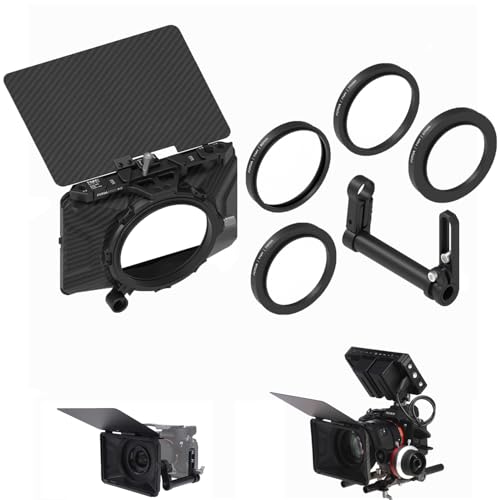
Though compact, the Fotga Mini Matte Box handles demanding shoots with ease, making it my go-to choice when traveling light without sacrificing filter flexibility or accessory support. I use it on my Sony A7S III and Canon R5C, and it holds 4×4, 4×5.65, and 100mm filters securely. The clip-on design works with 67mm, 72mm, 77mm, and 82mm lenses out of the box, but I’ve added optional rings down to 52mm. At just 140 grams, it’s featherlight, yet the carbon fiber flag protects against drops. I mount my mic on the top shoe and love the two 1/4-20 points for accessories.
Best For: Traveling filmmakers and run-and-gun shooters who need a lightweight, versatile matte box with filter flexibility and accessory mounting options for DSLR and mirrorless cameras.
Pros:
- Lightweight at only 140 grams, making it ideal for travel and handheld use
- Supports multiple filter sizes including 4×4, 4×5.65, and 100mm with secure clip-on attachment
- Offers versatile accessory integration with two 1/4-20 threads, one 3/8-16 screw hole, and two cold shoe mounts
Cons:
- Limited lens compatibility out of the box, requiring separate purchase of adapter rings for smaller lenses
- Clip-on design may not fit all lens shapes or with large lens hoods in place
- Warranty and support depend on manufacturer, which may be less accessible than major brands
Freewell Eiger Matte Box for DSLR & Mirrorless

The Freewell Eiger Matte Box stands out for filmmakers and hybrid shooters who demand a streamlined, adaptable filtering system without the hassle of stacking or adapter rings, and it’s especially ideal for those already invested in the Freewell ecosystem. I use it with my mirrorless rig, and the magnetic filter slots make swapping ND, VND, or GND filters fast and precise. It fits lenses up to 95mm, includes adapter rings for 67mm to 82mm, and weighs just 1.82 pounds. The carbon fiber top flag cuts flare effectively, and the quick-release hood lets me adapt on set. Though not water-resistant, it’s solid, compact at 10x6x4 inches folded, and integrates seamlessly with Freewell’s Eiger filters and Magnetic Quick Swap System.
Best For: Filmmakers and hybrid shooters seeking a lightweight, modular matte box system that simplifies filter changes and integrates seamlessly with the Freewell Eiger and Magnetic Quick Swap ecosystems.
Pros:
- Magnetic filter slots and compatibility with multiple filter types (ND, VND, GND, mist, steak) enable fast, tool-free filter swaps
- Supports lenses up to 95mm with included adapter rings and features a foldable, compact design (10x6x4 inches) for easy transport
- Carbon fiber top flag effectively reduces lens flare, and the quick-release sunshield aids rapid on-set adjustments
Cons:
- No waterproof protection, limiting use in wet or harsh weather conditions
- Warranty not included, potentially affecting long-term reliability confidence
- Additional adapter rings required for lens sizes below 67mm or above 82mm, increasing overall cost
Factors to Consider When Choosing Matte Box Dslr
You’ll want to check your lens compatibility range first, since most matte boxes support 65mm to 95mm lenses, and going beyond that can cause vignetting. Make sure the system supports the filter types you use, like 4×4” or 4×5.65” ND grads, and confirm the mounting system works with your rods or follow focus setup-15mm or 19mm LWS-with quick-release options for faster builds. Lightweight carbon fiber or aluminum matte boxes, around 1.8 to 3.2 lbs, strike the best balance between durability and portability when you’re shooting on the move.
Lens Compatibility Range
A matte box must match your lens setup precisely, so start by confirming the outer diameter support-most kits handle lenses up to 95mm, but check your lens specs to avoid fit issues. You’ll also want to verify thread size compatibility, since common sizes like 67mm, 72mm, 77mm, and 82mm need matching adapter rings. Some models even support 95mm threads for larger cinema glass. Make sure the matte box works with your lens type-SLR lenses with a 95mm inner diameter can cause clearance problems in cinema-only designs. Watch for wide-angle lenses too; models down to 15–16mm can vignette if the matte box isn’t optimized. Finally, confirm the mounting method: clip-on, adapter ring, or 15mm rod support-each affects stability and lens access.
Filter Type Support
While matching your lens specs is essential, don’t overlook what your matte box can actually hold-filter size support makes or breaks your ability to shape light effectively, and most models accept either 4×4-inch or 4×5.65-inch rectangular filters, with the wider 4×5.65-inch being the go-to for cinema formats since it prevents vignetting on lenses as wide as 15mm, especially when paired with Super 35 or full-frame sensors. You’ll also want trays that fit 4mm-thick filters to avoid light leaks. Many matte boxes support screw-on filters up to 92.5mm via adapter rings, so you can still use your ND or CPL glass. Dual-slot trays let you stack graduated NDs with color filters, and rotation helps fine-tune horizon lines. High-end models use magnetic systems for quick filter swaps-just make sure your filters have magnetic edges.
Mounting System Flexibility
If you’re building a reliable camera rig, the mounting system on your matte box makes a real difference in how quickly you can adapt to changing shooting conditions. You’ll want a clamp-on design that attaches directly to your lens via filter thread adapters-no rods needed-for fast deployment. Look for compatibility with 15mm or 19mm studio rails; it guarantees solid alignment, especially with heavy cinema lenses. Adjustable rod clamps let you fit single or dual configurations, keeping everything stable on gimbals or handheld rigs. A swing-away mechanism gives you 90-degree rotation, so you can swap lenses or filters without dismounting the camera. Plus, multiple 1/4″-20 and 3/8″-16 threaded points let you attach flags, monitors, or lights right to the matte box. It’s practical, it’s efficient, and it keeps your workflow smooth when time’s tight.
Material And Durability
Since durability and weight directly impact your setup’s performance in the field, you’ll want a matte box built from materials that won’t let you down-carbon fiber models weigh as little as 140 grams and deliver serious strength, so your rig stays light, balanced, and ready for handheld or gimbal work. You’ll also see many pro kits using aluminum housings because they’re tough, resist dings from daily use, and maintain precise alignment over time. Look for matte-finished surfaces to cut down on glare, especially during outdoor shoots where sunlight can ruin contrast. Filter trays and flags often include silicone padding or reinforced corners, which protect your glass and lens elements during transport. Precision-machined parts guarantee everything fits snugly, reducing wobble, filter tilt, or light leaks. These details matter when you’re shooting long takes or moving fast-durability isn’t just about surviving the day, it’s about performing flawlessly every time you roll.
Weight And Portability
You’ll want a matte box that won’t throw off your rig’s balance, especially when you’re running gimbals or shooting handheld for hours. Look for models under 200 grams-light enough to avoid fatigue during long sessions. Compact folded sizes, like 180mm x 140mm x 50mm, slip easily into camera bags and save space on crowded sets. Carbon fiber and aluminum builds cut weight without sacrificing toughness, ideal for run-and-gun shoots. A low-profile design, around 34mm thick, keeps weight centered and stops lens imbalance on smaller rigs. Foldable arms and collapsible flags mean less bulk when moving between locations. Many top kits include padded pouches for quick storage and protection in transit. These features add up: you stay mobile, your gear stays safe, and your setup stays agile whether you’re on a crane, slider, or shoulder rig. Portability isn’t just convenience-it’s endurance.
Accessories And Expansion
Lightweight design sets the foundation, but your matte box should also work as a hub for the tools you rely on in dynamic shooting environments. You’ll want 1/4” and 3/8” threaded mounts or cold shoes to quickly attach monitors, mics, or LED lights without extra adapters. Look for models with accessory rails and swing-away mechanisms-these let you swap lenses fast while keeping filters and add-ons securely mounted. Expandable rail systems support side flags for precise light control, especially useful outdoors. Integrated filter trays often hold one 4 x 5.65-inch filter plus a 92.5mm circular filter, giving you flexibility in grading and exposure. Some kits even offer modular upgrades, like magnetic filter stages or additional trays, so you can scale as your needs grow. Testers praise systems that balance expandability with clean setup, saving time on set without sacrificing professional control.
Frequently Asked Questions
Can I Use a Matte Box With a Zoom Lens?
You can use a matte box with a zoom lens, but you’ve got to leave room for the lens to breathe. Don’t crush your zoom range-back off the matte box flags to avoid vignetting at wide angles. Choose a kit with adjustable knickers and a wide-diameter hood, like 85mm+, for clearance. Test at both ends of your zoom; most pros run 24-70mm or 70-200mm without issues if spaced right.
Do Matte Boxes Work With Anamorphic Lenses?
Yes, you can use matte boxes with anamorphic lenses, and you should, because they reduce lens flare and support filters critical for controlling the unique flare characteristics of anamorphics. Just make certain your matte box has tall enough height adjustable flags and accommodates the lens’s wider field of view. Pros use 4×5.65″ or 4×4″ systems with 138mm+ filter trays so they don’t vignette, maintaining that cinematic look without compromise.
Are Matte Boxes Compatible With Gimbals?
Yes, you can use matte boxes with gimbals if you choose lightweight, compact models designed for balance. Brands like SmallRig and Letus Helium offer carbon fiber kits under 1.5 lbs that won’t strain motors. You’ll need to recenter your rig and adjust follow focus placement. Testers confirm proper lens shading works, but avoid oversized flags on tight moves. Use 4×4 filters and guarantee clearance-most gimbals handle it when set up right, maintaining smooth operation and shot stability without drift or tilt issues.
How Do I Clean a Dirty Matte Box Filter?
You clean a dirty matte box filter by first removing it from the rig, then gently wiping both sides with a microfiber cloth to remove dust and smudges, you use a lens cleaning solution if needed, but never spray directly on the glass-apply it to the cloth instead, you avoid paper towels or rough materials that scratch, and you store it in a padded case to prevent future damage, keeping it ready for crisp, flare-free shots.
Can I Attach a Matte Box to a Phone?
You can attach a matte box to a phone, but you’ll need the right adapter, like a clamp-style mount with 1/4″-20 threads, to secure it to a rig or cage, and make sure your phone’s lens alignment matches the matte box’s flag system, since even slight offsets cause vignetting, testers found that models like the SmallRig phone cage work well, maintaining focus peaking and full touch access, without blocking lights or ports.