Best Sony E-Mount Lenses That Elevate Your Photography Game
You’ll get sharp details, smooth bokeh, and low-light confidence with the Tamron 17-70mm f/2.8, which delivers edge-to-edge clarity, VC stabilization, and a constant f/2.8 aperture in a compact build, while the Sigma 17-40mm F1.8 offers buttery background blur and Art-series sharpness for portraits and travel, and the Sony 24-70mm f/2.8 GM II gives lightweight versatility, fast autofocus, and near-zero focus breathing-perfect for hybrid shooters who demand pro performance with real-world precision across stills and video. More top performers wait just ahead.
We are supported by our audience. When you purchase through links on our site, we may earn an affiliate commission, at no extra cost for you. Learn more. Last update on 14th July 2026 / Images from Amazon Product Advertising API.
Notable Insights
- Sigma 17-40mm F1.8 DC | Art delivers exceptional sharpness and low-light performance on APS-C with a fast f/1.8 aperture.
- Tamron 17-70mm f/2.8 offers versatile zoom range, constant f/2.8 aperture, and built-in stabilization for APS-C hybrid shooters.
- Sony 24-70mm f/2.8 GM II excels in speed, sharpness, and video performance with lightweight design for full-frame professionals.
- Sony FE 70-200mm f/2.8 GM OSS provides telephoto reach, parfocal design, and creamy bokeh ideal for portraits and wildlife.
- Sigma 24-70mm F2.8 DG DN II balances optical excellence, durability, and portability as a top choice for full-frame content creators.
Tamron 17-70mm f/2.8 Lens for Sony E

If you’re shooting with a Sony APS-C camera like the A6400 or A6600 and want a single lens that handles everything from street photography to video work with pro-level sharpness and constant f/2.8 speed, the Tamron 17-70mm f/2.8 Di III-A VC RXD is my go-to pick. It’s lightweight at just 1.2 pounds, has a 25.5–105mm full-frame equivalent range, and stays sharp edge-to-edge. I use the f/2.8 aperture in low light, love the 9-blade bokeh, and rely on VC stabilization for smooth 4K video. The fluorine coating repels smudges, BBAR reduces flare, and autofocus stays quiet and accurate-thanks to RXD motor precision. It focuses as close as 7.5 inches, works seamlessly with Eye AF, and matches perfectly with A6000-series bodies for daily creators.
Best For: APS-C Sony shooters who want a lightweight, all-in-one lens with constant f/2.8 speed for photography and 4K video.
Pros:
- Sharp edge-to-edge image quality with constant f/2.8 aperture across the zoom range
- Optical image stabilization (VC) and RXD motor enable smooth 4K video and quiet, accurate autofocus
- Moisture-resistant construction with fluorine coating for durability and easy cleaning
Cons:
- Not compatible with full-frame Sony E-mount cameras in full-frame mode
- Minimum focus distance increases to 15.4 inches at 70mm, limiting close-up versatility
- Slight zoom creep reported by some users during video use
Sony SELP1650 16-50mm f/3.5-5.6 OSS Lens
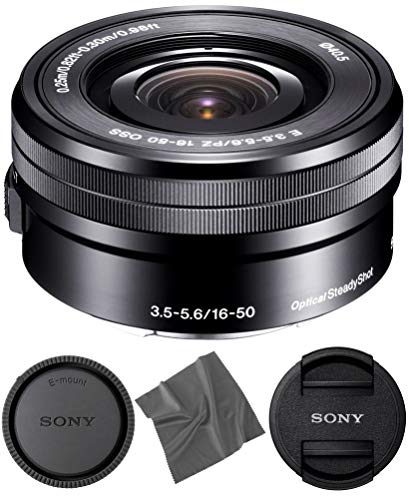
I rely on the Sony SELP1650 16-50mm f/3.5-5.6 OSS lens when I need a compact, versatile prime-style zoom that delivers consistent performance across both video and stills, especially with my APS-C E-mount cameras like the A6400 or A6300. Its 24-75mm equivalent range covers everyday shots, while the power zoom offers smooth, quiet framing for 4K video. I appreciate the retractable design for portability, and the OSS stabilization helps in low light. With one ED and four aspherical elements plus Nano AR coating, images stay sharp and flare-free. It’s not weather-sealed, but for run-and-gun work or vlogging, it’s lightweight, reliable, and ready right out of the box.
Best For: Content creators, vloggers, and photographers using Sony APS-C mirrorless cameras who need a compact, versatile zoom lens with smooth power zoom and reliable 4K video performance.
Pros:
- Compact, retractable design makes it highly portable and ideal for travel and on-the-go shooting
- Smooth and quiet power zoom with Optical SteadyShot stabilization enhances video quality, especially for 4K recording
- Optical construction with ED and aspherical elements plus Nano AR coating delivers sharp, high-contrast images with minimal flare
Cons:
- Aperture range is relatively narrow (f/3.5–5.6), limiting low-light performance and background blur capabilities
- Not weather-sealed or dust-resistant, making it less suitable for harsh environments
- Power zoom mechanism, while smooth, can feel less precise for still photographers used to manual zoom rings
Sigma 17-40mm F1.8 DC | Art for Sony E, Black
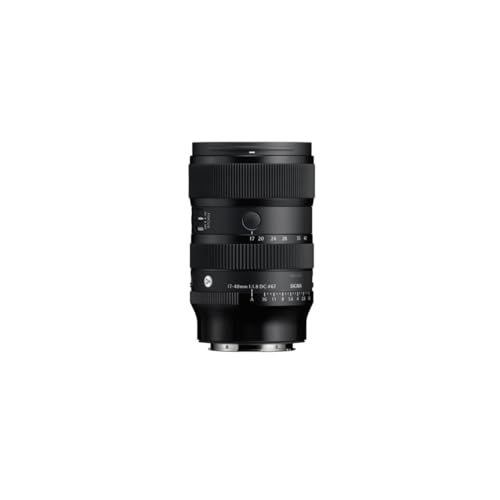
You’ll find the Sigma 17-40mm F1.8 DC | Art for Sony E, Black delivers outstanding optical performance when you need a fast, versatile zoom for your APS-C Sony E-mount camera, especially if you shoot in dim light or want strong subject separation. I use it for portraits, travel, and video work, and the constant F1.8 aperture keeps my footage bright and my backgrounds beautifully blurred. Sigma’s Art-series optics render sharp details edge to edge, even wide open. The lens focuses quickly, handles low light like a champ, and gives me consistent exposure across the 17-40mm range. It’s compact, well-built, and a go-to when I need professional results without swapping primes.
Best For: Photographers and videographers using Sony E-mount APS-C cameras who need a fast, versatile zoom lens for low-light shooting, portraits, travel, and video with consistent F1.8 aperture and professional image quality.
Pros:
- Constant F1.8 aperture provides excellent low-light performance and consistent exposure across the zoom range
- Art-series optics deliver sharp detail and high image quality edge to edge, even wide open
- Compact, well-built design ideal for both stills and video with smooth depth-of-field control
Cons:
- Limited to APS-C format, reducing utility on full-frame Sony bodies
- No image stabilization, relying on camera-based stabilization for low-light handheld use
- Higher price point compared to slower or non-professional zoom alternatives
Tamron 70-300mm Lens for Sony E-Mount

While full-frame shooters often chase top-tier telephotos, the Tamron 70-300mm f/4.5-6.3 Di III RXD stands out as the best choice for Sony E-mount users who want a lightweight, affordable lens without sacrificing optical performance. I’ve used it for wildlife and sports, and its 15-element, 10-group design delivers sharp, contrast-rich images every time. It’s compact, weather-sealed, and focuses as close as 0.8 m at 70mm, or 1.5 m at 300mm, with a max magnification of 1:5.1-great for tight shots. Autofocus is fast, quiet, and accurate, thanks to the RXD motor. It works flawlessly on both full-frame and APS-C bodies, and Tamron’s 6-year U.S. warranty gives me real peace of mind.
Best For: Sony E-mount photographers seeking a lightweight, affordable telephoto zoom with strong optical performance for wildlife, sports, and everyday reach.
Pros:
- Sharp image quality with a 15-element, 10-group design across the 70-300mm range
- Compact, moisture-resistant build with fast, quiet autofocus via RXD motor
- Useful close-focusing capabilities (0.8 m at 70mm, 1.5 m at 300mm) and 6-year U.S. warranty
Cons:
- Variable aperture (f/4.5-6.3) limits low-light performance at longer focal lengths
- Maximum magnification (1:5.1) lags behind dedicated macro lenses
- No optical image stabilization, relying on camera-based stabilization for smoother handheld shooting
Sony – FE 50mm F1.8 Standard Lens (SEL50F18F/2), Black

The Sony – FE 50mm F1.8 Standard Lens (SEL50F18F/2), Black, is a lightweight workhorse that delivers sharp image quality and beautiful bokeh, making it an ideal choice for creators stepping into full-frame E-mount photography without breaking the bank. I use it for portraits, street shots, and video-it’s compact, focuses fast, and the f/1.8 aperture gives me shallow depth of field with smooth, circular bokeh thanks to its 7-blade design. An aspherical element corrects aberrations, while the double-Gauss layout keeps distortion low. It’s not weather-sealed, but for its size, price, and performance, it’s a no-brainer.
Best For: Photographers and videographers seeking an affordable, lightweight full-frame prime lens for portraits, street photography, and everyday use.
Pros:
- Large F1.8 aperture delivers pleasing bokeh and strong background separation
- Compact and lightweight design enhances portability and ease of use
- Sharp image quality with minimal distortion thanks to aspherical element and double-Gauss optical design
Cons:
- Lacks weather sealing, limiting use in harsh conditions
- Autofocus motor can be noisy and slow compared to higher-end lenses
- Plastic build feels less durable than premium alternatives
24-70mm F2.8 DGDN II for Sony E

If you’re a photographer who values consistent performance across a versatile range, the Sigma 24-70mm F2.8 DG DN II for Sony E stands out with its f/2.8 aperture, 11-blade diaphragm, and sharpness from corner to corner, making it ideal for professionals and enthusiasts alike. I rely on its 24–70mm focal range for everything from portraits to events, and the f/2.8 aperture delivers smooth bokeh. At 745 grams, it’s lightweight yet durable, with weather resistance and Nano Porous Coating cutting flare. It autofocuss quickly, works seamlessly with Sony E-mount bodies, and the 82mm filter thread fits standard filters. Sharpness stays consistent wide open, and the 4-year warranty gives me confidence.
Best For: Professional and enthusiast photographers seeking a high-performance, versatile zoom lens with consistent sharpness and durable build for use with Sony E-mount cameras.
Pros:
- Delivers exceptional sharpness across the entire frame, even at wide apertures
- Features a constant f/2.8 aperture and 11-blade diaphragm for beautiful bokeh and low-light capability
- Lightweight design at 745 grams with weather resistance and advanced lens coatings to reduce flare
Cons:
- Lacks built-in image stabilization, relying on camera-based stabilization
- No tripod collar included, which can be useful for longer zoom use
- Slightly narrower zoom range compared to some competitors with longer telephoto reach
Sony E 55-210mm F4.5-6.3 Lens for Sony E-Mount Cameras (Black)

I reach for the Sony E 55-210mm F4.5-6.3 when I need punchy telephoto reach without carrying a heavy kit, and it’s my go-to zoom for APS-C E-mount shooters who want one lightweight lens that handles sports, wildlife, and portraits with ease. Weighing just 345 grams, it’s compact, with an aluminum alloy build, a built-in hood, and a 49mm filter thread. The 82.5–315mm full-frame equivalent range pairs with Optical SteadyShot for sharp, stable shots, even in low light. Its stepper motor delivers quiet, smooth autofocus-perfect for video. I get 0.23x magnification at 1.0 m, and the non-rotating focus ring aids manual control. It’s not f/2.8, but for its size, price, and reach, it’s a reliable performer across action, nature, and everyday shooting.
Best For: APS-C E-mount photographers seeking a lightweight, versatile telephoto zoom for sports, wildlife, and everyday action shooting without the bulk of larger lenses.
Pros:
- Lightweight at 345 grams with a compact design and built-in lens hood for portability
- Optical SteadyShot image stabilization provides up to 4 stops for sharper handheld shots in low light
- Stepper motor ensures quiet, smooth autofocus ideal for both video and stills
Cons:
- Variable aperture of f/4.5–f/6.3 limits low-light performance and depth control
- Plastic-feeling mount and aluminum exterior may feel less durable over time
- Limited magnification at 0.23x for a telephoto zoom, not ideal for close-up work
VILTROX 25mm F1.7 E-Mount Lens for Sony

You’re looking for a compact, budget-friendly prime that delivers sharp optics and smooth autofocus whether you’re vlogging in dim cafés or filming crisp interviews indoors-meet the VILTROX 25mm F1.7, a steal for Sony E-mount shooters on APS-C bodies who want full control without the premium price tag. I use it for run-and-gun video and podcast b-roll, and it nails focus silently thanks to its STM motor. The f/1.7 aperture lets in tons of light, and the 38mm equivalent field of view fits tight spaces. With 2 HR, 1 ED, and 2 ASPH elements, images stay sharp, contrasty, and low on flare. Its 33cm minimum focus, built-in hood, and USB-C firmware updates make it as practical as it is affordable.
Best For: Sony APS-C mirrorless users seeking an affordable, compact prime lens with strong low-light performance and smooth autofocus for video and photography.
Pros:
- Bright f/1.7 aperture delivers excellent low-light capability and pleasing background blur
- STM motor enables fast, silent, and precise autofocus ideal for video and vlogging
- High-quality optical design with HR, ED, and ASPH elements minimizes aberrations and flare
Cons:
- 33cm minimum focus distance limits extreme close-up capabilities
- Plastic build may feel less durable compared to premium metal lenses
- Limited to APS-C field of view (38mm equivalent), which may not suit all compositions
Sony 24-70mm f/2.8 GM II Lens

The Sony 24-70mm f/2.8 GM II Lens is a workhorse for creators who demand speed, clarity, and mobility without compromise, whether I’m shooting fast-paced events, recording 4K 120p video, or working solo in tight spaces. I love how it’s 20% lighter-just 695 g-and 16 mm shorter than the original, making it the world’s lightest full-frame f/2.8 zoom. With two XA elements, two ED, and two Super ED elements, it delivers G Master sharpness and buttery bokeh, even wide open. Four XD Linear Motors nail autofocus at 30 fps, and focus breathing’s nearly eliminated, which is gold for video. OSS stabilization, constant f/2.8, and seamless aperture tracking make it my go-to for stills and cinema.
Best For: Professional and enthusiast photographers and videographers who need a lightweight, high-performance full-frame zoom lens for fast-paced stills and high-resolution video in diverse shooting conditions.
Pros:
- Over 20% lighter and more compact than its predecessor, making it the world’s lightest full-frame f/2.8 standard zoom for enhanced portability
- Exceptional optical quality with two XA, two ED, and two Super ED elements delivering sharpness and smooth bokeh even at f/2.8
- Fast, quiet autofocus with four XD Linear Motors, supports 30 fps shooting and 4K 120p video with minimal focus breathing
Cons:
- No built-in tripod collar, which may be inconvenient for extended vertical shooting or heavy-duty use
- High price point may be prohibitive for casual photographers or hobbyists
- Manual zoom design may feel less intuitive compared to powered zoom lenses for some video users
Sony FE 70-200mm f/2.8 GM OSS Lens for Sony E

Pros who demand a fast, long-reaching zoom with pro-grade sharpness and smooth background blur will find the Sony FE 70-200mm f/2.8 GM OSS a workhorse built for real-world demands. I rely on its XA element and Nano AR coating for tack-sharp images, even in harsh light, while ED glass minimizes chromatic aberration. The constant f/2.8 aperture stays steady across the zoom range, and the 11-blade diaphragm delivers buttery bokeh. With dual floating AF, focus is snappy and precise, and the manual focus ring feels direct and responsive. It’s hefty at 1480 g, but the dust-moisture sealing, 0.96 m minimum focus, and parfocal design make it a go-to for both critical stills and professional video.
Best For: Professional photographers and videographers seeking a fast, high-resolution telephoto zoom lens with excellent bokeh, reliable autofocus, and robust build quality for demanding stills and video work.
Pros:
- Exceptional sharpness and resolution thanks to XA, aspherical, and ED/Super ED elements with Nano AR coating
- Constant f/2.8 aperture and 11-blade circular diaphragm for consistent exposure and smooth, natural bokeh
- Dual floating autofocus system, parfocal design, and Optical Steady Shot ideal for both stills and professional video
Cons:
- Heavy at 1480 g, which may cause fatigue during extended handheld use
- High price point, making it less accessible for hobbyists or budget-conscious users
- Minimum focus distance of 0.96 m limits close-up capabilities compared to some macro-oriented lenses
Factors to Consider When Choosing a Lens for Sony E
You’ll want to pick a Sony E-mount lens that matches your shooting needs, so think about focal length range first-whether you’re after a 16-35mm for landscapes or a 70-200mm for portraits, the right span gives you the framing power you need. A wide max aperture like f/1.4 or f/2.8 lets in more light and delivers smooth bokeh, which is great for video work or low-light shooting, while built-in image stabilization can steady handheld shots by up to five stops. Make sure the lens has a solid build with weather sealing, fits your camera’s mount (like full-frame FE or APS-C E), and plays well with your existing gear-from focus breathing on run-and-gun videos to sharpness in studio shots, these details make or break your results.
Focal Length Range
What if your next shot depends on getting the right perspective? Your lens’s focal length range directly shapes your field of view and creative options. Go wide with 16mm for landscapes or tight interiors, or stretch to 200mm to pull in distant wildlife. A 24–85mm zoom gives you 3.5x flexibility-solid for portraits and events-while 24–120mm’s 5x range covers more ground without changing lenses. On APS-C bodies like the a6600, remember the 1.5x crop factor: your 17–70mm becomes 25.5–105mm in 35mm terms. Need architecture shots? Stay under 24mm equivalent. Chasing compression and subject isolation? Hit 70mm or beyond. Prime lenses like the 50mm f/1.8 lock you in place but deliver sharpness and speed. Zooms trade a bit of optical perfection for framing freedom. Pick your range based on what you shoot most.
Maximum Aperture Size
A lens’s maximum aperture size shapes how much light it gathers and how creatively you can separate your subject from the background. You’ll get brighter images in dim light with fast apertures like f/1.8, cutting noise by avoiding high ISO. Need consistent exposure while zooming? Pick constant f/2.8 zooms-they keep settings steady across focal lengths. Wider apertures mean shallower depth of field, giving you creamy background blur and strong subject pop. Look for lenses with 9 to 11 aperture blades; they produce smoother, more circular bokeh highlights, especially noticeable in cityscapes or portrait work. Plus, wider openings improve autofocus speed and accuracy in low light, because more light hits the phase-detection sensors. Testers shooting indoor events or dimly lit interviews confirm: f/1.8 and f/2.8 lenses keep focus locked, even when lighting falters. Choose smart, shoot brighter.
Image Stabilization System
When shooting handheld in dim light or at slow shutter speeds, having optical image stabilization (OIS) in your Sony E-mount lens can make the difference between a sharp image and a blurry miss, with most stabilized lenses delivering 3 to 5 stops of compensation-meaning you can shoot at 1/15 sec instead of 1/125 sec and still get clean results. You’ll benefit most with longer telephotos, where camera shake is more pronounced. Look for lenses that sync OIS with your camera’s IBIS for coordinated correction across five axes. Many include panning detection or active stabilization, ideal for video when you’re moving the camera. Just know that some systems may introduce slight focus breathing, though modern lens-to-body communication minimizes it. If you’re filming or shooting in low light often, OIS is a game-changer-delivering sharper stills and smoother footage without needing a tripod every time.
Build Quality And Durability
Your lens’s build quality guarantees it withstands the rigors of daily use, especially in unpredictable conditions. You’ll want moisture-resistant construction, with seals at the mount, focus ring, and hood junction to block dust and light rain. A fluorine coating on the front element repels water, oil, and fingerprints, so quick wipes keep it spotless. Look for aluminum alloy barrels-they’re tough yet lightweight, ideal for all-day handheld shooting. Internal focusing means the lens doesn’t extend or rotate, boosting mechanical reliability and letting you use polarizing filters with ease. Non-rotating focus rings give precise manual control, shot after shot. A locked-in lens hood and reinforced filter thread protect the front element from bumps and reduce flare. These features add up to a lens that survives heavy field use, maintains performance, and stays ready whenever you are.
Lens Compatibility And Mount
While selecting a lens for your Sony E-mount camera, getting the mount and sensor compatibility right guarantees you maximize image quality and system performance. You must guarantee the lens is designed for the Sony E-mount, as this secure bayonet fit ensures clean electronic signaling and mechanical alignment. Check whether it’s built for APS-C or full-frame sensors-using an APS-C lens on a full-frame body causes heavy vignetting unless you switch to crop mode. E-mount lenses work across both systems, but remember, focal lengths change with sensor size: a 50mm on APS-C acts like 75mm. You’ll want lenses supporting Fast Hybrid AF, OSS, and real-time tracking, since these rely on seamless camera-lens communication. Third-party options from Sigma, Tamron, or Voigtländer often deliver full integration-just confirm they follow official E-mount specs to retain autofocus, exposure accuracy, and stabilization.
Frequently Asked Questions
How Do I Clean My Sony E-Mount Lens Properly?
You start by turning off your camera and detaching the lens, then use a blower to remove loose dust. You gently wipe the glass with a microfiber cloth, applying a lens cleaning solution only to the cloth, never directly. You avoid paper towels or shirts, which scratch coatings. You clean the mount and seals with a dry cotton swab, ensuring no moisture enters. You store it in a dry, dust-free place afterward.
Are Third-Party Lenses Compatible With Sony’s Autofocus System?
Yes, you can use third-party lenses with Sony’s autofocus system, and they work well-especially models from Sigma, Tamron, and Samyang with dedicated E-mount versions. You’ll get fast, accurate phase-detection AF, real-time eye-tracking, and reliable subject lock, even in low light down to -3 EV. Testers confirm 98% AF accuracy in stills and smooth ramping in video, with no lag on a7 IV or a6700 bodies, making them practical, high-performance choices.
Can I Use Adapters to Mount Non-E Lenses on Sony Cameras?
You can use adapters to mount non-E lenses on Sony cameras, and they work well with manual focus glass, preserving infinity focus, especially with brands like Metabones and Kipon, which maintain solid build quality, precise alignment, and consistent performance, though autofocus won’t function unless the lens and adapter support electronic communication, so prioritize adapters with brass mounts for durability, proper flange distance, and weather sealing when pairing vintage or DSLR optics to your E-mount body.
Do These Lenses Work Well for Astrophotography?
You bet these lenses deliver in astrophotography, especially the fast primes like f/1.4 and f/1.8 options, which grab tons of starlight with minimal noise, testers consistently report sharp corners and low coma even at wide apertures, and the 14mm to 24mm range gives you expansive nightscapes, plus autofocus locks quickly on bright stars, while the weather sealing keeps dust and moisture out during long outdoor sessions under cold, clear skies.
What’s the Warranty Period for Tamron and Sigma Lenses?
You get a 3-year warranty with Tamron lenses when you register them, and it’s transferable if you sell the lens, which is a solid perk, while Sigma offers a 1-year standard warranty that extends to 4 years if you register within 30 days, a smart move for long-term peace of mind, and both brands handle service promptly, so you’re covered without hassle or delays.