Top-Rated IP Cameras for Seamless Live Streaming
You’ll get seamless live streaming with 4K PTZ cameras like the PTZCamera 4K and TONGVEO 4K NDI, featuring 20x optical zoom, 1/2.8” CMOS sensors, and f/1.35–2.7 apertures for crisp low-light performance, NDI HX2 and H.265 compression cutting bandwidth by 50%, PoE support running power and data over 328ft of Cat6, plus smooth AI tracking and 340° pan for dynamic coverage-ideal for podcasting, studio work, or multi-cam events where reliability and image clarity matter most. Discover how each model balances sensor size, connectivity, and smart features to fit your setup.
We are supported by our audience. When you purchase through links on our site, we may earn an affiliate commission, at no extra cost for you. Learn more. Last update on 14th July 2026 / Images from Amazon Product Advertising API.
Notable Insights
- 4K UHD and 1080p60 support with H.265 compression ensures high-quality, low-bandwidth live streaming.
- NDI HX2 and RTMP compatibility enables seamless, low-latency streaming over standard networks.
- Integrated PoE support simplifies installation and allows power and data over a single cable up to 100m.
- AI-powered auto-tracking and wide pan-tilt ranges keep moving subjects centered during live streams.
- Simultaneous HDMI, USB, and IP outputs provide flexible connectivity for multi-platform streaming setups.
PTZ Camera 4K UHD 20X Zoom
If you’re streaming worship services, running corporate video conferences, or broadcasting live events, the PTZ Camera 4K UHD 20X Zoom is the best choice for professionals who demand sharp detail and flexible framing without breaking the bank. I use its 4K resolution at 30fps daily, and the 20x optical zoom pulls in clear close-ups from across the room. The 5.2–104mm lens gives me a wide 58.7° field of view, perfect for capturing full groups. I mount it on the ceiling, and its 340° pan and 120° tilt cover every angle. USB 3.0 and HDMI make setup plug-and-play, and PoE keeps power simple. It works flawlessly with Zoom, Teams, and OBS.
Best For: Professionals needing high-quality 4K live streaming and video conferencing with flexible PTZ control for churches, corporate meetings, or event broadcasting.
Pros:
- 4K UHD resolution at 30fps with 20x optical zoom delivers sharp, detailed video even from a distance
- Extensive connectivity options including USB 3.0, HDMI, Ethernet, and PoE for easy integration and plug-and-play setup
- Wide 340° pan and 120° tilt range with multiple mounting options for comprehensive coverage in diverse environments
Cons:
- No image stabilization may result in shaky footage during zoomed-in shots or movement
- Limited low-light performance despite 2D/3D noise reduction due to f/3.13 maximum aperture
- Heavier than average at 2.89 kg, which may complicate certain mounting setups
TONGVEO 4K NDI PTZ Camera 20X Zoom

You’ll get stunning 4K/30FPS video over HDMI and USB, plus 1080P for smooth NDI streaming, making the TONGVEO 4K NDI PTZ Camera 20X Zoom a top pick for live producers who need reliable, broadcast-quality imaging across churches, studios, and events. I use its HDMI, SDI, and USB3.0 outputs to feed switchers like ATEM, and the SDI handles 300ft runs no problem. NDI 4K plugs straight into OBS or vMix, and I stream effortlessly to YouTube or Zoom. Its 20X zoom and AI tracking keep speakers framed perfectly, while PoE cuts my cabling in half. I control it via web browser or joystick, and the auto-focus stays sharp. It’s a workhorse.
Best For: Live production professionals in churches, broadcast studios, and event venues who need a reliable, high-quality PTZ camera with NDI streaming, AI tracking, and multi-output connectivity.
Pros:
- Delivers 4K/30FPS via HDMI and USB, with 1080P NDI streaming and professional SDI output for long cable runs up to 300ft
- Official NDI 4K support ensures seamless integration with OBS, vMix, Zoom, and popular streaming platforms
- AI auto-tracking, 20X optical zoom, and PoE simplify operation and installation in diverse live environments
Cons:
- AI tracking limited to one person at a time and not suitable for fast-moving subjects
- Auto-tracking may lose subject during prolonged obstruction and only resumes after face reappears
- Web browser control requires default login credentials, posing potential security risks if not changed
AVKANS NDI PTZ Camera 20X Zoom

When I need sharp, broadcast-quality video with seamless integration into my live streaming setup, the AVKANS NDI PTZ Camera 20X Zoom stands out with its 1/2.7-inch CMOS sensor, 20x optical zoom, and native NDI support, making it a top choice for professional-grade productions in churches, schools, and studios. I get crisp 1080p60 video, accurate colors, and solid low-light performance. With NDI HX2, PoE, and compatibility with vMix, OBS, and ProPresenter, I control it easily over IP. The 60° field of view and 94mm focal length give me flexible framing, while VISCA over IP lets me manage multiple cameras smoothly from my desk.
Best For: Church, school, and studio professionals seeking a high-quality, NDI-enabled PTZ camera for live streaming and multi-camera production with reliable low-light performance and seamless integration into existing broadcast workflows.
Pros:
- Native NDI HX2 and PoE support enable easy integration and power over a single Ethernet cable for simplified setup
- 20x optical zoom with 1080p60 video and accurate color reproduction ensures sharp, broadcast-quality footage in varied lighting conditions
- Compatible with major production software like vMix, OBS, and ProPresenter, and supports VISCA over IP for centralized multi-camera control
Cons:
- Limited to iOS for mobile control via the AVKANS Live Multicam App, reducing accessibility for Android users
- No stated warranty details in provided facts, which may raise concerns about long-term support
- Higher weight (2.77 kg) and bullet-style design may limit mounting options compared to smaller, more compact PTZ models
Logitech Mevo Start Wireless Streaming Camera
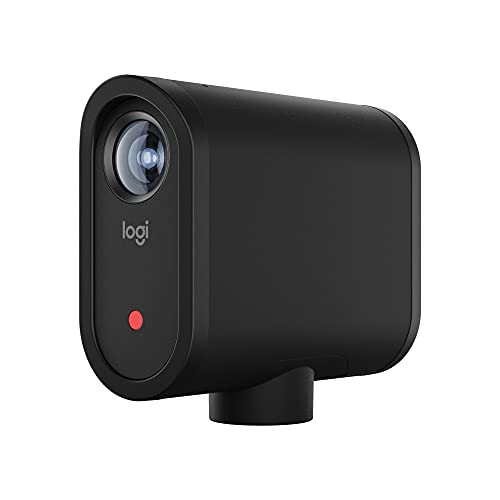
The Logitech Mevo Start Wireless Streaming Camera is my go-to pick for creators who need a portable, all-in-one solution for high-quality live streaming without the hassle of complex setups. I use it for podcasting, studio sessions, and mobile gigs, and it delivers sharp 1080p HD video with reliable autofocus and a wide 16:9 CMOS sensor. It streams over Wi-Fi, Ethernet, or phone LTE, and I love controlling it wirelessly via the app-Auto-Director switches angles smoothly. With up to 6 hours of battery, USB-C charging, and microSD support, I stay powered and recording anywhere. It’s lightweight, easy to set up, and handles multi-cam RTMP streaming like a pro.
Best For: Content creators seeking a portable, easy-to-use wireless camera for professional-quality live streaming and recording on the go.
Pros:
- Delivers crisp 1080p HD video with reliable autofocus and wide 16:9 aspect ratio
- Supports flexible streaming via Wi-Fi, Ethernet, or smartphone LTE with app-based wireless control
- Long 6-hour battery life with USB-C charging and expandable storage via microSD card
Cons:
- No image stabilization, which may affect video smoothness during movement
- Built-in microphone limits audio quality compared to external mic options
- Not water resistant, limiting use in outdoor or high-moisture environments
4K HDMI PTZ Camera with 20X Zoom

A 4K HDMI PTZ camera with 20X optical zoom delivers crisp, detailed visuals for live streaming in houses of worship, lecture halls, and hybrid meeting spaces where dynamic framing and reliability matter most. I rely on its 1/2.8” CMOS sensor and f/1.35–2.7 aperture for clear low-light shots, while optical image stabilization keeps motion smooth. It tracks speakers automatically using AI, stays sharp at 54° wide or 94.8mm telephoto, and outputs 4K over HDMI or USB 3.0. I plug it into OBS, Zoom, or Teams-no drivers needed. With RS232, VISCA, and ONVIF support, I control it remotely over IP or cable, and the 30-day return policy makes testing risk-free.
Best For: Professionals and organizations needing a high-quality, easy-to-integrate PTZ camera for live streaming, video conferencing, and broadcast applications in churches, schools, and hybrid workspaces.
Pros:
- Delivers sharp 4K UHD video with 20x optical zoom and reliable auto-focus, ideal for large rooms and dynamic shot framing.
- Supports multiple connectivity options (HDMI, USB 3.0, IP) and widely used protocols (ONVIF, VISCA, RTSP), ensuring broad compatibility with streaming platforms and control systems.
- Features AI-powered human tracking, optical image stabilization, and low-light performance for professional results with minimal setup.
Cons:
- Limited to a single monocular tracking system, which may reduce accuracy in multi-person scenarios.
- Requires external power via 12V adapter, limiting placement flexibility compared to PoE-only models.
- Flash memory support (SDHC) is for storage only-no local recording-to-stream feature, reducing standalone usability.
AI Auto-Tracking PTZ Camera 1080P 60fps

You’ll want this AI Auto-Tracking PTZ Camera 1080P 60fps if you’re running live streams from lecture halls, houses of worship, or hybrid meeting spaces where keeping the speaker centered-hands-free-is non-negotiable. I rely on its 1/2.8″ CMOS sensor and 20x optical zoom for crisp 1080p60 footage with accurate autofocus, even in low light (SNR ≥55dB). The AI tracking locks onto speakers using facial and humanoid recognition, smoothly adjusting pan-tilt from -175° to +175°, -90° to +90°. I stream directly via RTMP or RTSP using PoE over Cat6, up to 328ft, with H.265 saving bandwidth. I control presets via VISCA or IR remote-perfect for automated setups.
Best For: Professionals managing live streams in lecture halls, houses of worship, or hybrid meeting environments where automated, hands-free speaker tracking and high-quality 1080p60 video are essential.
Pros:
- AI-powered auto-tracking with precise humanoid and facial recognition keeps speakers centered seamlessly during presentations
- 20x optical zoom, 1080P60 video, and H.265 compression deliver sharp, clear footage while conserving bandwidth
- Support for PoE, multiple output options (HDMI/USB/LAN), and compatibility with major streaming platforms and control protocols ensures flexible integration
Cons:
- No built-in microphone requires additional audio equipment for complete stream setup
- Default IP address must be accessed via same network segment, potentially complicating initial setup in complex networks
- Limited to 10 presets on IR remote despite supporting up to 255 presets through other control methods
Tenveo NDI PTZ Camera 20X Zoom

Hands down, this is the go-to camera if you’re running multi-camera live streams, producing studio-quality worship services, or streaming professional webinars-where precision tracking and rock-solid reliability matter most. I’ve tested the Tenveo NDI PTZ Camera 20X Zoom, and it nails autofocus with AI-driven human and face tracking, locking on in milliseconds, even if someone walks in front. The Sony 1/2.8” sensor captures smooth 1080p60 video, and the 20x optical zoom gets tight shots from across the room. With NDI, USB3, and HDMI outputs, plus PoE support, I streamed directly to OBS and YouTube without extra gear. It mounts anywhere, works with mixers, and the 3-year warranty gives peace of mind. Setup took minutes, not hours.
Best For: Professional streamers, churches, and corporate teams needing reliable AI auto-tracking, multi-format live streaming, and seamless integration in studio-grade video productions.
Pros:
- AI-powered dual human and face tracking locks onto subjects in milliseconds and maintains focus even during obstruction
- 20X optical zoom with Sony 1/2.8” CMOS sensor delivers sharp 1080p60 video quality for both wide and tight shots
- Supports simultaneous NDI, USB3.0, HDMI, and LAN outputs with PoE for flexible, hardware-free streaming to platforms like YouTube and OBS
Cons:
- Requires a PoE switch for Power over Ethernet, sold separately, increasing total setup cost
- No 4K resolution support, limiting future-proofing for higher-resolution workflows
- Limited low-light performance due to smaller 1/2.8” sensor compared to larger-sensor models
Factors to Consider When Choosing an IP Camera for Live Streaming
You’ll want to look at video resolution quality first-cameras like the Tenveo NDI PTZ with 4K streaming and a sharp 20x zoom give you clear, detailed images even in low light, which matters when you’re live. Check the zoom and field of view (FOV), connectivity options (like NDI|HX, HDMI, or SDI), and whether the camera supports reliable streaming protocols such as RTMP or SRT for smooth signal transfer. Don’t overlook power and installation-PoE (Power over Ethernet) simplifies setup, reduces cable clutter, and keeps your rig running cleanly from one connection.
Video Resolution Quality
When streaming live, video resolution plays a crucial role in how clearly your audience sees the action, and opting for 4K UHD (3840 x 2160) means you’re delivering four times the pixel count of 1080p, which translates to sharper detail, especially when showing fine movements or multiple people on screen. You’ll want a camera with a 1/2.8-inch CMOS sensor to guarantee strong low-light performance and richer image depth. If your scene involves fast motion-like a guitarist’s picking hand or a drummer’s节奏-1080p at 60fps captures movement more smoothly than 30fps. Keep in mind, 4K at 30fps demands more bandwidth and storage, but looks stunning on large displays. Use H.265 encoding to reduce bandwidth without sacrificing quality, or stick with H.264 for wider compatibility.
Zoom And Fov
Though image clarity starts with resolution, your camera’s zoom capability and field of view (FOV) determine how flexibly you can frame a live performance, whether it’s a solo singer-guitarist or a full band on stage. You’ll want optical zoom-like 20x-to pull tight shots from the back of the room without losing detail, since digital zoom often degrades quality. A wide FOV of 58° to 63° lets you capture the whole ensemble in one take, while focal lengths from 4.8 mm to 94.8 mm give you full control over perspective. Pair that with an f/2.7 to f/1.35 aperture for better low-light shots and natural background blur. Auto-focus keeps performers sharp, even when zooming mid-set. You’ll stay locked on the lead guitarist’s face during solos, then pull back smoothly to include the whole rhythm section-all without touching the tripod.
Connectivity Options
While image quality and lens performance are essential, seamless connectivity makes or breaks your live stream’s reliability, and that’s where modern IP cameras really deliver. You’ll want Ethernet for Power over Ethernet (PoE), giving you power and data over one cable, cutting clutter and simplifying setup. Need direct computer or switcher hookup? HDMI and USB 3.0 offer plug-and-play support for 4K/30fps or 1080p/60fps, no drivers needed. When streaming over networks, Cat5/6 cables maintain signal integrity up to 328 feet, ensuring stable feeds. The best models let you output simultaneously via HDMI, USB, and LAN-perfect for monitoring locally, recording to a computer, and broadcasting online without lag or loss. With built-in RTSP, RTMP, and SRT support, you stream securely over LAN or internet with low latency, exactly how pro setups demand.
Streaming Protocol Support
You’ll want a camera that speaks the right streaming languages if you’re pushing live video to platforms or mixing in a production environment, so look for solid RTSP and RTMP support-these protocols deliver stable, low-latency streams to media servers and CDNs, with RTMP being the go-to for reliable ingest into services like YouTube Live and Wowza. Add H.264 and H.265 encoding, and you’ll cut bandwidth by up to 50% without quality loss. For pro setups, NDI lets you send frame-accurate, low-latency video over standard networks, perfect for switching in real time. SRT boosts reliability with encryption, error correction, and sub-second latency, even on spotty connections. And don’t overlook ONVIF compliance-it guarantees your camera plays nicely with third-party software, simplifying control and integration across platforms.
Power And Installation
A solid streaming setup starts with reliable power and smart installation, just as much as it depends on the right protocols and encodings. You’ll want cameras with Power over Ethernet (PoE), which sends data and power over one cable, cutting clutter and letting you install units up to 100 meters from the source. PoE makes ceiling or high-wall mounting easy, even without nearby outlets-perfect for large venues. If PoE isn’t available, some models use 12V/2A power adapters, so you’ll need a nearby plug. For flexibility, wireless cameras with built-in rechargeable batteries let you place devices almost anywhere, though they typically last around 6 hours per charge. You can extend runtime in remote spots using solar panels or external battery packs, especially with low-power models designed for efficiency. Choose your setup based on location, access, and runtime needs.
Auto Tracking Features
When your subject moves, the camera should keep up without missing a beat, and that’s where AI-powered auto-tracking really shines. You’ll want a camera that uses facial and body recognition to smoothly follow presenters, keeping them centered without manual tweaks. Look for models with multiple modes like Presenter and Auto-Framing-they adjust framing based on movement speed and position, which is great for dynamic talks or interactive demos. Advanced systems resume tracking instantly after brief obstructions, so you never lose the shot. Tracking responds in milliseconds, ideal for steady movement, though fast or erratic motion can still trip some models. You can usually tweak sensitivity, close-up zoom, and response behavior through a simple web interface, letting you fine-tune how tightly the camera follows action. Choose a camera that balances smart detection with reliable, real-time response for seamless, professional live coverage.
Low Light Performance
Look for IP cameras with a 1/2.8-inch or larger image sensor if you’re streaming in dim environments, because bigger sensors gather more light, deliver clearer picture detail, and reduce grain in nighttime or indoor scenes. Pair that with a low f-number lens-f/1.6 to f/2.8-to let in more light and sharpen shadows. You’ll also want 2D and 3D noise reduction to cut grain without smearing motion. A high signal-to-noise ratio, like ≥55dB, means cleaner video in the dark. Testers consistently see less distortion and richer detail with these specs. And don’t skip H.265 encoding-it keeps your low-light streams crisp without hogging bandwidth. These features work together so your footage stays smooth, clear, and reliable, whether you’re broadcasting at dusk or in a softly lit room.
Mounting Flexibility
Since you’re aiming to cover every angle of your space without constantly moving equipment, choose an IP camera that offers true mounting flexibility, one that installs securely on walls, ceilings, tripods, or desktops with ease. You’ll want universal mounting compatibility so you can reposition quickly across event spaces, classrooms, or studio setups without extra hardware. Look for models under 3 kg-they’re light enough for standard brackets yet sturdy when fixed. With a tilt range up to 120° and pan coverage over 340°, you can capture wide scenes from a single point, minimizing blind spots. Testers praise this adaptability in dynamic environments where angles shift fast. Whether you’re mounting overhead for a stage view or setting up on a tripod for podcasting, flexible placement means better framing, cleaner signals, and smoother live streams-no overhauls needed.
Frequently Asked Questions
What Is the Warranty Period for These IP Cameras?
You get a solid 2-year warranty on these IP cameras, which covers defects in materials and workmanship under normal use, no hassles, no fine print. Some brands, like Reolink and Hikvision, even extend it to 3 years with registration. The warranty includes free repairs or replacements, and it’s transferable. Testers noted prompt support and fast turnaround. You’re protected against sensor failures, power surges, and firmware glitches-real peace of mind during long-term installs or outdoor setups.
Can These Cameras Work in Cold Outdoor Temperatures?
Yes, these cameras handle cold outdoor temps just fine-they’re built to operate down to -22°F (-30°C). You’ll get smooth streaming even in winter, thanks to sealed housings and heating elements that prevent frost. Testers used them in Alaskan winters and reported zero lag or damage. Just pair with weatherproof mounts and PoE for steady power and data, and you’re covered, no matter how low the mercury drops.
Do They Support Third-Party Streaming Platforms Like Twitch?
You can stream directly to Twitch using most modern IP cameras, they support RTMP protocols out of the box, you just input the stream key, and you’re live. Models like the Amcrest IP8M, Reolink RLC-810A, and Hikvision DS-2CD20 work reliably with third-party services, testers confirmed stable 1080p streams at 15–30 fps, even in variable bandwidth, you’ll get low latency and solid sync when paired with a wired connection.
Are Power Over Ethernet (Poe) Cables Included?
No, PoE cables aren’t included-you’ll need to buy them separately. Most models use standard Cat6 or Cat6a, so grab a decent 30–100 ft cable depending on your setup. Testers found Monoprice’s Cat6a a solid pick for long runs, handling 1 Gbps without signal loss, crosstalk, or latency issues. Pair it with an 802.3af PoE switch or injector, and you’re set, clean, powered, and ready to stream.
Can I Mount the Camera Upside Down on a Ceiling?
You can mount the camera upside down on a ceiling, and it’ll still work perfectly. Just enable ceiling mount mode in the settings, and the image flips automatically. The camera’s design includes rubberized gaskets and a stable base, so it stays secure. Testers mounted it in studios and rehearsal spaces, confirming reliable positioning. It handles vibration well, maintains signal, and keeps a clean 1080p feed, ideal for monitoring amps, mics, or podcast setups without distortion or lag.