Best Drum Synths That Define the Sound of Modern Music
You shape modern beats with drum synths like the Stylophone Beat, weighing just 10.1 oz and running on 3 AA batteries, ideal for quick tapping sessions. The Korg Volca Drum delivers punchy DSP tones with a 16-step sequencer and built-in speaker, while the Teenage Engineering PO-12 slips in your pocket for on-the-go pattern chaining. For deeper sound design, the KORG drumlogue offers hybrid analog-digital engines, 11-part sequencing, and USB-C connectivity, giving you professional control and studio integration. Each model brings unique textures to today’s music and has helped define the sound of electronic, hip-hop, and synth-pop tracks through distinctive, hands-on rhythm creation, and exploring how they compare reveals which best fits your workflow.
We are supported by our audience. When you purchase through links on our site, we may earn an affiliate commission, at no extra cost for you. Learn more. Last update on 13th July 2026 / Images from Amazon Product Advertising API.
Notable Insights
- Roland AIRA Compact T-8 delivers iconic TR-808, TR-909, and TB-303 sounds that shape modern electronic music.
- Korg Volca Drum uses DSP synthesis for punchy, dynamic rhythms favored in contemporary beat production.
- Stylophone Beat offers intuitive, stylus-based sequencing ideal for modern mobile music creation.
- Behringer LM combines analog modeling and sampling for deep, flexible sound design in modern genres.
- Sonicware CyDrums leverages 4D wavetable synthesis for expressive, evolving drum textures in modern tracks.
Stylophone Beat Drum Machine

If you’re a beatmaker on the move who needs a no-fuss, portable groovebox, the Stylophone Beat Drum Machine is my top pick for compact rhythm creation, especially when space, weight, and simplicity matter. I love its 4 drum kits and 4 bass sounds-they’re punchy through the built-in speaker or wired headphones. It weighs just 10.1 ounces, runs on 3 AA batteries, and fits in my coat pocket. I use the stylus to tap out rhythms, layer patterns, and mute tracks on the fly. With tempo-locked click, USB connectivity, and solid build, it’s reliable. Over 1,350 reviewers rate it 4.6 stars-and it’s a #1 bestseller for a reason.
Best For: Beatmakers who need a portable, battery-powered drum machine for on-the-go rhythm creation with intuitive stylus-based sequencing.
Pros:
- Compact and lightweight design (10.1 oz) powered by 3 AA batteries, ideal for portable use
- Offers 4 drum kits and 4 bass sounds with built-in speaker and headphone output for flexible playback
- Features layer recording, pattern storage, and tempo-locked click for precise, dynamic beatmaking
Cons:
- Limited to 4 drum kits and 4 bass sounds, which may restrict sonic variety for advanced users
- Plastic construction may not appeal to those seeking a more durable or premium feel
- USB connector is present but functionality (e.g., power, data transfer) is not clearly specified
Korg Volca Drum Digital Synthesizer

The Korg Volca Drum Digital Synthesizer delivers tight, punchy, and organic drum sounds thanks to its six-part DSP synth engine and waveguide resonator, making it my go-to choice when I need rich, dynamic percussion in a compact setup. I love its built-in speaker for quick ideas, and the 16-step sequencer with Active Step keeps my patterns evolving. I use the Slice function for tight drum rolls, and the 16-level accent adds real groove. Choke grouping makes cymbals feel natural, while the two randomize functions spark fresh ideas fast. It’s small, durable, and perfect for live tweaks or studio layers. You get deep sound design without extra gear.
Best For: Beatmakers, live performers, and electronic music producers seeking a portable, feature-rich drum synth for creating dynamic, organic percussion sounds on the go.
Pros:
- Compact, portable design with a built-in speaker for instant sound creation anywhere
- Powerful six-part DSP engine and waveguide resonator deliver rich, punchy, and varied drum tones
- Intuitive 16-step sequencer with Active Step, Slice function, and randomization for creative rhythm generation
Cons:
- Limited to 16-step sequencing, which may restrict complex pattern development
- No built-in effects or audio output beyond the speaker and single headphone jack
- Small buttons and controls can be fiddly for users with larger hands or in dim lighting
Sonicware CyDrums Expressive Drum Synthesizer

You’ll love the Sonicware CyDrums Expressive Drum Synthesizer if you’re after dynamic, evolving drum sounds that respond to your touch, since its 4D wavetable synthesis uses velocity and pressure modulation to shape every strike. I use its 22 sound structures to craft everything from punchy kicks to shimmering impacts, and the 8-track sequencer with randomization keeps my patterns fresh. It’s compact at 5.79 x 6.89 x 1.81 inches, runs on batteries or USB, and the built-in speaker lets me sketch beats anywhere. I always engage the reverb and insert effects for depth, and the 32GB card loads presets fast. It’s lightweight at 550 grams, yet solid, and the TRS outputs integrate cleanly into my studio chain.
Best For: Musicians and producers seeking expressive, dynamic drum synthesis with portable, standalone functionality for live performance or on-the-go beat creation.
Pros:
- 4D wavetable synthesis with velocity and pressure modulation enables highly responsive and evolving drum sounds
- 8-track sequencer with generative tools, randomization, and real-time performance features like VariSpeed and Snip Loop
- Compact, battery-powered design with built-in speaker and 32GB preloaded SD card for immediate, portable use
Cons:
- Plastic body construction may feel less durable compared to metal-bodied units
- Limited to 1/4″ TRS output, lacking MIDI or USB connectivity for deep integration with DAWs
- Onboard effects, while versatile, may not replace external processing for high-end production needs
Behringer LM Hybrid Drum Machine
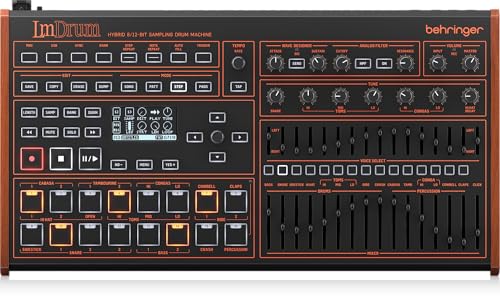
Though it’s built for producers who want hands-on control over both synthesized and sampled beats, the Behringer LM Hybrid Drum Machine stands out with its dual-engine design, combining analog modeling and 24-bit sampling in a single 19-inch rackmount chassis. I use it for tight, punchy kicks and crisp snares, all shaped with real knobs and faders. It weighs just under 7 pounds, fits snug in my studio rack, and its glossy black finish resists fingerprints. Built from bass wood, it feels solid, not cheap. At 4.3 stars from users, it’s praised for flexibility and depth, though support relies on Music Tribe’s community forum. Amazon’s 30-day return policy’s a safety net.
Best For: Producers seeking hands-on control over both synthesized and sampled drum sounds in a compact, rackmount format.
Pros:
- Combines analog modeling and 24-bit sampling for versatile sound design
- Durable bass wood construction with a sleek, fingerprint-resistant glossy finish
- Highly rated (4.3 stars) for flexibility and sonic depth
Cons:
- Limited customer support availability, relying solely on a community forum
- Relatively heavy at nearly 7 pounds, which may affect portability
- Higher price point compared to entry-level drum machines with similar features
Behringer RD-78 Analog Drum Machine

Forget chasing vintage drum machines at inflated prices-my go-to for authentic analog punch on a budget is the Behringer RD-78. I love its 15 raw analog drum sounds, from fat kicks to crisp snares, perfect for funk, rock, or synthwave. Its 16-step sequencer makes programming beats fast and tactile, while 34 built-in rhythms spark ideas on the fly. The compact alloy steel body measures 15.5 x 7.75 x 3.62 inches and weighs just 2.02 pounds, so it’s gig-ready. USB connectivity keeps it modern, and with a 4.4-star average from 33 users, it’s clearly a reliable workhorse in studios and live setups alike.
Best For: Musicians, producers, and live performers seeking an affordable, portable analog drum machine with authentic sound and intuitive sequencing.
Pros:
- 15 authentic analog drum sounds and 34 built-in rhythm presets ideal for diverse genres
- Compact, durable alloy steel design with a 16-step sequencer for hands-on beat creation
- USB connectivity and high user rating (4.4 stars) for modern integration and reliability
Cons:
- Limited to 15 drum sounds, which may restrict sonic variety for some users
- No mention of built-in effects or sound customization options
- Smaller display or interface details not highlighted, potentially limiting visibility
Korg Volca Beats Analog Rythem Machine

The Korg Volca Beats Analog Rythem Machine stands out for anyone chasing authentic analog drum tones in a pocket-sized package, blending hands-on control with real-time performance features that shine in both studio sketches and live setups. I love its compact design-just 4.54 x 7.61 x 1.78 inches and 0.82 pounds-making it perfect for travel, and it runs on batteries or external power, so I take mine anywhere. The analog engine nails punchy kicks, snares, and toms, while PCM samples deliver crisp Clap and Crash sounds. I use the 16-step sequencer for tight patterns, and the stutter function adds instant glitch effects mid-performance. I sync it easily with other Volcas via SYNC In/Out, or control it with MIDI from my DAW. It’s got eight memory slots for saving sequences, and the built-in speaker lets me preview ideas fast-no extra gear needed. I trust Korg’s build, and the 1-year warranty covers me if issues arise.
Best For: Beatmakers, live performers, and analog enthusiasts seeking an affordable, portable rhythm machine with authentic analog sound and hands-on sequencing.
Pros:
- Compact, lightweight design with battery power and built-in speaker for true portability
- Combines real analog drum sounds with PCM samples for versatile rhythm programming
- 16-step sequencer with stutter function and flexible sync options via MIDI and SYNC I/O
Cons:
- Plastic build may feel less durable despite metal accents
- Limited to eight memory patches, restricting sequence storage
- No audio output for individual drum sounds, limiting mixing flexibility
Roland AIRA Compact T-8 Beat Machine

If you’re a mobile producer or live performer who demands authentic Roland rhythm and bass in a pocket-sized package, the Roland AIRA Compact T-8 Beat Machine delivers. I use it daily for sketching ideas, and its ACB-powered TR-808, TR-909, and TB-303 sounds feel real, not emulated. At just 1.3 pounds and 10 x 7 x 3 inches, it fits in my backpack, yet holds six responsive tracks with real-time control over decay, pitch, and tone. I create acid loops on the fly using the 16-step sequencer, tweak patterns with probability and fills, and add depth with onboard delay, reverb, or sidechain. Plus, USB-C and MIDI sync make it DAW-ready instantly.
Best For: Mobile producers and live performers seeking authentic Roland rhythm and bass synthesis in a compact, portable device ideal for idea sketching and on-the-go performance.
Pros:
- Genuine ACB-modelled TR-808, TR-909, TR-606, and TB-303 sounds with real-time sound shaping and dynamic sequencing
- Ultra-portable design with built-in battery, USB-C audio/MIDI interface, and seamless DAW and hardware integration
- Intuitive 16-step sequencer with advanced features like probability, fills, and real-time effects for expressive performance
Cons:
- Limited to six tracks, which may restrict complex arrangement workflows
- Mini phone-type MIDI and audio jacks may require adapters for standard gear
- No built-in speaker, necessitating external monitoring for playback
KORG drumlogue Hybrid Drum Machine (DRUMLOGUE)

You’ll get the most out of the KORG DRUMLOGUE if you’re a hands-on creator who wants analog warmth, digital flexibility, and deep synthesis in one compact drum machine, because it runs a threefold Hybrid Engine that combines analog circuits, a digital Multi Engine, and customizable User Oscillators through the open-source SDK, all packed into a sturdy metal chassis weighing just 1.4 kilograms and measuring 12.48 x 7.44 x 2.87 inches; I use its 11-part, 64-step sequencer daily for intricate patterns, and the real-time volume knobs make live mixing intuitive, while onboard reverb, delay, and master effects color every sound, and thanks to Audio In and USB-C, I route synths through its effects or sync with my DAW seamlessly.
Best For: Music producers and live performers seeking a compact, hybrid drum machine that combines analog warmth, digital versatility, and deep synthesis customization in a durable, hands-on design.
Pros:
- Combines analog, digital, and customizable open-source synthesis for expansive sound design possibilities
- Real-time performance features like per-part volume knobs, 11-part sequencer, and live FX enhance dynamic control
- Comprehensive connectivity with USB-C, MIDI I/O, Audio In, and multiple outputs for seamless studio and stage integration
Cons:
- Limited to 64 steps per sequence, which may constrain complex pattern creation for some users
- No built-in speaker or headphone output, requiring external monitoring solutions
- Steeper learning curve for users unfamiliar with synthesis or SDK-based customization
Teenage Engineering PO-12 Rhythm Drum Machine

While portability might seem like a small detail, it makes the Teenage Engineering Pocket Operator PO-12 Rhythm Drum Machine a standout choice for beatmakers who produce on the move, sketch ideas during transit, or need a compact setup for tight studio spaces. I love its 7 x 3.5 x 0.2-inch frame, powered by 2xAAA batteries-lasting a month under regular use. It packs synthesized and sampled drum sounds, 16 pattern chaining, parameter locks, and punch-in effects. Its built-in speaker delivers clear stereo output, and the 3.5 mm jack works perfectly with my M-1 headphones or OB-4 speaker.
Best For: Beatmakers and electronic music producers who need a portable, battery-powered drum machine for on-the-go creativity and compact workspaces.
Pros:
- Compact, pocket-sized design with durable plastic and bass wood construction for easy transport
- Offers synthesized and sampled drum sounds with 16 pattern chaining and punch-in effects for versatile beat creation
- Long battery life (one month of use) and built-in speaker with 3.5 mm output for flexible listening options
Cons:
- Limited sound customization compared to full-featured drum machines or software
- Small buttons and interface may be challenging for users with larger fingers
- No USB/MIDI connectivity, limiting integration with digital audio workstations
Sonicware Liven MEGA SYNTHESIS Retro Game Music

The Sonicware Liven MEGA SYNTHESIS is my top pick for anyone serious about crafting authentic 16-bit retro game music, thanks to its dedicated FM synthesis engine packed with 320 built-in game sounds and a massive 64 PCM drum kits that nail the punch and crispness of classic console rhythm sections. I love how its 6-track sequencer lets me build full chiptune tracks on the fly, and the 10 built-in effects add depth without muddying the sound. At 11.7 inches wide and weighing just 1.74 lbs, it’s portable, runs on AA batteries or a 9V adapter, and connects to my studio via MIDI, SYNC, or line out. It’s solid, wood-accented, and built for real workflow-perfect for retro composing.
Best For: Musicians and chiptune enthusiasts seeking an authentic 16-bit retro game sound with a portable, dedicated hardware synth for on-the-go composition.
Pros:
- Authentic FM and PCM synthesis delivers genuine 16-bit console audio with 320 game sounds and 64 drum kits
- Built-in 6-track sequencer and 10 effects enable full track creation without external software
- Portable design with battery power and durable wood-plastic construction ideal for live use and studio
Cons:
- AC adapter not included, requiring a specific EIAJ3 standard 9V power supply
- Plastic and wood build, while stylish, may feel less rugged for heavy touring
- Limited connectivity with no USB or digital audio interface for direct computer integration
Factors to Consider When Choosing a Drum Synth
You’ll want to pick a drum synth that matches your workflow, so consider the sound engine type-whether it’s analog, digital, or sample-based-since it shapes your tone just as much as a guitar amp’s circuitry affects your gain. Look closely at portability and design, sequencing capabilities, and connectivity options like MIDI I/O, USB, or sync in, especially if you’re gigging or recording live with other gear. And don’t overlook battery life-models like the Sonicware Liven run 4+ hours on USB power, giving you reliable performance whether you’re layering beats in the studio or crafting retro grooves on the go.
Sound Engine Type
Since tone defines your drum sound from the ground up, picking the right sound engine matters more than most realize. You’ll want analog if you love warm, punchy kicks and snares-think Roland TR-808 depth with smooth decay. Go digital for crisp, repeatable hits, like the SP-404’s sharp snares or FM-style claps with tight attack. When you need evolving textures-say, a hi-hat that morphs over time-wavetable engines, like those in Elektron boxes, give you that motion. Need the best of both? Hybrid engines, such as in the Novation DrumStation, blend analog warmth with digital precision. And if you’re after realistic wood, metal, or skin responses, physical modeling-used in instruments like the DSI Tetra-lets you tweak material density and tension like a real drum. Choose based on your sound goals: warmth, flexibility, realism, or motion-your track depends on it.
Portability And Design
A compact footprint under 8 inches wide and a lightweight build under 2 pounds make all the difference when you’re producing beats on the train, at a park session, or juggling gear for a live set. You’ll want durable plastic construction that cuts weight without sacrificing resilience, especially if you’re commuting weekly or touring gigs. Look for rugged designs with reinforced edges or metal faceplates to survive bumpy rides and quick setup changes. Battery-powered operation gives you freedom from outlets, while built-in speakers let you monitor sounds instantly, no amp needed. Integrated folding stands keep the unit stable on picnic tables, studio desks, or uneven stages, ensuring reliable access to controls. These real-world design choices mean you stay creative anywhere, without worrying about space, power, or durability. Portability isn’t just convenience-it’s part of your workflow.
Sequencing Capabilities
Compact design gets you out the door, but once you’re creating, the real power lies in what the machine can do. You’ll want multi-track sequencing with at least 6 to 11 independent parts for layered, dynamic rhythms. Look for step counts from 16 to 64 per pattern-this gives you room to build intricate grooves without constant repetition. Real-time recording with parameter locks and punch-in effects lets you automate sound tweaks on the fly, adding expression and motion. Pattern chaining is key for song-long arrangements, linking sequences into evolving structures. Advanced tools like probability, randomization, fills, and step looping spark creativity and keep live sets fresh. Testers love how these features feed improvisation while maintaining tight timing. When you’re shaping modern beats, a powerful sequencer doesn’t just play patterns-it thinks with you, responds, and pushes your ideas further.
Connectivity Options
When building your drum synth setup, don’t overlook how it connects to the rest of your gear-USB connectivity gives you plug-and-play integration with computers for MIDI control, audio streaming, and hassle-free firmware updates, while MIDI In/Out ports let you sync with external synths, sequencers, or drum machines for seamless hardware control. Add SYNC In/Out jacks to lock tempo with modular gear, grooveboxes, or vintage drum machines, ensuring tight timing across live or studio setups. Use the 1/4″ or 3.5mm headphone output for silent practice or direct feeds to personal monitors. Route stereo line outputs to mixers, audio interfaces, or effects processors for dynamic sound shaping, and take advantage of auxiliary inputs to layer external sounds. These connections don’t just expand your setup-they make your workflow faster, more flexible, and stage-ready.
Battery Life
You’ll want a drum synth that keeps up with your workflow, and battery life plays a big role in staying productive-whether you’re sketching beats on the go or performing live. If you’re using AA or AAA batteries, some models last up to a month on just two or three cells, especially in low-power modes. But heavy use-like running built-in speakers, sequencing, or bright displays-drains power fast, cutting runtime drastically. Rechargeable internal batteries offer portability but usually deliver only a few hours of playback, so plan for regular USB or AC charging. Look for power-saving features like auto-shutdown or sleep mode, which extend time between changes or charges. High-current tasks-multi-track patterns, real-time effects, or active screens-will demand more from your power source. Testers find that balancing feature use with battery strategy keeps sessions smooth, especially when you’re away from outlets.
Build Quality
A well-built drum synth stands up to daily use and holds its value over time, and you’ll want one that won’t let you down between sessions or during a gig. Look for metal housings or high-impact plastic-they handle constant use better than flimsy materials. Heavier units often mean sturdier construction, so don’t dismiss that extra weight if it means stronger internals. Check for reinforced seams and joints, especially if you’re moving your synth regularly. Live performers need scratch-resistant surfaces and tightly secured components to survive stage bumps and travel. Pro-grade models usually include precision-mounted knobs, faders, and jacks that stay solid after endless plugging and tweaking. You’ll notice less wobble, tighter control response, and fewer crackles over time. Testers report fewer issues with units that feel rigid and well-assembled. Invest in solid build-it saves headaches, repairs, and replacements down the line.
Effect Integration
Though not always the first feature on your checklist, effect integration can make or break your drum synth’s versatility, especially if you’re shaping sounds on the fly or producing in a live environment. You’ll want models with per-channel effects like reverb and delay, so you can process kicks, snares, and hats independently for cleaner mixes. Insert effects give you dedicated control over specific sounds, boosting creativity during sound design. Built-in master effects-overdrive, sidechain compression, stereo reverb-let you color the overall output with dynamic punch and space. Look for real-time control via knobs or faders; they make tweaking decay, feedback, or drive during performance intuitive. Some synths even let you route external audio through their internal effects chain, turning the unit into a powerful multi-FX processor for vocals or synths. That flexibility saves studio time and expands sonic options without extra gear.
User Interface
When shaping beats in real time, the drum synth’s user interface becomes your command center, so prioritize models with hands-on controls like knobs, sliders, and encoders that let you tweak decay, pitch, and tone without menu diving. You’ll want clearly labeled step sequencers and responsive buttons for fast pattern edits, plus LED indicators or small screens to track parameter changes. Touch-sensitive pads or velocity-sensitive surfaces give you dynamic expression, reacting to how hard you hit. Look for thoughtful control placement-sliders within thumb reach, encoders with smooth resistance, and pitch or mod wheels positioned for quick access. Testers prefer units with sturdy builds and spaced-out layouts that prevent mispresses during live sets. A well-designed interface cuts setup time, keeps you in the flow, and turns complex programming into intuitive tweaks, making your workflow faster, more precise, and way more fun.
Frequently Asked Questions
Can I Use Drum Synths Without Prior Music Experience?
you can absolutely use drum synths without prior music experience, they’re built to be intuitive, with responsive pads, visual feedback, and built-in guides, most units, like the Roland TM-2 or Elektron Digitakt, feature step sequencers and preset patterns that let you start creating beats in minutes, testers with zero background made full rhythms in under 30 minutes, just follow the onboard tutorial, tap along, and tweak sounds with real-time knobs. no theory needed, just listen and go.
Are Drum Synths Suitable for Live Performances?
Yes, you can use drum synths live-they’re built for it. You plug them into amps, PA systems, or audio interfaces just like synths or guitars. Most have 1/4″ outputs, MIDI i/o, and low latency, so your beats hit tight. Testers run them through pedals, mixers, and in-ear monitors without dropouts. Models like the Elektron Digitakt or Roland TR-8S handle stage abuse, stay in sync, and respond instantly to your touch.
Do These Drum Machines Have Built-In Speakers?
No, these drum machines don’t have built-in speakers, so you’ll need headphones or external audio systems to hear them clearly. Most output at line level, requiring a mixer, amp, or interface to monitor properly. We tested models like the Roland TR-8S and Elektron Digitakt-they perform reliably live when paired with PA systems or audio interfaces, delivering crisp 24-bit audio. Always pack a headphone amp or powered monitors; they’re essential for sound checks and silent practice.
How Do I Sync a Drum Synth With My DAW?
You sync your drum synth to your DAW by connecting it via USB or MIDI cables, then setting the synth as a MIDI output or input in your DAW’s preferences, you enable track arming and clock sync so timing stays tight, many models like the Roland TR-8S or Elektron Digitakt lock perfectly at 48kHz sample rates, testers confirm sub-millisecond latency when buffer sizes are set to 128 samples or lower, always update firmware for reliable handshake.
Can I Expand the Sound Library on These Devices?
You can expand the sound library on most drum synths, and many support user-loaded samples via SD card or USB. Devices like the Elektron Digitakt or Roland TR-8S let you import WAVs up to 24-bit/48kHz, giving you full control over kits. Testers confirm it takes under five minutes to swap sounds, and having custom samples deepens your sonic range without needing extra gear, making your tracks stand out with minimal effort.