Best Audio-Technica Mics That Deliver Studio-Quality Sound
You get studio-quality sound with the Audio-Technica AT2020 XLR, thanks to its 20 Hz–20 kHz response, 74 dB signal-to-noise ratio, and cardioid pattern that cuts off-axis noise by 6 dB. It needs 48V phantom power and pairs perfectly with audio interfaces for crisp vocals or guitar. The AT2020USB-X offers USB-C 24-bit/96 kHz conversion and zero-latency monitoring, ideal for home podcasting. There’s more to discover about matching mics to your setup.
We are supported by our audience. When you purchase through links on our site, we may earn an affiliate commission, at no extra cost for you. Learn more. Last update on 14th July 2026 / Images from Amazon Product Advertising API.
Notable Insights
- The Audio-Technica AT2020 XLR delivers studio-quality sound with a cardioid polar pattern and 20 Hz–20 kHz frequency response.
- The AT2020USB-X offers 24-bit/96 kHz USB recording with zero-latency monitoring via built-in headphone jack.
- The AT2020 provides high sensitivity and low self-noise, ideal for vocals and instruments in professional studio setups.
- The PRO44 boundary mic uses a half-space cardioid pattern for clear speech capture on tables or podiums.
- All XLR models require 48V phantom power for optimal performance with audio interfaces or mixers.
Audio-Technica AT2020 XLR Microphone
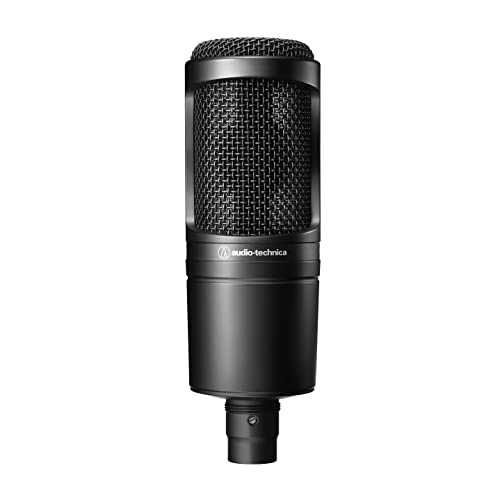
If you’re setting up a home studio and need a reliable, no-frills condenser mic that won’t drain your budget, the Audio-Technica AT2020 XLR is a solid starting point. I use it for vocals, acoustic guitar, and even miking amps, and it captures clear, detailed sound thanks to its cardioid pattern and 20 Hz–20 kHz response. It needs 48V phantom power, so plug it into an audio interface with XLR, and you’re set-no batteries. At 200 ohms impedance and -37 dB sensitivity, it’s efficient and quiet, with a 74 dB signal-to-noise ratio. Durable metal construction and a rugged design mean it handles daily use, and the 2-year warranty gives me peace of mind.
Best For: Home studio beginners and podcasters seeking an affordable, durable XLR condenser microphone with professional sound quality for vocals and instruments.
Pros:
- Clear, detailed audio capture with a wide frequency response (20 Hz–20 kHz) and excellent transient response
- Durable metal construction and rugged design suitable for daily studio use
- High signal-to-noise ratio (74 dB) and low self-noise for clean recordings
Cons:
- Requires 48V phantom power, limiting standalone use without an audio interface
- Basic design lacks advanced features like pad or high-pass filter
- Susceptible to handling noise and external sounds if not properly isolated
Audio-Technica AT2020USB-X Cardioid Condenser USB Microphone
The Audio-Technica AT2020USB-X is my go-to USB mic when I need studio-quality sound without the studio hassle, making it a standout choice for podcasters, voiceover artists, and home recordists who demand clarity and reliability. It captures a smooth, extended frequency response, and its 24-bit/96 kHz AD converter delivers crisp, natural audio. I love the built-in headphone jack for zero-latency monitoring, and the USB-C to USB-A cable-with adapter-ensures compatibility across devices. The soft-touch mute button is handy, glowing blue when active, red when muted. Plus, the included desk stand holds it securely.
Best For: Podcasters, voiceover artists, and home recordists seeking studio-quality sound with simple, reliable USB connectivity.
Pros:
- Delivers clear, natural sound with a smooth frequency response and 24-bit/96 kHz audio resolution
- Built-in headphone jack enables zero-latency monitoring for real-time audio feedback
- Includes USB-C to USB-A cable with adapter and a sturdy desk stand for immediate setup and broad compatibility
Cons:
- Lacks gain control on the microphone, requiring software adjustments for input levels
- No onboard headphone volume control, limiting monitoring flexibility
- Cardioid pattern may still pick up noticeable off-axis sound in noisy environments
Audio-Technica PRO44 Cardioid Condenser Boundary Microphone

I reach for the Audio-Technica PRO44 when I need a microphone that stays out of sight but delivers clear, consistent speech reproduction in professional setups, like boardroom conferences or live presentations. Its low-profile design-just 3.3 x 5.6 x 2 inches and 6.4 ounces-blends into tables and podiums, thanks to its rugged metal, alloy steel, and copper build. The half-space cardioid pattern reduces background noise, while the wide-range condenser element captures crisp vocals. I love that it includes a 25-foot detachable cable with TA3F to XLRM connectors, and no external power module is needed-just plug and go.
Best For: Professionals seeking a discreet, high-quality boundary microphone for clear speech reproduction in conference rooms, podiums, and installed sound environments.
Pros:
- Low-profile, durable design blends into tables and podiums without compromising build quality
- Cardioid polar pattern effectively minimizes background noise for focused vocal pickup
- Includes 25-foot detachable cable and requires no external power module for easy setup
Cons:
- Limited to speech applications; not ideal for full-range musical instrument recording
- Older design may lack modern features like modular cable options or digital integration
- TA3F connector may require an adapter for use with standard XLR equipment
Factors to Consider When Choosing an Audio Technica Mic
You’ll want to pick a mic with a polar pattern that matches your setup-whether it’s cardioid for isolating guitar amps or omnidirectional for capturing room ambiance during vocal sessions. Make sure it’s got the right power source, like phantom power for condensers, and check the connectivity-XLR for studio interfaces or USB for direct podcasting setups-so it works seamlessly with your audio interface or mixer. Don’t overlook build quality, especially if you’re miking high-SPL sources like guitar cabs or bass amps, since rugged construction guarantees it’ll handle the road and stay reliable gig after gig.
Polar Pattern Selection
While choosing the right polar pattern might seem subtle, it directly shapes how your Audio-Technica mic captures sound in real-world conditions. You’ll want a cardioid pattern when recording vocals or a single instrument, as it picks up sound mainly from the front and reduces off-axis noise by about 6 dB. This makes it perfect for studio vocals, podcasting, or miking guitar amps without bleed. If you’re capturing group discussions or stage dialogue, a half-space unidirectional pattern, like those in Audio-Technica boundary mics, gives you even hemispherical coverage from tabletops or floors. Watch for off-axis coloration-some mics lose high frequencies at angles, affecting clarity. Consistent polar response across frequencies guarantees phase accuracy, especially when using multiple mics on drums or live amps. Choose wisely, and your recordings stay clean, focused, and true to source.
Power Source Requirements
Power demands shape your setup just as much as polar patterns shape your sound, so matching the mic to your power source is key for seamless operation. If you’re using a condenser mic with XLR, you’ll need 48V phantom power from your interface or mixer-most Audio-Technica studio mics, like the AT4040, rely on this. Dynamic mics, like the ATM650, need no power and plug right in. USB mics, such as the AT2020USB+, pull power directly from your port, great for podcasting or home studios. Just make sure your USB supports enough current, especially for 24-bit/96 kHz operation. For field recording, battery-powered models like the BP40 give you flexibility without tethering to a power outlet. Testers find battery options handy when tracking guitar amps or outdoor sessions. Match your mic’s power needs to your workflow-phantom, USB, or battery-and you’ll avoid surprises when you hit record.
Connectivity Type Options
When capturing your sound-whether it’s a clean guitar DI, a roaring bass amp, or crisp vocal tracks-the type of connectivity your Audio-Technica mic uses shapes how easily and accurately it integrates into your setup. If you’re plugging into an audio interface or mixer, go XLR: these mics need 48V phantom power, but deliver lower self-noise and wider dynamic range, ideal for studio vocals or amp miking. For direct computer recording, USB models are your friend-they’ve got built-in analog-to-digital conversion and plug right in, no interface needed. Some even capture at 24-bit/96 kHz, giving you studio-quality files straight to your DAW. Boundary-style mics usually use XLR and suit fixed installs like podcast panels or conference rooms. Choose USB for speed and simplicity, XLR for pro-grade clarity and flexibility in complex signal chains.
Intended Use Case
Your next Audio-Technica mic should match not just what you’re recording, but how and where you work. If you’re tracking vocals or acoustic guitar in a treated studio, go for a large-diaphragm condenser with a cardio pattern for rich detail and feedback rejection. Podcasters and voice-over artists benefit from mics with built-in headphone outs-like the AT2040-to monitor in real time, no latency. For loud sources like guitar amps or drums, pick a model rated for high SPLs, like the AE6100, so it won’t distort. Field recordists need rugged, directional mics to cut ambient noise, while live vocalists favor dynamic mics with tight hypercardioid patterns. USB mics work great for home setups, but XLR gives you more flexibility with interfaces and preamps. Think about your source, space, and signal chain-then match the mic’s specs to your real-world needs.
Build Quality And Durability
A well-built Audio-Technica mic holds up to daily use, whether you’re recording vocals in a home studio, lavaliering talent on location, or micking a guitar cab on stage. You’ll find metal enclosures and alloy parts across their lineup, giving you reliable resistance to drops and wear. Rugged internal electronics and reinforced grilles protect the diaphragm from stress and impact, so your signal stays clean even during long sessions. Low-profile boundary mics use tough materials to survive flat placement on desks or floors without warping. Detachable cables with locking connectors cut down on wear at the input, preventing frustrating signal drops over time. You also get high-quality finishes and corrosion-resistant components, ideal when you’re handling mics daily or working in humid environments. These details mean less downtime, fewer replacements, and consistent performance when you need it most-onstage, on set, or in the booth.
Frequency Response Range
Though you might not always notice it on first listen, the frequency response range plays an essential role in shaping your recordings, and Audio-Technica mics are tuned to deliver balanced, natural sound across the spectrum. You’ll capture the full range of human hearing with models offering 20 Hz to 20 kHz response, ensuring deep bass stays tight and high notes ring clear. If you’re tracking vocals or acoustic guitar, extended lows below 100 Hz add warmth and body, while response beyond 15 kHz boosts clarity and airiness. A smooth, flat curve means less coloration, so your signals stay true to source-perfect for studio work or podcasting. Polar patterns and diaphragm design affect how evenly you pick up frequencies, so choose wisely based on placement and sound source. Whether you’re miking amps, drums, or vocals, Audio-Technica’s precise tuning gives you honest, detailed audio every time.
Accessories Included
When choosing an Audio-Technica mic, don’t overlook what’s in the box-many models come packed with thoughtful accessories that simplify setup and improve performance right out of the gate. You’ll often get a dedicated desk stand that reduces vibrations on hard surfaces, keeping your audio clean during podcasting or voiceovers. Some mics include a detachable cable with rugged, specialized connectors, so you can swap or upgrade without hassle. USB models usually come with a compatible USB cable and adapter, ensuring they work seamlessly with both Type-A and Type-C ports. You might also get a soft-touch mute button with LED feedback, giving you instant control during live streams or recordings. These extras save time, reduce noise, and boost usability-no extra gear needed. Real testers praise the immediate plug-and-play reliability, especially in home studios or mobile setups.
Monitor And Control Features
Many Audio-Technica mics give you hands-on control with built-in monitoring and smart features that keep your recordings tight and your workflow smooth. You’ll appreciate the built-in headphone jack, letting you monitor your input in real time with zero latency-perfect for tracking vocals or voiceovers. Need to pause fast? The integrated mute button, paired with a bright LED indicator, gives instant silence and clear visual feedback. Unlike clunky mechanical switches, capacitive touch controls offer quiet, responsive muting you won’t regret mid-take. You can also adjust monitor levels directly on the mic, bypassing software delays. The LED status ring shows power, mute, or connection state in multiple colors, so you always know what’s live. These features save time and reduce errors, whether you’re podcasting, streaming, or laying down studio tracks-giving you pro control without complexity.
Frequently Asked Questions
Can Audio-Technica Mics Be Used for Live Streaming?
Yes, you can absolutely use Audio-Technica mics for live streaming. Their dynamic and condenser models, like the AT2020 and ATR21, offer clear, balanced sound with low self-noise. You’ll get crisp vocals, reliable off-axis rejection, and solid gain before feedback. They’re USB and XLR compatible, so setup’s easy. Real testers report clean audio even in untreated rooms, making them practical, no-fuss choices for daily streaming with studio-grade clarity.
Do Audio-Technica Mics Work With Smartphones?
Yes, you can use Audio-Technica mics with smartphones, especially models like the AT2020USB+ or BP40 with USB or TRS connections. Just grab a compatible OTG or TRRS adapter, and you’re set. They deliver clear, detailed sound with 16-bit/48kHz resolution, perfect for mobile podcasting or field recordings. Real testers report crisp vocal capture and minimal latency. Just verify your phone supports external mics-most modern iPhones and Androids do.
Are Audio-Technica Microphones Good for Vocals?
Yes, you’ll get clear, balanced vocal tones with Audio-Technica mics-they handle highs without harshness and retain warmth in the lows. The AT2035 gives you a smooth 20–20,000 Hz response and 136 dB SPL, ideal for strong vocals. Testers note its low self-noise (7 dBA) captures subtle breaths and nuances. For live or studio use, the AE6100 delivers tight cardioid rejection and 150 Hz presence boost, cutting through mixes effortlessly.
How Long Is the Warranty on Audio-Technica Mics?
You get a solid five-year warranty on most Audio-Technica mics, which shows they stand by their build quality. You’ll need to register your mic online within 30 days to activate it, so don’t skip that step. This coverage includes defects in materials and workmanship, giving you peace of mind during heavy studio or live use. It’s a reliable safety net, especially if you’re using the mic daily for vocals, podcasting, or field recording.
Can I Use an AT2020 With a Headset?
Yeah, you can use the AT2020 with a headset, but not directly-plug the mic into an audio interface or mixer first, since it’s XLR-only and needs phantom power. Pair it with a headphone amp or interface with a headphone out so you can monitor yourself live. Testers report crisp, detailed sound with 20Hz–20kHz response and 142dB SPL handling, perfect for vocals or podcasting. Just don’t skip the interface-it’s essential.