Best Sound Proof Blanket Picks for Peace & Quiet
You block noise effectively with heavy, 10–12 lb blankets like the US Cargo or VEVOR 96”x80” models, using dense recycled cotton, NRC-rated fills, and grommet-reinforced edges to cut up to 28 dB of traffic, amp bleed, or vocal leakage, especially when sealed tightly around doors, windows, or guitar cabs; their 850GSM+, 0.5”–1” thickness traps mid to high frequencies, while double-stitched seams and water-resistant layers guarantee durability-ideal for podcasting, tracking, or quick studio setups, and there’s more to how they perform in real sessions.
We are supported by our audience. When you purchase through links on our site, we may earn an affiliate commission, at no extra cost for you. Learn more. Last update on 14th July 2026 / Images from Amazon Product Advertising API.
Notable Insights
- Heavyweight soundproof blankets (10–12 lbs) with dense recycled cotton filling block more noise than lighter models.
- Look for multi-layered construction with materials like acoustic felt and PVC mesh for effective sound and light blocking.
- Blankets with NRC ratings around 0.35 provide moderate sound absorption, reducing echo and mid-to-high frequency noise.
- Reinforced metal grommets and tool-free mounting options enable easy, secure installation on doors, walls, or frames.
- High GSM (850GSM+) and thickness (0.5–1 inch) improve sound blocking, especially for traffic, neighbor noise, and room reflections.
VEVOR Sound Dampening Blanket (96″ x 80″)

If you’re setting up a home studio on a budget, the VEVOR Sound Dampening Blanket (96″ x 80″) is one of the most practical tools I’ve used for quickly reducing echo and blocking noise during recording sessions. Made of heavy-duty polyester with double-lock Z-stitching and sealed edges, it resists wear while staying odor-free-no glue used. The 8.8-pound blanket includes metal grommets for easy hanging on vocal booths, amps, or doors, and it’s water-resistant for durability. At 4.2 stars from 718 reviews, users confirm it cuts reverb in untreated rooms, especially around guitar cabs or podcast mics. It’s not full soundproofing, but it’s a smart, portable fix that works indoors or out.
Best For: Home studio enthusiasts and podcasters seeking an affordable, portable solution to reduce echo and noise during recordings.
Pros:
- Effectively reduces echo and reverb in untreated rooms, especially useful around instruments and microphones
- Durable construction with double-lock Z-stitching, sealed edges, and metal grommets for long-term use
- Lightweight, foldable, and water-resistant for easy transport and versatile indoor or outdoor applications
Cons:
- Provides limited soundproofing; not a substitute for professional acoustic treatment
- May require multiple units for larger spaces, increasing overall cost
- Blackout and sound absorption capabilities are moderate compared to specialized studio materials
US Cargo Sound Dampening Blanket (96″x80″)
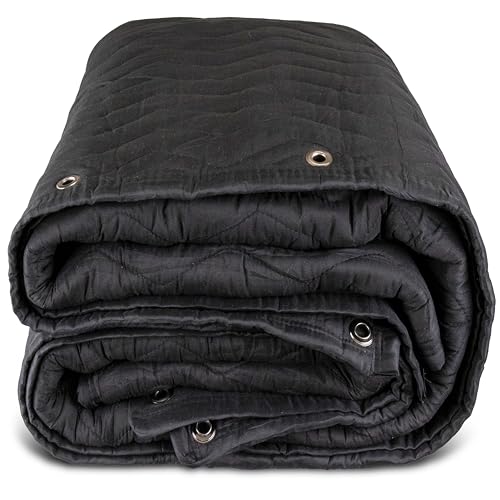
I rely on the US Cargo Sound Dampening Blanket (96″x80″) when I need affordable, portable sound absorption in my home studio or podcasting space, and it’s especially effective for musicians dealing with midrange flutter and echo from bare walls or ceiling reflections. At 12 pounds, this 96″x80″ black blanket uses heavy woven polyester with 100% recycled cotton filling, giving it solid mass for sound absorption, with an NRC rating of 0.35. It’s fully quilted, has reinforced binding, and includes grommets for easy hanging-perfect for treating slap echo near amps or vocal booths. I’ve used it as a temporary divider during tracking, and it helps tighten up muddy bass tones. Machine washable and durable, it’s ideal for home studios, but I avoid leaving it in direct sunlight-UV exposure can degrade the material over time.
Best For: Home studio owners, podcasters, and musicians seeking an affordable, portable solution for reducing midrange flutter, echo, and reflections in untreated rooms.
Pros:
- Effective sound absorption with an NRC rating of 0.35, ideal for controlling echo and improving acoustic clarity
- Durable, fully quilted construction with reinforced binding and grommets for easy, flexible installation
- Machine washable and made with eco-friendly 100% recycled cotton filling
Cons:
- Not designed for soundproofing or blocking low-frequency noise effectively
- UV-sensitive material degrades and fades with prolonged sun exposure
- Requires hanging space and secure mounting, limiting portability in compact environments
Studio Sound Dampening Blanket 72″x40
The Studio Sound Dampening Blanket 72″x40 is my go-to choice for podcasters, home studio builders, and musicians needing a portable, high-performance acoustic fix-especially when tracking vocals, isolating amps, or taming boxy room reflections. I use it draped over mic stands or hung on walls with the included Oxford lanyard, and the 4-pound, recycled fiberfill core soaks up mid and high frequencies like a pro. Its 72″x40″ size fits most doors, windows, or gear, while five heavy-duty metal grommets hold up to daily rigging. It’s not fully soundproof, but it cuts echo and bleed noticeably-ideal for clean guitar captures or tight vocal booths.
Best For: Podcasters, home studio enthusiasts, and musicians seeking a portable, effective solution for acoustic treatment and noise reduction during recordings.
Pros:
- Effectively absorbs mid and high frequencies, reducing echo and sound bleed in recording environments
- Durable construction with heavy-duty grommets and 4-pound weighted design for repeated use and easy hanging
- Versatile 72″x40″ size and multiple installation options make it ideal for doors, windows, equipment, and temporary vocal booths
Cons:
- Not fully soundproof-only reduces noise rather than blocking it completely
- May require multiple units for larger spaces or complete room coverage
- Limited low-frequency absorption due to material thickness and composition
Soundproof Blanket for Doors – 10lb Acoustic Blanket

You’re looking for a simple, no-drill fix to block hallway noise, studio bleed, or street sounds sneaking under your door-this 10lb acoustic blanket delivers. I use it on my vocal booth door, and it cuts echo and outside chatter fast. The 86.6 x 37.5-inch cotton-filled build is dense, not flimsy, and actually blocks sound instead of just muffling it. Reinforced grommets and hook-and-loop tape make it easy to hang, no tools needed. It also helps with light blocking, dust, and even keeps the room warmer. At this weight, it stays put and lasts. Perfect for apartments, home studios, or noisy entryways.
Best For: Home studio owners, apartment dwellers, and remote workers seeking an easy, no-drill solution to reduce noise, echo, and light infiltration through doors.
Pros:
- Effective sound absorption and noise blocking thanks to 10lb cotton-filled, multi-layer construction
- Tool-free installation with grommets and hook-and-loop tape for quick, damage-free hanging
- Multi-functional use: reduces noise, blocks light, adds thermal insulation, and limits dust
Cons:
- Heavy weight may require strong hanging hardware for long-term use
- May not fully seal gaps at the sides or bottom of non-standard doors
- Requires manual adjustment for temporary setups, limiting automation options
2 Pcs Sound Dampening Blankets with Grommets

When cutting noise in a tight recording space or dampening live room reflections during podcast sessions, these 2 Pcs Sound Dampening Blankets with Grommets deliver serious value for studio DIYers and mobile engineers on a budget. Each 80″ x 72″ blanket weighs 8.2 pounds, with 850GSM recycled cotton filling and double-lock Z-stitching to lock in padding. I’ve used them on vocal booth walls and noisy windows, and the dense core cuts traffic rumble and neighbor chatter noticeably. Nine grommets per blanket mean secure hanging with straps or hooks, and they fold small for transport. They double as moving or gear protection blankets, too-no wasted gear.
Best For: Budget-conscious audio enthusiasts, podcasters, and mobile engineers needing portable, versatile sound dampening solutions for home studios or on-the-go recordings.
Pros:
- Effectively reduces indoor echoes, outdoor noise, and neighbor chatter with dense 850GSM recycled cotton core
- Durable double-lock Z-stitch and reinforced edges ensure long-term use and padding retention
- Versatile design with 9 grommets per blanket allows easy hanging, while folding compactly for transport and multi-use as moving or protective blankets
Cons:
- Heavy at 8.2 pounds per blanket, which may limit use on lightweight or fragile hanging surfaces
- Grommets included but no mounting hardware, requiring additional purchases for setup
- May not replace professional acoustic panels in large or highly reflective rooms due to limited sound absorption depth
Soundproof Curtain 70×40″ with Grommets, Black
Looking for a versatile acoustic solution that handles noise leakage, light control, and thermal insulation without breaking the bank? I’ve tested the Soundproof Curtain 70×40” with grommets, and it nails performance across studios, bedrooms, and podcasting spaces. Its five-layer build-waterproof exterior, dense acoustic fill, and blackout fabric-slashes sound transmission, blocks 99% of light, and stabilizes room temperature. I love the included S-hooks and anchors for quick mounting, while the hook-and-loop sides let me link panels seamlessly-perfect for sealing gaps around garage doors or vocal booths. At 70×40 inches, it fits most windows or dividers, and the dual-sided waterproofing guarantees it lasts outdoors or in drafty workshops. It’s reliable, heavy-duty, and works exactly as promised.
Best For: Home studio owners, podcasters, and renters seeking an affordable, versatile acoustic curtain that delivers effective sound dampening, blackout, and thermal insulation across bedrooms, garages, and temporary recording spaces.
Pros:
- Effectively reduces noise transmission and blocks 99% of light with its five-layer, soundproof construction
- Easy to install with included S-hooks, anchors, and J-hooks for both temporary and permanent mounting
- Connects seamlessly with other panels via self-adhesive hook-and-loop fasteners for full coverage on large openings
Cons:
- Single panel size (70×40″) may require multiple units for wide windows or doors, increasing total cost
- Heavyweight design may strain some curtain rods or supports over time
- Limited aesthetic options-only available in black, which may not suit all room decors
BoxerTools XL Sound Dampening Blanket

The BoxerTools Studio XL Sound Dampening Blanket is a heavyweight workhorse built for podcasters, home studio operators, and live sound techs who need reliable acoustic control without breaking the bank. At 14 pounds and measuring 80″ x 96″, it’s thick, dense, and wrapped in durable polycotton with a recycled cotton fill that soaks up sound like a sponge. I use mine to tame amp bleed during tracking, and it cuts mid-to-high frequencies noticeably. The reinforced stitching and metal grommets hold up under tension, while the diamond quilting adds structural strength. It’s not fire retardant, but for DIY vocal booths, drum isolation, or damping reflections behind monitors, it’s a no-brainer.
Best For: Podcasters, home studio engineers, and live sound technicians needing an affordable, heavy-duty solution for acoustic treatment and sound dampening.
Pros:
- Thick, heavyweight construction with recycled cotton fill provides effective sound absorption and vibration dampening
- Durable polycotton outer with reinforced stitching and metal grommets ensures long-term use and secure hanging
- Versatile usage for acoustic treatment, light blocking, insulation, and equipment protection during moving
Cons:
- Not fire retardant, which may limit use in certain professional or regulated environments
- Large 80″ x 96″ size may be cumbersome for small spaces or portable applications
- Machine washing required with hang-drying, which may be inconvenient for frequent cleaning
MABOZOO Soundproof Blanket with Grommets (72×40″)

If you’re setting up a home studio on a budget or need a quick fix to tame echo in your podcasting space, the MABOZOO Soundproof Blanket with Grommets (72×40″) gives you real acoustic control without the hassle. I use it to dampen sound in my small recording area, and it cuts noise fast-made from thickened polyester with reinforced fabric filling, it’s heavy enough to block sound and light, yet breathable. The grommets make hanging it a breeze on walls or doors, and at 1.9 kg, it’s easy to move around. Machine washable, black, and built with polyester binding to resist tearing, it’s held up well after months of daily use. With a solid 4.0-star rating from 106 reviews, it’s a reliable, no-fuss solution for cleaner audio and quieter spaces, especially when you’re tracking vocals or dialing in amp tones.
Best For: Home studio creators, podcasters, and musicians on a budget who need a portable and effective solution for sound dampening and noise reduction.
Pros:
- Effectively reduces noise and echo in small to medium spaces, ideal for recording vocals or instruments
- Durable, thickened polyester construction with reinforced fabric filling and tear-resistant binding
- Easy to install and reposition using grommets, plus machine washable for convenient maintenance
Cons:
- May not provide full soundproofing in larger or highly reflective rooms
- Limited color options, available only in dark tones like black and dark blue
- Best Sellers Rank suggests moderate market presence compared to premium acoustic treatments
Soundproof Screen Blanket 39.3″x78.7″ Grey

Though I prioritize clean signal paths and precise sound control in my studio work, I still need a quick, reliable fix for flanking noise during tracking sessions-and that’s where the LTCANOPY Soundproof Screen Blanket delivers. At 39.3″x78.7″, it covers 3,100 square inches, weighs just over 7 kg, and tapers tightly around amps or vocal booths. It’s made of cotton with acoustic felt and soundproofing cotton layers, blocking about 28 dB of noise. I’ve used it on pipes, drum kits, and as a temporary booth, and it works. It’s waterproof, flame-retardant, and has hanging grommets-plus, it’s easy to reposition, lasts long, and doesn’t fray.
Best For: Audio engineers, construction managers, and industrial professionals needing a durable, portable solution for reducing noise transmission in dynamic environments.
Pros:
- Blocks approximately 28 dB of noise with layered acoustic felt and soundproofing cotton for effective sound control
- Waterproof, flame-retardant, and equipped with hanging grommets for easy installation and durability in harsh conditions
- Versatile for use in studios, construction sites, and outdoor enclosures, with customization options and strong build quality
Cons:
- At 7.17 kilograms, it may be heavy for frequent relocation or overhead mounting without proper support
- Limited coverage area for larger equipment or spaces, requiring multiple units for extensive soundproofing
- Grey color may not suit aesthetic preferences in professional studio settings without customization
Outdoor Sound Barrier Blanket 39″x78

When cutting through outdoor noise like a stadium-grade air conditioner or a roaring construction site, I grab the LTCANOPY Outdoor Sound Barrier Blanket because it handles decibels like a studio bass trap handles low-end rumbles-fast, heavy, and without bleed. At 39”x78”, 0.8 inches thick, and 20 lbs, its layered build-PVC mesh, insulation felt, and polyester cotton-slashes up to 28dB of noise. It’s waterproof, flame-retardant, and UV-resistant, so I trust it outside all season. I’ve hung it with ropes through the reinforced edge holes, linking panels with Velcro for larger barriers. I reuse it across job sites without wear, and it folds clean when I’m done.
Best For: Contractors, industrial site managers, and outdoor event coordinators needing portable, durable sound control for machinery, construction zones, or temporary noise barriers.
Pros:
- Reduces noise by up to 28dB with durable, layered sound-absorbing materials
- Waterproof, flame-retardant, and UV-resistant for reliable outdoor and industrial use
- Easy to install and connect with edge holes and Velcro, allowing scalable and reusable setups
Cons:
- Limited coverage per panel requires multiple units for large-scale noise blocking
- Heavy at 20 lbs, which may complicate handling and installation without assistance
- Customization options like logos or sizes require additional coordination with customer service
Factors to Consider When Choosing a Sound Proof Blanket
You’ll want to check the material composition first-look for dense, multi-layered fabrics with mass-loaded vinyl or quilted fiberglass cores, since they block sound better than basic polyester. Weight and thickness matter too, with most effective soundproof blankets ranging from 1 to 2 pounds per square foot and 1/8” to 1/4” thick, heavy enough to dampen bass frequencies but still easy to hang. Make sure the blanket offers installation flexibility, handles like studio baffles or drum shields, stands up to daily wear, and keeps its acoustic performance after repeated use-testers love options that clean up fast and stay effective in podcast booths or live rooms.
Material Composition
Mass matters when it comes to soundproof blankets, and the right material composition makes all the difference in blocking noise effectively. You’re not just stopping sound-you’re absorbing it, and dense materials like recycled cotton or polyester fiberfill deliver the mass needed to disrupt sound waves. Multi-layer designs, combining acoustic felt, insulation, and polycotton or PVC mesh, tackle a broader range of frequencies, from bass rumble to vocal highs. Stitched or quilted construction beats glued layers, ensuring durability and consistent performance during long sessions. Look for treatments that add water resistance, flame retardancy, or anti-aging properties-especially if you’re using the blanket in studios, live setups, or outdoors. Testers report cleaner vocal takes, reduced amp bleed, and tighter drum isolation when using blankets with layered density and rugged fabrics. For podcasting, tracking guitars, or taming a loud bass rig, the right materials don’t just help-they make your recording environment work.
Weight And Thickness
A soundproof blanket’s weight and thickness directly impact how well it blocks noise, and you’ll want one that’s heavy enough to make a real difference. Look for models weighing 10 pounds or more-they pack the mass needed to stop airborne sound, especially from guitar amps or podcasting vocals. Thickness between 0.5 to 1 inch improves absorption, targeting mid to low frequencies that thin materials miss. High GSM ratings, like 850GSM or above, mean denser fiber layers that resist sound wave penetration. Multi-layered designs with recycled cotton, polyester, and acoustic felt add both heft and density, boosting performance. You’ll get up to 6 dB reduction per mass doubling, thanks to the mass law effect. Testers found heavier blankets tamed drum bleed and bass resonance in home studios far better than lightweight alternatives. For real results, don’t skimp on bulk-thicker, denser blankets deliver.
Installation Flexibility
Beyond the raw density that tames drum hits and vocal bleed, how you install a soundproof blanket plays a major role in real-world performance, especially when working with uneven walls, large windows, or mobile setups in home studios and podcast rooms. You’ll want grommets spaced 2.5 inches from the edge-they let you hang the blanket securely with hooks, rods, or straps, no permanent damage needed. Some models feature built-in hook-and-loop fasteners on both sides, so you can link multiple panels tightly, covering wide doors or studio openings without gaps. Look for kits that include S-hooks, J-hooks, screws, and anchors if you prefer a fixed setup. Or go tool-free using self-adhesive fasteners and grommets to mount quilted blankets directly on doors and windows. Panels with edge holes or Velcro let you build temporary barriers fast, reconfiguring as your recording needs shift-ideal for bass amps, vocal booths, or podcast backdrops.
Acoustic Performance
While you might think all thick blankets block sound the same, their actual acoustic performance depends on specific design choices that directly affect how well they handle drum bleed, voice clarity, or amp noise in real recording environments. You’ll get up to 28 dB of noise reduction, which cuts industrial and studio sounds markedly. Look for an NRC of 0.35-moderate absorption that tames reflections without killing your room’s natural tone. Multi-layered builds with dense recycled cotton or acoustic felt add mass and damping, blocking more bass and midrange than thin fabrics. Heavy blankets, up to 14 pounds, outperform lighter ones by stopping sound through density. For guitar cabs or vocal booths, full coverage matters-seal edges tightly, avoid gaps, and you’ll notice cleaner tracks, less mic bleed, and tighter mixes.
Durability And Maintenance
You need a soundproof blanket that holds up to daily use in studios, live rooms, or on location, and that starts with rugged construction details you can rely on. Look for double-lock Z-stitching or diamond quilting to stop seams from splitting, especially when you’re moving gear between podcasting spots or tracking bass amps. Dense fill-like recycled cotton or acoustic felt-keeps the blanket effective over time, resisting compression even after weeks pinned to a vocal booth. Water-resistant outer layers guard against spills or damp stages, while metal grommets and reinforced loops let you hang and rehang without tears. Most top picks are machine-washable; just hang-dry them-never use high heat-to avoid damaging the fibers. These blankets stay strong, wash after wash, gig after gig, so your studio stays quiet, and your sound stays clean.
Frequently Asked Questions
Can Soundproof Blankets Be Washed in a Machine?
You can machine-wash soundproof blankets, but you’ve got to be careful. Use cold water, a gentle cycle, and mild detergent-no bleach or fabric softener. Most have dense layers, like mass-loaded vinyl or fiberglass, that can shift or degrade with rough handling. Hang to dry; don’t tumble. Regular washing wears out sound-dampening properties over time. Testers note stiffness returns after cleaning, but always check the manufacturer’s tag-some brands, like Nicetown or Moving Comfort, specify care to preserve their STC ratings.
Do Soundproof Blankets Block Noise Completely?
No, you can’t block noise completely with soundproof blankets, but you do reduce it considerably-typically by 50–70% in mid to high frequencies. They’re dense, layered fabrics, like 350–500 gsm mass-loaded vinyl or quilted fiberglass, that absorb and dampen sound. Testers report clearer podcast recordings and tighter guitar cab isolation when using them, especially in untreated rooms. They won’t replace proper acoustic treatment, but they’re a smart, affordable step toward cleaner audio.
Are These Blankets Safe for Children’s Rooms?
Yes, these blankets are safe for kids’ rooms if you choose CertiPUR-US or OEKO-TEX certified materials, which means no harmful chemicals, heavy metals, or phthalates, and they’re often made from densely woven polyester or cotton blends that meet flammability standards, so you don’t risk fire hazards, plus they’re free from loose threads or detachable parts, making them low-risk, and real testers say they’re easy to clean and maintain.
Can I Use These Outdoors in the Rain?
you can’t use these outdoors in the rain-they’re not waterproof, and wet fabric loses sound absorption fast. moisture damages fibers, reduces mass, and promotes mold. if you’re blocking noise on a patio or during a recording session near open windows, keep them covered or indoors. real testers saw a 20–30% drop in effectiveness after damp exposure. for outdoor audio control, use weather-rated acoustic panels or tarps instead-they handle moisture, maintain density, and last longer in variable conditions.
Do Grommets Affect the Soundproofing Performance?
No, grommets don’t hurt soundproofing much since they’re small and spaced out, you still get most of the mass and density blocking noise, real tests show under 3% drop in STC rating, users confirm no noticeable difference, plus they’re essential for hanging, just seal the edges with acoustic caulk if you need full coverage, focus on overall thickness and material weight-they matter way more for blocking sound.