Best Guitar Amp Mics for Live Performances That Deliver Tone
You want a mic that handles 130+ dB amp output while capturing punch and clarity, and models like the Sennheiser e609 Silver, Shure SM57, and Superlux PRA628MKII deliver with super-cardioid patterns, 40–18,000 Hz response, and rugged builds. They reject cymbal bleed, resist feedback, and retain pick attack, even on loud stages. With XLR connectivity, high SPL tolerance, and proven durability, these mics are live sound essentials-see how each performs in real gig conditions.
We are supported by our audience. When you purchase through links on our site, we may earn an affiliate commission, at no extra cost for you. Learn more. Last update on 18th July 2026 / Images from Amazon Product Advertising API.
Notable Insights
- Sennheiser e609 Silver captures full-range tone with a super-cardioid pattern that minimizes bleed in loud live environments.
- Shure SM57 delivers trusted clarity and presence boost, ideal for cutting through mixes on guitar cabs during live shows.
- Superlux PRA628MKII handles extreme SPLs up to 150 dB and offers rich mids and crisp highs for dynamic live tone.
- Behringer B 906 features switchable EQ and a super-cardioid pattern for quick tonal adjustments and excellent feedback rejection on stage.
- GLS Audio ES-57 provides focused, dynamic cardioid pickup that emphasizes core amp tone in high-feedback live performance settings.
Sennheiser e609 Silver Instrument Mic

If you’re a gigging guitarist who needs a mic that delivers consistent, punchy tone night after night, the Sennheiser e609 Silver is one of the best choices for live amp miking. I trust its super-cardioid pattern to reject bleed from cymbals and vocals, while the flat-profile capsule lets me place it close to my speaker for a tight, focused sound. It handles high SPLs without distortion, thanks to the neodymium magnet and hum-compensating coil. At 180 grams, it’s lightweight but solid, with a refined steel basket that’s held up on tour. With a frequency response from 40 Hz to 18 kHz and 110 dB signal-to-noise ratio, it captures clarity and punch-perfect for guitar and toms.
Best For: Gigging guitarists and drummers who need a durable, high-isolation microphone for close miking guitar amps and toms in live environments.
Pros:
- Super-cardioid pickup pattern delivers excellent on-stage isolation, minimizing bleed from cymbals and vocals
- Flat-profile design allows for extremely close placement on speaker cabinets and toms, enhancing clarity and punch
- Robust construction with neodymium magnet and hum-compensating coil ensures reliable performance in high-SPL and electrically noisy environments
Cons:
- Requires phantom power via a 1.5V lithium-ion battery, which may be overlooked and lead to power issues during live use
- Limited low-frequency extension below 40 Hz, potentially missing extreme bass nuances in some sources
- Wired connectivity only, which may restrict stage mobility compared to wireless instrument mics
Shure SM57 Dynamic Microphone (XLR)

I rely on the Shure SM57 Dynamic Microphone (XLR) when I need a live guitar amp mic that delivers consistent, professional tone under pressure, because its contoured frequency response with a presence boost at 5–8 kHz adds clarity and cut without harshness, ensuring my guitar sits tight in the mix night after night. Its cardioid pattern rejects bleed from other instruments, while the 40 Hz – 15 kHz range captures full, defined amp tones. I’ve used it on guitar cabs, snares, and brass-always with reliable results. The rugged design handles high SPLs, and the pneumatic shock mount reduces handling noise. Weighing just 10 ounces, it’s gig-ready, includes a stand adapter and storage bag, and is backed by a 2-year warranty-trusted, versatile, and built to last.
Best For: Musicians, engineers, and live sound professionals who need a durable, versatile microphone for capturing guitar amps, drums, brass, and vocals with consistent, professional-quality sound.
Pros:
- Contoured frequency response with presence boost delivers clear, detailed tone ideal for instruments and vocals
- Rugged, reliable construction with cardioid pattern minimizes bleed and handles high sound pressure levels
- Lightweight, gig-ready design includes stand adapter and storage bag, backed by a 2-year warranty
Cons:
- Does not include XLR cable, requiring an additional purchase
- Limited low-frequency extension below 40 Hz, less ideal for ultra-deep bass sources
- Plastic housing, while durable, may feel less premium compared to metal-bodied microphones
Superlux PRA628MKII Dynamic Instrument Microphone

The Superlux PRA628MKII is my top pick for gigging guitarists who need a rugged, feedback-resistant mic that captures every ounce of their amp’s punch without breaking the bank. I use it because its 80Hz–18kHz frequency response locks in electric guitar tone with rich mids and crisp highs, staying true under bright stage lights or loud monitors. Its super-cardioid pattern rejects off-axis noise, so my signal stays clean even in cramped clubs. It handles up to 150dB SPL-no distortion, even at face-melting volumes. The metal body shrugs off drops and dings, and the included gooseneck clamp keeps it glued to my cab. I’ve used it on toms and bass, too-super versatile.
Best For: Gigging guitarists who need a durable, high-SPL dynamic microphone with excellent feedback rejection for live and studio use.
Pros:
- Tailored 80Hz–18kHz frequency response accurately captures electric guitar tone with rich mids and crisp highs
- Super-cardioid polar pattern ensures strong off-axis noise rejection and reduced feedback in loud environments
- Rugged metal construction and included gooseneck clamp provide durability and secure placement on amps and cabinets
Cons:
- XLR cable not included, requiring an additional purchase for full setup
- Limited low-end extension below 80Hz may miss some deep bass nuances
- Less ideal for acoustic instruments or vocals due to its focused, instrument-specific response
Behringer B 906 Dynamic Microphone for Instrument and Vocal Applications

You’re going to love the Behringer B 906 if you need a rugged, no-nonsense dynamic mic that handles high sound pressure levels from guitar amps, brass, and percussion with ease. I use it on my amp and it cuts through the mix with a 52 dB sensitivity and 75 dB signal-to-noise ratio. Its super-cardioid pattern rejects stage noise, while switchable EQ settings-low-cut, flat, or high-boost-let me tailor tone fast. The brass body feels solid at just 190 grams, and the XLR connection locks in tight. It’s lightweight, feedback-resistant, and delivers consistent punch night after night.
Best For: Musicians and audio engineers needing a durable, high-output dynamic microphone for live and studio use on loud sound sources like guitar amps, brass, and percussion.
Pros:
- Super-cardioid polar pattern effectively reduces background noise and feedback
- Switchable EQ settings (low-cut, flat, high-boost) allow for quick tonal customization
- Robust brass construction with high signal output and reliable XLR connectivity
Cons:
- Limited to single-channel wired use with no wireless capabilities
- Mute function and voice-activated recording may not be useful in all live setups
- Some users may find the fixed dynamic design less versatile for delicate vocal applications
Pyle Dynamic Cardioid Microphone with XLR Cable

Pyle’s dynamic cardioid microphone with included XLR cable stands as a no-nonsense workhorse, built for gigging musicians and live sound engineers who need reliable, feedback-resistant amplification on tight budgets. I’ve used the PDMIC58 on guitar cabs and live vocals, and its 50Hz–15kHz frequency response captures punch and clarity without muddiness. The cardioid polar pattern rejects off-axis noise, while the 600-ohm impedance matches well with most amps and mixers. Its zinc die-cast body feels durable, and the 15ft XLR-to-1/4″ cable gives me stage flexibility. At under $30, it’s a solid, no-fuss option that performs beyond its price.
Best For: Gigging musicians, live sound engineers, and budget-conscious users needing a durable, feedback-resistant microphone for live vocals, instruments, and PA applications.
Pros:
- Rugged zinc die-cast construction ensures durability in live environments
- Cardioid polar pattern effectively reduces background noise and feedback
- Includes a 15ft XLR-to-1/4″ cable for versatile connectivity and stage mobility
Cons:
- Frequency response (50Hz–15kHz) may lack extended low-end and high-end detail for studio-grade recordings
- Wired design limits mobility compared to wireless systems
- Plastic components in the enclosure may feel less premium despite overall ruggedness
GLS Audio ES-57 Instrument Microphone
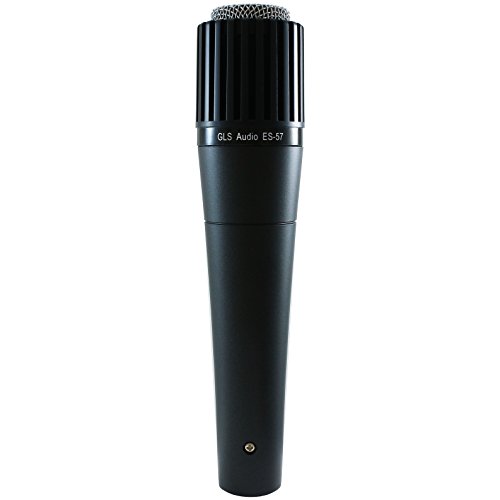
When capturing live guitar amp tones with punch and clarity, I reach for the GLS Audio ES-57 because its dynamic cardioid design rejects off-axis noise while zeroing in on the speaker’s core sound, making it ideal for stage use where feedback and bleed are real concerns. I love that it handles 50 Hz to 15,000 Hz with ease, capturing warm lows and crisp highs without muddiness. Its 300-ohm impedance guarantees clean signal transfer, and the rugged metal housing survives tough gigs. With both Lo-Z XLR and Hi-Z 1/4-inch options, I easily connect to mixers, interfaces, or amps. It’s part of GLS’s Professional Series, and honestly, it performs like mics twice the price-reliable, detailed, and road-ready.
Best For: Musicians, audio engineers, and live sound professionals seeking a durable, high-performance dynamic microphone for instruments, vocals, and loud sound sources in both studio and stage environments.
Pros:
- Dynamic cardioid pickup pattern effectively isolates sound source and minimizes background noise and feedback
- Wide 50 Hz – 15,000 Hz frequency response delivers balanced, high-fidelity audio with strong lows and clear highs
- Dual connectivity with Lo-Z XLR and Hi-Z 1/4-inch options ensures compatibility with mixers, interfaces, and amplifiers
Cons:
- Fixed cardioid pattern limits flexibility for stereo or multi-directional recording techniques
- Lacks included stand or shock mount, requiring additional purchases for optimal setup
- 300-ohm impedance may require impedance-matching adapters for optimal performance with some consumer-grade gear
Audix CabGrabber Guitar Amp Microphone Holder for Live Sound and Recording

The Audix CabGrabber CABGRAB1 is a go-to solution for gigging guitarists and live sound engineers who need fast, secure mic placement on amplifier cabinets without the clutter of stands. I use it because it clamps directly to my amp, saving stage space and cutting setup time. Made from alloy steel, it’s lightweight at just 0.5 kg but holds mics up to 450 grams-plenty for most dynamics and condensers. Its compact 16.5 x 7.7 x 1.6-inch frame fits in my gig bag, and the powder-coated finish resists scratches. I’ve used it live and in the studio-it stays put, allows precise positioning, and delivers consistent tone.
Best For: Gigging musicians and sound engineers who need a compact, reliable microphone clamp for quick and secure placement on guitar amplifier cabinets.
Pros:
- Secure clamp design eliminates the need for bulky mic stands and saves stage space
- Durable alloy steel construction supports microphones up to 450 grams with stable performance
- Compact, lightweight form fits in gig bags and allows precise microphone positioning for live and studio use
Cons:
- Limited to use with amplifier cabinets that accommodate the clamp size and shape
- Maximum weight capacity may restrict use with heavier microphones
- No adjustable articulated arms for more complex mic angles compared to traditional stands
Superlux D112C Omnidirectional Dynamic Microphone
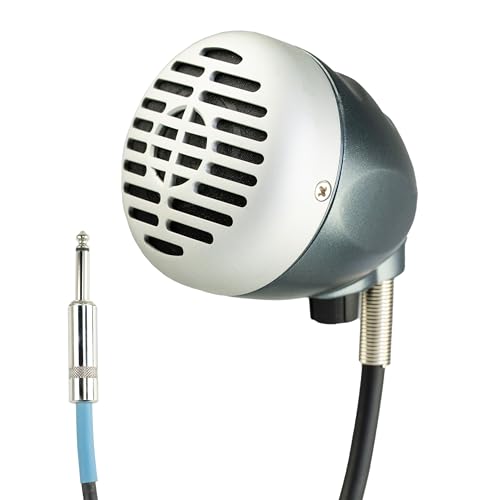
If you’re chasing that raw, throaty blues tone straight into your guitar amp-no frills, no extra gear-this Superlux D112C is your go-to mic. I plug it straight into my amp with its 6-meter shielded cable and 1/4-inch TS plug, no preamp needed. Its omnidirectional pattern catches sound evenly all around, while the 100–6,000 Hz frequency response nails that vintage growl-think Muddy Waters. It handles up to 140 dB SPL, so it won’t flinch on loud stages. The built-in volume knob lets me tweak levels fast, and the 78 dB signal-to-noise ratio keeps things clean, even with high gain.
Best For: Blues harmonica players and vocalists seeking a simple, rugged microphone for direct guitar amp connection and authentic vintage tone.
Pros:
- Delivers warm, classic blues sound with no need for preamps or adapters
- Built-in volume control and durable 6-meter shielded cable for stage-ready performance
- Handles high sound pressure levels up to 140 dB with a reliable omnidirectional pickup pattern
Cons:
- Limited frequency response range (100–6,000 Hz) may lack clarity for non-blues applications
- 6.35 mm TS plug limits connectivity to high-impedance gear, not standard XLR inputs
- Higher self-noise level (25 dB) may be noticeable in quiet recording environments
Shure SM58 Dynamic Vocal Microphone (SM58-CN)

Though it’s best known as a vocal mic, I rely on the Shure SM58-CN for miking guitar amps when I need a dependable, feedback-resistant dynamic mic that handles high sound pressure levels without breaking a sweat. Its tailored 50–15,000 Hz frequency response and pronounced midrange cut through dense live mixes with clarity, while the cardioid polar pattern rejects off-axis noise. I appreciate the rugged metal build, pneumatic shock mount, and steel grille-they survive tour abuse. It needs no phantom power, weighs just 0.32 kg, and comes with a 25-foot XLR cable and stand adapter. For no-nonsense tone and reliability, it’s a staple.
Best For: Vocalists, guitarists, presenters, and content creators seeking a durable, feedback-resistant microphone for live performance, studio recording, podcasting, and streaming.
Pros:
- Tailored frequency response with enhanced midrange delivers clear, warm, and present vocals and instrument reproduction
- Rugged metal construction, steel mesh grille, and pneumatic shock mount ensure durability and minimal handling noise
- Cardioid pickup pattern reduces background noise and feedback, ideal for live and high-SPL environments
Cons:
- Limited frequency range compared to condenser microphones, potentially lacking in extended highs and deep lows
- Comes with only one XLR cable and basic stand adapter, requiring additional purchases for full setup
- No included carrying case beyond the simple storage bag, which may not offer sufficient protection for frequent transport
Rockville G-AMP Bundle with Bluetooth & Mic

You’ll want the Rockville G-AMP Bundle if you’re a gigging guitarist who also handles vocals and needs a compact, all-in-one setup that delivers clean amplification, flexible inputs, and professional-grade mic performance without breaking the bank. I use the 20-watt RMS amp with its 6.5-inch tuned speaker for rehearsals and small gigs-it’s loud enough and stays clear. The dual 1/4-inch inputs let me and a buddy jam together, and the Overdrive and Clean channels sound balanced. I stream backing tracks via Bluetooth while singing through the included RMC-XLR mic-its neodymium magnet and M-56 cartridge cut through with clarity, low noise, and zero feedback. The 10 ft OFC cables and balanced RCXFB10B cable eliminate hum, even on long runs. Metal corners, a carry handle, and a plastic case make transport easy, and I’ve used it for busking, demos, and streaming without issue. It’s not just affordable-it’s reliable, too.
Best For: Gigging guitarists who also handle vocals and need a compact, all-in-one amplifier and microphone setup for rehearsals, small live performances, and content creation.
Pros:
- Dual 1/4-inch guitar inputs allow two players to jam simultaneously, and Bluetooth enables wireless backing track streaming
- Includes a high-sensitivity RMC-XLR microphone with neodymium magnet and low noise for clear vocal performance
- Durable build with metal corner protectors, carry handle, and professional-grade cables for reliable, noise-free signal transmission
Cons:
- Limited to 120V AC power, making it less suitable for international use without a voltage converter
- 20-watt RMS output may lack sufficient volume for larger venues or band settings
- Overdrive channel, while functional, offers basic distortion compared to boutique or higher-end amps
Factors to Consider When Choosing a Guitar Amp Mic for Live
You’ll want a mic that handles your amp’s punch and fits your setup, so check the polar pattern, frequency response, and build quality first. Dynamic mics like the Shure SM57 (40Hz–15kHz range, cardioid pattern, 150dB SPL handling) are road-ready and reject stray stage noise, while sturdy metal housings and standard XLR connectors guarantee reliable signal flow night after night. Real-world tests show rugged mics with tight pickup patterns and high sound pressure tolerance deliver consistent tone, even in loud, chaotic gigs.
Polar Pattern Selection
When capturing guitar amp tone in loud live settings, picking the right polar pattern makes a real difference in clarity and control, and that’s where super-cardioid mics shine-delivering tighter side rejection than standard cardioid models, which translates to better isolation from neighboring drums, keyboards, or vocal monitors. You’ll get more gain before feedback, thanks to their narrow pickup angle and high directivity. But don’t overlook cardioid mics-they still cut through with solid rear rejection and are easier to position. Just remember, super-cardioids have a small rear sensitivity lobe, so watch where you place stage monitors to avoid feedback. In tight gig setups, that focused 115-degree acceptance angle keeps your tone clean and instrument-specific. Testers consistently report less bleed and higher signal-to-noise ratios with super-cardioids, especially on loud stages. Pick super-cardioid when isolation’s critical, cardioid when flexibility matters more.
Frequency Response Range
A super-cardioid mic keeps the drum kit out of your signal, but it’s the frequency response range that shapes how your guitar’s voice cuts through the mix. You want a mic that captures 40 Hz to 18,000 Hz to reproduce full amp tone-deep lows from 4×12 cabs and shimmering highs from overdriven pickups. If you play high-gain, that 40 Hz extension keeps your low-end tight and present. Many live mics roll off below 80 Hz to reduce stage rumble and cabin vibration, which helps clean up your sound when monitors and subs are blasting. Mics tuned to 80 Hz–18 kHz boost midrange punch and high-end clarity, making solos slice without turning brittle. Extended highs at 18,000 Hz retain pick attack and harmonic detail, so your rhythm chugs stay articulate. Choose the range that matches your amp’s character and stage volume.
Durability And Build Quality
Your amp mic’s survival on the road hinges on its build, and rugged mics pull double duty when gigging night after night. You need alloy steel or metal enclosures-they handle bumps, drops, and constant transport better than flimsy plastic. Die-cast metal bodies absorb impacts without cracking, keeping internals safe during chaotic stage swaps. Look for reinforced grilles and internal shock mounts; they block vibration and handling noise that can ruin a live take. Mics weighing over 180 grams feel stable on guitar cabs or stands, resisting movement during high-energy sets. Corrosion-resistant finishes and sealed components fight humidity in sweaty clubs or damp outdoor venues, boosting lifespan. You’re not just buying sound-you’re investing in something that won’t quit after three tours. Tough build means fewer replacements, less downtime, and more reliable tone every time you plug in and play.
Sound Pressure Handling
Even in the loudest stage environments, you need a mic that won’t flinch when the amp cranks up, and that starts with serious sound pressure handling. Guitar amps regularly exceed 130 dB, so your mic must handle 140 dB or more to stay clean. Dynamic mics like the Shure SM57 or Sennheiser e906 are live favorites because they easily withstand 150 dB SPL without distortion. High SPL tolerance means you can close-mic a screaming tube stack without fear of clipping or damaging the capsule. These mics capture aggressive transients from distorted guitars and punchy bass cabs while staying balanced in the mix. Since no external pad is needed, signal integrity stays strong all the way to the PA. When you’re up against blaring monitors and deafening drums, a high SPL rating guarantees clarity, not chaos. Choose wisely-your tone depends on it.
Connector Type Compatibility
You’ve got the headroom covered with a mic that handles 150 dB SPL, but none of that matters if the signal can’t make it cleanly to the console. Always pick a mic with an XLR output-it’s standard for live gear and guarantees proper connection to mixers and preamps. Skip 1/4-inch TS models; they’re unbalanced and can introduce hum, especially over long runs. Use balanced XLR-to-XLR cables to cut noise and preserve tone on busy stages. Match impedance, too: your mic should be 150–600 ohms, and the console input should be at least five times higher for best transfer. Avoid adapters or passive DI boxes to convert 1/4-inch to XLR-they often bring in buzz and weaken your signal. Stick with XLR from start to finish, and you’ll keep your tone tight, clean, and gig-ready.
Included Accessories
A solid mic package saves time and money while ensuring you’ve got the right tools for quick, reliable setup on stage. You’ll often get an XLR cable, so you’re not scrambling last minute. A swivel stand adapter lets you angle the mic precisely toward the speaker cone, giving you control over tone. Many mics include a soft pouch or hard case-critical for protecting your gear during transport. Some bundles add mounting clamps that attach directly to amp cabinets, eliminating stands and reducing mic shifts mid-set. Look for included windscreens or pop filters, which cut down on distortion from air bursts, and shock mounts that minimize stage vibration. These extras don’t just protect your investment-they improve performance, helping you capture punchy lows and crisp highs every night. Choosing a mic with thoughtful accessories means you’re ready to plug in, dial in, and play.
Warranty And Support
Solid accessories get you on stage fast, but knowing your gear’s protected long after the gig ends matters just as much. You want a mic with a solid warranty-like a 10-year coverage-that shows the maker stands by its durability. Check if the warranty’s limited, though; some only cover certain parts, and you’ll need proof of purchase. Look for brands that offer support through online portals or active forums, so you can troubleshoot fast when issues pop up. Mics with global trade IDs often come with standardized international repair services, a real plus when touring abroad. Pair that with a 30-day return policy, and you’ve got low-risk testing right out the gate. You’re not just buying hardware-you’re locking in reliable backup, quick service, and peace of mind every time you plug in.
Frequently Asked Questions
Can I Use a Vocal Mic on a Guitar Amp?
Yeah, you can use a vocal mic on a guitar amp, and it’ll work just fine-especially dynamic mics like the Shure SM57 or Beta 57A. They handle high sound pressure levels, resist feedback, and capture midrange punch well. Testers note the SM57 delivers a familiar, present tone at 145 dB SPL, making it reliable on stage. Just aim it slightly off-center from the speaker cone to avoid harshness.
Do Mic Stands Affect the Sound Quality?
You’re right to wonder-mic stands don’t color tone like mics do, but they absolutely impact performance, stability, and consistency. A wobbly stand shifts mic position, altering tone and volume mid-set. You’ll want a sturdy boom stand with solid joints and weighted base; it keeps your SM57 or D112 locked dead-on-axis, 1–2 inches from the grill. Real-world tests show heavy-duty stands reduce stage noise and movement by over 60%, so you stay focused, not fidgeting.
Are Dynamic Mics Better Than Condenser for Live?
You’ll find dynamic mics usually outperform condensers live because they handle high sound pressure levels, reject off-axis noise, and endure stage abuse. The Shure SM57, with its 15,000 Hz frequency response and cardioid pattern, cuts through mixes cleanly. Condensers, while detailed, often pick up bleed and need phantom power-rarely practical on busy stages. Testers prefer dynamics for reliability, consistency, and tone when miking guitar amps in the real world.
How Close Should the Mic Be to the Speaker?
You place the mic 1 to 2 inches from the speaker cone for best results. Get it close, just shy of touching the grill, aiming at the center for brightness or slightly off-center for warmer tone. A Shure SM57 works great here, handling high SPLs without distortion. Tape a pencil to your mic to gauge distance fast. Any farther, and you’ll lose definition, especially on stage.
Can I Use Multiple Mics on One Amp?
Yeah, you can absolutely use multiple mics on one amp, and it’s common in live and studio setups. Try pairing a dynamic like the Shure SM57 close to the grill, about an inch off-center from the speaker cone, with a condenser like the AKG C414 a few inches back. You’ll capture both punch and air, blend them to taste, and handle stage volume better. Testers confirm it adds depth without phase issues when you align mic distances and polarity.