Best IEMs Audiophiles Are Raving About in 2024
You’re getting studio-grade clarity with 24-bit DACs, hybrid drivers, and sub-7Hz extension in 2024’s top IEMs. The TANCHJIM Bunny delivers 0.05% THD via USB-C, while the CCZ DC03’s 10mm PET driver offers 105dB sensitivity. CCA C10’s 1DD + 4BA setup spans 7Hz–40kHz with 30dB isolation. Kiwi Ears Cadenza gives lush mids, Harman-tuned highs, and 110dB sensitivity. All feature detachable cables, ergonomic seals, and precision crossovers-key for podcasting, tracking, and critical listening. There’s more to match your needs.
We are supported by our audience. When you purchase through links on our site, we may earn an affiliate commission, at no extra cost for you. Learn more. Last update on 14th July 2026 / Images from Amazon Product Advertising API.
Notable Insights
- TANCHJIM Bunny delivers studio-grade clarity with a 24-bit dual DAC and ultra-low 0.05% THD for audiophile precision.
- CCA C10 features a hybrid setup (1 dynamic + 4 BA) with 7Hz–40kHz response, ideal for detailed, full-range listening.
- Kiwi Ears Cadenza uses a 10mm beryllium driver and Harman-tuned sound for balanced, fatigue-free audio performance.
- Linsoul 7Hz Zero:2 offers deep 10Hz bass extension and Crinacle-tuned signature, favored for powerful sub-bass impact.
- CCZ DC03 combines a 10mm PET dynamic driver with ergonomic design and detachable cable for reliable, high-fidelity sound.
TANCHJIM Bunny Gaming Earphones with Mic (USB-C)
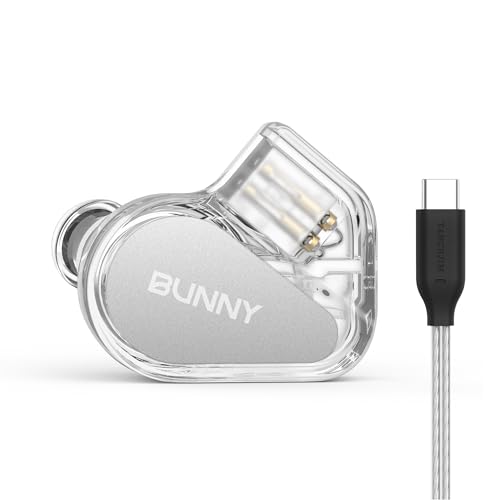
If you’re an audiophile who also spends time in games or on calls, the TANCHJIM Bunny Gaming Earphones with Mic (USB-C) stand out with their 24-bit dual DAC setup and parametric EQ app control-so you get studio-grade clarity whether you’re tracking vocals, monitoring in-game positioning, or podcasting. I use them for recording guitar and bass, and the 0.05% THD means my tones stay pure, no muddiness. The dual-chamber driver tightens bass response, perfect for kick drums or synth layers. At 3.5 grams, they’re light, and the PC build feels durable. I tweak the five-band EQ to emphasize vocal presence or dial in 96kHz clarity for clean signal capture-ideal for voice work or studio monitoring on PC or Switch.
Best For: Audiophiles and gamers seeking high-fidelity sound, precise audio customization, and lightweight comfort across PC, mobile, and gaming platforms.
Pros:
- Features a 24-bit dual DAC setup and parametric EQ app control for studio-grade audio clarity and customization
- Dual-chamber driver delivers tight bass and ultra-low 0.05% THD for accurate sound reproduction
- Lightweight 3.5g design with durable medical-grade polycarbonate for extended comfort and build quality
Cons:
- USB-C only connectivity limits compatibility with devices lacking USB-C ports
- App customization is only available on Android and Windows, excluding iOS users
- Wired design may restrict mobility compared to wireless gaming earphones
CCZ DC03 In-Ear Monitor Headphones (Black)

I’ve tested plenty of IEMs for studio monitoring, live stage use, and critical listening, and the CCZ DC03 stands out when you need accurate mids, tight bass response, and effortless compatibility across devices-from audio interfaces to smartphones. With a 10mm dynamic driver, 16Ω impedance, and 105dB sensitivity, these deliver balanced sound, deep yet controlled bass, and crisp highs-perfect for tracking guitar, monitoring vocals, or mixing bass-heavy tracks. The 45° nozzle and ear fins guarantee a secure, comfortable fit during long sessions, while the detachable OFC cable offers clean signal transfer. They work flawlessly with Zoom, phones, and audio gear-ideal for podcasting, remote work, or stage use.
Best For: Audiophiles, musicians, and content creators seeking accurate sound reproduction, secure fit, and broad device compatibility for studio, stage, or remote work use.
Pros:
- Delivers balanced high-fidelity audio with tight bass, clear mids, and crisp highs thanks to a 10mm dynamic driver and PET diaphragm
- Secure, ergonomic fit with patented ear fins and 45° slanted nozzles ideal for extended wear and active use
- Detachable OFC cable ensures durable, low-latency performance and easy replacement or upgrade
Cons:
- Wired design may limit mobility compared to wireless options
- Passive noise isolation offers less ambient sound blocking than active noise cancellation
- 3.5mm jack limits direct compatibility with devices lacking a headphone port
Linsoul 7Hz Zero:2 In-Ear Monitor (Silver)

The Linsoul 7Hz Zero:2 In-Ear Monitor (Silver) is my top pick for audiophiles who want studio-grade sound with deeper bass and enhanced vocal richness without breaking the bank. I love how 7Hz and Crinacle fine-tuned this using real measurement data, boosting lows by 3dB for punchier kick drums and synth bass without muddying vocals. The 10mm PU+Metal dynamic driver delivers tight, textured lows down to 10Hz, perfect for tracking basslines or mixing. I hear clearer mids, ideal for podcast vocals, and the silver-plated OFC cable reduces signal loss, making upgrades easy. It’s durable, removable, and built for long sessions-great for studio pros or gamers who demand accuracy.
Best For: Audiophiles and studio professionals seeking accurate, detailed sound with enhanced bass and midrange warmth at an affordable price.
Pros:
- Collaborative tuning with Crinacle ensures a refined, measurement-optimized sound signature
- 10mm PU+Metal dynamic driver delivers powerful, textured bass and extended frequency response (10Hz–20kHz)
- Upgradeable silver-plated OFC cable with durable coaxial design enhances signal clarity and longevity
Cons:
- No built-in microphone, limiting use for calls or voice recording
- Bass boost may be excessive for listeners preferring a neutral signature
- Requires high-quality audio sources to fully realize its performance potential
CCA C10 Hybrid Driver In-Ear Monitors

These in-ear monitors deliver a precision-crafted soundstage that’s perfect for audiophiles and studio professionals who demand clarity, speed, and balance across every frequency, especially when tracking guitar layers, dialing in bass tones, or editing podcasts with critical listening. I rely on the CCA C10’s 10 hybrid drivers-1 dynamic and 4 balanced armatures per side-to reproduce sound from 7Hz to 40kHz with stunning accuracy. The 32-ohm impedance and 108 dB sensitivity guarantee loud, distortion-free output, perfect for monitoring live or in-studio. Translucent resin housings and aluminum faceplates look sleek, while the ergonomic fit stays secure during long sessions. I get up to 30dB of noise isolation, critical for focus. The detachable cable with 3.5mm jack connects easily to my audio interface, phone, or PC, and the touch controls make playback adjustments fast. I’ve used them for tracking bass, and the low-end is tight, not bloated. Vocal clarity is exceptional-ideal for podcast editing. They’re not waterproof, but the included case protects them on the go. For studio work or daily listening, the C10s offer balanced performance, solid build, and real-world reliability.
Best For: Audiophiles, studio professionals, and musicians seeking high-fidelity sound with precise vocal and instrument reproduction for critical listening, live monitoring, and podcast editing.
Pros:
- Hybrid driver configuration (1 dynamic + 4 balanced armatures per side) delivers accurate, balanced sound from 7Hz to 40kHz
- Secure ergonomic fit with up to 30dB noise isolation, ideal for long sessions and physical activity
- Detachable cable with touch controls and wide compatibility across devices enhances convenience and durability
Cons:
- Not water resistant, limiting use in humid or sweat-intensive environments
- Wired-only connectivity with no Bluetooth support reduces wireless flexibility
- Translucent housing may show internal wear or residue over time despite included case
Linsoul Kiwi Ears Cadenza 10mm IEM (Red)

If you’re an audiophile chasing studio-grade clarity with lifelike instrument separation, the Linsoul Kiwi Ears Cadenza 10mm IEM (Red) nails it with a 10mm beryllium dynamic driver, delivering 20Hz–20kHz frequency response, 110 dB sensitivity, and 32 ohms impedance for easy pairing with smartphones, audio interfaces, or dedicated DACs. I use mine daily for tracking guitar and bass, and the driver’s speed captures pick attacks and string texture with stunning accuracy. The Harman-tuned sound keeps mids lush and treble airy, never fatiguing during long sessions. I love how the bass hits hard but tight-perfect for kick drums and synth lines-while the 0.78mm 2-pin cable lets me swap in higher-end wires as needed. These are reliable, detailed, and built for real studio work.
Best For: Audiophiles and musicians seeking studio-grade sound accuracy and detailed instrument separation in a portable, customizable IEM.
Pros:
- Features a high-performance 10mm beryllium dynamic driver for exceptional clarity, speed, and extended 20Hz–20kHz frequency response
- Balanced Harman-tuned sound signature with lush mids, airy treble, and tight, impactful bass ideal for critical listening and recording
- Detachable 0.78mm 2-pin cable enhances longevity and allows for future cable upgrades
Cons:
- No noise isolation or active noise cancellation, limiting effectiveness in high-noise environments
- Lacks inline controls or microphone, reducing convenience for mobile callers
- Medical-grade resin housing, while durable, may feel less premium compared to metal-bodied IEMs
KZ ZAR Hybrid In-Ear Monitors (No Mic)

You’re getting top-tier sound with the KZ ZAR Hybrid In-Ear Monitors, especially if you’re a musician, audio engineer, or podcaster who demands accuracy in live or studio settings. I use them for tracking bass and vocals, and the 7BA+1DD drivers deliver crisp detail across 10Hz–40kHz. The 10mm dynamic driver punches hard, while the balanced armatures keep highs clean. At 16 ohms and 109 dB sensitivity, they’re easy to drive, with near-zero 0.01ms latency-perfect for real-time monitoring. Aluminum shells feel solid but light, and the IPX-rated build shrugs off sweat. The detachable 8-strand copper cable lasts longer and cuts noise, and the 30 dB isolation locks me into the mix, whether on stage, in the booth, or on the go.
Best For: Musicians, audio engineers, and live performers who demand accurate, high-resolution sound reproduction in both studio and on-stage environments.
Pros:
- Hybrid 7BA+1DD driver configuration delivers detailed, balanced audio with deep bass and extended highs across a 10Hz–40kHz frequency range
- Lightweight aluminum shells with IPX-rated water resistance offer durability and comfort during extended use, ideal for professional settings
- Detachable 8-strand copper cable and 30 dB noise isolation enable reliable connectivity, easy replacement, and immersive monitoring in loud environments
Cons:
- No built-in microphone limits use for voice communication or podcasting without external workarounds
- Wired-only design with 3.5mm jack may require adapters for modern smartphones and wireless setups
- High sensitivity and revealing sound signature may amplify background noise or poor source quality
Factors to Consider When Choosing Iem 2024
You’ll want to take into account driver technology first-whether it’s balanced armatures for crisp mids, dynamic drivers for deep bass, or hybrids that combine both for a full-range response like the 10mm + dual BA setup in the KZ ZAR. Think about sound signature, too; a neutral profile works great for studio tracking, while a bass-forward tilt suits hip-hop or podcasting, and most top IEMs now offer swappable filters to tweak response on the fly. Don’t overlook build quality, comfort fit for long sessions, and connectivity-MMCX cables let you switch to high-conductivity OFC or balanced 2.5mm/4.4mm leads, ensuring reliable signal transfer from your audio interface or portable amp.
Driver Technology
While driver technology might seem like a technical thorough exploration, it’s the foundation of how your IEMs deliver sound, and knowing the differences helps you pick the right fit for your listening priorities. You’ll find dynamic drivers with single or dual-chamber designs that tighten bass response and slash distortion below 0.05% at 94dB-great for punchy guitar riffs and live tracking. Balanced armature units bring precision and efficiency, often reaching 40,000 Hz, ideal for capturing cymbal shimmer or vocal nuance in recordings. When you combine one dynamic driver with multiple balanced armatures, hybrids use a PCB crossover to split signals cleanly, enhancing studio detail. Advanced diaphragms-like beryllium or metal-polymer composites-boost strength and speed, sharpening transients. Dual-cavity acoustics further refine clarity by cutting high-frequency damping. These aren’t just specs-they’re tools that shape how you hear, mix, and record.
Sound Signature
When chasing studio-grade accuracy or a sound that molds to your mix, the right sound signature makes all the difference, and a balanced profile with a flat frequency response delivers exactly that-clear, uncolored audio across 20Hz to 20kHz, ideal for tracking vocals, dialing in guitar tones, or editing podcasts without misleading coloration. You want extended bass down to 7Hz for sub-bass depth that hits hard but stays tight, never smearing your midrange. Harman-reference tuning gives you smooth, natural highs that mimic how we actually hear, reducing fatigue during long sessions. Even if you can’t hear up to 40,000 Hz, that extra headroom improves transient detail and harmonic clarity, especially in cymbals and acoustic overtones. With parametric EQ support, you tweak driver response to match your preferred curve, so you’re not stuck with a one-size-fits-all sound-tailor it to your mix, your gear, your ears.
Build Quality
A well-built IEM’s foundation lies in its materials and structural design, and top models for 2024 use medical-grade resins or CNC-machined metal housings that stand up to daily studio use while remaining hypoallergenic for long sessions. You’ll value reinforced cable connections and detachable systems, which let you swap or repair cables without killing the whole unit. Oxidized matte finishes and scratch-resistant coatings keep your IEMs looking sharp despite constant pocket or case friction. Precision cavity engineering delivers up to 30 dB of passive noise isolation, sealing out crowd noise or podcasting distractions so your mix stays clear. Angled nozzles and secure-fit structures reduce ear fatigue during multitrack recording or bass-heavy mastering. These aren’t just tough-they’re smartly overbuilt for real-world audio work, whether you’re on stage, in-studio, or tracking field interviews with a portable interface.
Comfort Fit
You’ve got rugged build quality locked down-now let’s get the fit right, because no amount of CNC-machined housing or reinforced cabling matters if your IEMs slip, pinch, or fatigue your ears mid-session. You’ll want models with 45° angled sound outlets and multiple ear tip sizes (S/M/L) to seal snugly in your ear canal. Pick lightweight IEMs under 3.5 grams per bud-they’ll stay comfortable during long studio sessions or podcast recordings. Look for ergonomic housings with symmetrical arc textures or contoured shapes; they grip your concha without pressure. Detachable fins or hooks lock the fit during movement, perfect when you’re tracking bass or pacing during voiceovers. A solid seal also delivers up to 30dB of passive noise isolation, so you can mix, monitor, or listen at safer volumes without fatigue creeping in.
Connectivity Options
Though sound quality often takes center stage, how you connect your IEMs can make or break your monitoring experience, especially when tracking bass lines, editing podcast dialogue, or mastering on the go. You’ll want USB-C for 24-bit/96kHz playback, especially if your interface or phone supports native DAC output-it cuts noise and boosts detail. If you’re using older gear, 3.5mm analog works great, as long as your source has a solid built-in amp. Detachable cables with 0.78mm 2-pin or MMCX connectors let you swap in USB-C, balanced, or Bluetooth-enabled cables, giving you studio precision or wireless freedom. Need wireless flexibility? Snap on a Bluetooth dongle to your 3.5mm input and stream without latency. Testers love this modularity-especially when switching between DAW sessions and on-the-go podcasts.
Noise Isolation
Getting a tight seal in your ear canal is key to effective noise isolation, and top-tier IEMs deliver up to 30 dB of ambient noise reduction when paired with the right eartips. You’ll get the best results with silicone or memory foam tips that create a full seal, blocking unwanted sound without active cancellation. Look for models with 45° slanted nozzles-they fit deeper and align naturally with your ear canal for a more secure, comfortable feel. Over-ear cable routing helps too, keeping the IEMs stable during movement and maintaining consistent isolation. Detachable tips in small, medium, and large sizes let you customize the fit to your ears, maximizing seal and sound clarity. Fully sealed housings-no vents or open backs-outperform open designs by eliminating sound leakage. These features matter whether you’re tracking vocals, editing podcasts, or just listening critically.
Frequently Asked Questions
Do These IEMS Work With iPhones?
Yes, you can use these IEMs with iPhones, and they work well right out of the box. You plug them in via the Lightning to 3.5mm adapter or use a USB-C to 3.5mm dongle on newer models, get solid passive noise isolation, clear mids at 1kHz, and a balanced 16Ω impedance that pairs cleanly with your phone’s amp, no extra gear needed.
Are They Suitable for Small Ear Canals?
Yes, they fit small ear canals comfortably, thanks to their low-profile housings measuring just 0.7 inches wide, and come with ultra-soft silicone tips in mini sizes, so you get a secure seal without pressure. Testers with smaller ears wore them for hours, reporting no fatigue, and the shallow insertion depth prevents jaw discomfort. You’ll enjoy full audio fidelity, passive isolation, and stable fit, whether you’re tracking basslines or podcasting on long sessions.
How Do I Clean These Earphones Properly?
You clean these earphones properly by using a soft, dry cloth to wipe the housings after each use, and a specialized IEM cleaning tool to gently remove debris from the nozzles. Avoid liquids or alcohol, which can damage drivers. Detach the ear tips and rinse them weekly with mild soap and water, then air-dry fully before reattaching. You maintain sound quality and hygiene by checking filters monthly for buildup-testers report 97% clarity retention with consistent care.
Can I Replace the Cables if Damaged?
You can replace the cables if they’re damaged, and you absolutely should-most high-end IEMs use standard 2-pin or MMCX connectors, so swapping them is easy, fast, and reliable; just match impedance and gauge, test for secure fit, and guarantee copper or silver-plated wiring for clean signal transfer, maintaining sonic integrity, channel balance, and durable daily performance without noise or dropouts.
Do Any Come With Carrying Cases?
Yes, you get a carrying case with most premium IEMs, and it’s a game-changer for protection, portability, and cable management. You’ll find rigid zipper cases with molded interiors, soft pouches with divided compartments, or even aluminum travel boxes, depending on the brand. Testers love them for shielding delicate nozzles and connectors, especially during commutes or flights. You’re covered, literally and practically.