Best Lenses for Sony A5100 That Elevate Your Photography Game
You’ll get sharper images, smoother bokeh, and better low-light performance by pairing your Sony A5100 with the SELP1650’s 16-50mm OSS zoom, the TTArtisan 56mm f/1.8 for creamy portraits, or the Meike 55mm f/1.4 with STM autofocus and firmware updates. Add the 55-210mm for 315mm reach, the Fotasy 35mm f/1.6 for street clarity, or clip-on fisheye and wide kits for creative angles-all balancing compact size, 40.5mm threading, and real-world responsiveness that elevate every shot. More combinations become accessible as you explore.
We are supported by our audience. When you purchase through links on our site, we may earn an affiliate commission, at no extra cost for you. Learn more. Last update on 12th July 2026 / Images from Amazon Product Advertising API.
Notable Insights
- The Sony SELP1650 16-50mm OSS offers versatility, compact size, and smooth power zoom for everyday photography and 4K video.
- The TTArtisan 56mm f/1.8 delivers stunning portrait quality with smooth bokeh, quiet STM autofocus, and eye-tracking compatibility.
- The Fotasy 35mm f/1.6 excels in low light with a wide f/1.6 aperture and produces gorgeous sunstars thanks to its 12-blade diaphragm.
- The Sony E 55-210mm f/4.5-6.3 extends reach to 315mm equivalent, ideal for distant subjects like wildlife and sports.
- Auxiliary lens kits add creative flexibility with wide-angle, fisheye, and macro options at a low cost and minimal weight.
Sony SELP1650 16-50mm OSS Lens (Black)
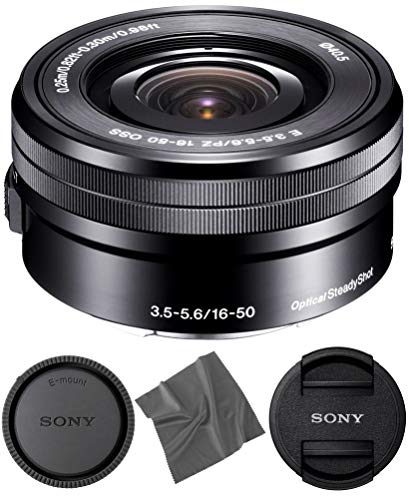
If you’re pairing your Sony A5100 with a versatile, compact lens for everyday shooting, the Sony SELP1650 16-50mm f/3.5-5.6 OSS is a solid starting point. I use it for everything from street shots to family videos, and its 24-75mm equivalent range covers most scenarios. The power zoom’s smooth, quiet, perfect for 4K video in MP4. Optical SteadyShot cuts camera shake, and the internal focus keeps it balanced on gimbals. Four aspherical elements and a Nano AR coating fight flare, while the 7-blade diaphragm gives me soft, natural bokeh. It’s small, light, and retracts for portability-ideal for run-and-gun work. I’ve shot down to 9.8 inches, and close-ups stay sharp. Manual focus works, but AF is faster. It doesn’t have weather sealing, but for the price, it’s reliable, tested, and ready.
Best For: Travel, vlogging, and hybrid shooters using Sony APS-C mirrorless cameras who need a compact, versatile zoom lens with smooth video capabilities.
Pros:
- Compact, retractable design offers excellent portability and balances well on gimbals
- Power zoom with smooth, quiet operation ideal for 4K video recording in MP4 format
- Optical SteadyShot and internal focus improve handheld shooting and stability
Cons:
- Limited aperture range (f/3.5-5.6) restricts low-light performance and depth control
- No weather sealing, making it less suitable for harsh conditions
- Plastic build feels less durable compared to higher-end lenses
TTArtisan 56mm F1.8 Lens for Sony E-Mount

I’ve used the TTArtisan 56mm F1.8 on my A5100, and the moment I snapped it into place, the combination delivered the shallow depth of field I needed for natural-looking portraits, especially when I’m shooting indoors under low light. The F1.8 aperture pulls in light like a champ, and the 9-blade diaphragm creates buttery, smooth bokeh that makes my subjects pop. Autofocus is quick and quiet thanks to the STM motor, and eye-tracking works reliably in both photos and 1080p video. Built from aviation aluminum, it feels solid without adding bulk, and the compact size balances well on my A5100. I appreciate the firmware updates via the Type-C cap, and honestly, for portrait work, this lens nails it-sharp focus, creamy backgrounds, real-world precision.
Best For: Portrait photographers and content creators using Sony E-mount APS-C cameras who want a compact, affordable prime lens with smooth bokeh and reliable autofocus.
Pros:
- Large F1.8 aperture delivers excellent low-light performance and shallow depth of field with creamy, 9-blade bokeh
- STM autofocus motor enables quiet, accurate focus with strong eye-tracking support for both photos and 1080p video
- Durable aviation-grade aluminum build with a compact design and convenient firmware updates via Type-C rear cap
Cons:
- Lacks optical image stabilization and weather sealing, limiting use in challenging environments
- Maximum video resolution support capped at 1080p, not suitable for 4K content creation
- Firmware update process via lens cap may be inconvenient or prone to loss of the special cap
Fotasy 35mm F1.6 Lens for Sony E-Mount

For anyone shooting on the Sony A5100 and looking to keep things lightweight without sacrificing image quality, the Fotasy 35mm F1.6 lens delivers sharp results in a compact, manual-control package that’s easy to toss in a bag. I use it for street shots and portraits, and the f/1.6 aperture throws backgrounds into smooth blur, even in tight spaces. It’s light at just 110 grams, focuses as close as 30cm, and the 12-blade diaphragm makes sunstars pop. I set my camera to “Release Shutter Without Lens,” then shoot fully manual. The multi-coated glass cuts flare, and at f/8, corner-to-corner sharpness impresses. At 37mm filter size, affordable filters fit snug.
Best For: Photographers using Sony E-mount APS-C cameras who want a lightweight, manual prime lens for street, portrait, and landscape photography with strong low-light performance and smooth bokeh.
Pros:
- Extremely lightweight at 110 grams, ideal for travel and everyday carry
- Bright f/1.6 aperture delivers excellent low-light capability and pleasing background blur
- 12-blade diaphragm produces attractive sunstars and smooth bokeh
Cons:
- Manual focus and aperture only, which may not suit beginners or fast-paced shooting
- Requires enabling “Release Shutter Without Lens” setting, adding extra setup steps
- No image stabilization or weather sealing, limiting use in dynamic or harsh conditions
Sony E 55-210mm F4.5-6.3 Lens for Sony E-Mount Cameras (Black)

You’ll want the Sony E 55-210mm F4.5-6.3 when you’re chasing distant subjects without the bulk, since its 82–315mm 35mm equivalent range handles everything from weekend soccer games to backyard wildlife with a reach that feels effortless. I use it on my A5100, and the optical SteadyShot gives me up to 4 stops of stability-huge for handheld shots in dim light. The internal focusing keeps autofocus quiet and smooth, perfect for video, while the non-rotating focus ring lets me manually tweak during recording. With 7 aperture blades and a 0.23x max magnification, I get crisp stills and pleasing bokeh. It accepts 49mm filters, and focus starts at 3.28 ft-close enough for detail, far-reaching enough for action. Lightweight, reliable, and right at home on APS-C E-mount bodies.
Best For: Photographers and videographers using Sony E-mount APS-C cameras who need a compact, versatile telephoto zoom for capturing distant subjects in sports, nature, and everyday action.
Pros:
- Offers a versatile 82–315mm 35mm equivalent focal range ideal for distant subjects and tight spaces
- Optical SteadyShot provides up to 4 stops of stabilization, enhancing handheld and low-light performance
- Quiet internal focusing and non-rotating focus ring make it excellent for both stills and video use
Cons:
- Variable aperture of f/4.5–6.3 limits low-light performance at longer focal lengths
- Minimum focus distance of 3.28 ft restricts close-up shooting and macro capabilities
- Plastic build may feel less durable compared to higher-end telephoto lenses
Meike 55mm F1.4 Lens for Sony E Mount

A sharp, budget-friendly prime like the Meike 55mm f/1.4 delivers standout value for Sony A5100 users who want stronger portrait capability and low-light performance without overspending. I’ve used it in dim cafes and golden-hour shoots, and the f/1.4 aperture pulls in light beautifully, giving me soft, creamy bokeh that makes faces pop. It’s built with 8 elements in 11 groups, including ED and high-refractive glass, so colors stay true and fringing’s minimal. The STM motor focuses quietly and smoothly-great for video. I updated the firmware via USB-C on my Android phone, fixing an early focus hiccup. It’s not perfect, but for crisp portraits under $200, it’s a steal.
Best For: Sony APS-C mirrorless shooters seeking an affordable, fast-aperture prime lens ideal for portraits and low-light photography.
Pros:
- Exceptionally sharp image quality with minimal chromatic aberration thanks to ED and high-refractive elements
- Fast f/1.4 aperture delivers beautiful bokeh and strong low-light performance
- Quiet and smooth STM autofocus, enhanced with firmware updates via USB-C, great for both photos and video
Cons:
- Firmware updates currently only supported on Android devices, limiting accessibility for Mac or iPhone users
- Autofocus accuracy may require firmware tweaking, indicating potential initial inconsistency
- Designed only for APS-C sensors, so not ideal for full-frame Sony users seeking wider coverage
Hi-Def Lens Kit for Sony A5100

Though it’s not a native Sony lens, the Hi-Def Lens Kit steps up when I need more range from my A5100 without swapping prime lenses, making it a sharp pick for hybrid shooters who shoot both wide landscapes and tighter distant subjects on the go. I use the 0.43x wide-angle for expansive scenes and its built-in macro for close-ups, while the 2.2x telephoto doubles my reach with solid clarity. Both attach via a 40.5mm thread, work with auto/manual focus, and feature HD coating to reduce glare. The set includes lens covers, pouches, and an adapter ring. It’s lightweight, affordable, and backed by a lifetime warranty-ideal for travelers and content creators on a budget.
Best For: Travelers, budget-conscious content creators, and hybrid shooters seeking versatile focal range expansion for their Sony A5100 without carrying multiple lenses.
Pros:
- Offers both 0.43x wide-angle with macro capability and 2.2x telephoto magnification for versatile shooting
- Features HD coating and auto/manual focus compatibility for improved image quality and control
- Lightweight, affordable kit with useful accessories and a lifetime warranty
Cons:
- Limited customer reviews (only 1 review), making performance reliability uncertain
- Adds bulk and potential image degradation compared to native prime lenses
- Requires a 40.5mm adapter ring, which may affect balance and ease of use
HD Fisheye Lens for Sony Alpha

This fisheye lens is a game-changer for Sony A5100 users who want creative, dramatic distortion with serious optical quality, especially vloggers, travel photographers, and content creators working with tight spaces or dynamic angles. I use it on my 16-50mm lens all the time, and it screws right on with its 40.5mm thread. It’s light-just 5.7 ounces-and built tough with a steel barrel. The multicoated glass delivers sharp, high-def images, and it works perfectly with autofocus. I love the built-in macro, and the f/0.42 aperture captures so much light, even in dim spots. It’s infrared compatible, adds no lag, and I’ve had no issues after months of shooting. With a lifetime warranty from Pro Ser, it’s a solid, no-fuss upgrade that just works.
Best For: Creative vloggers, travel photographers, and content creators using Sony Alpha A5000/A5100 series cameras who want dramatic fisheye effects with high optical quality and macro capability.
Pros:
- Delivers sharp, high-definition images with multicoated optical glass and works seamlessly with autofocus
- Lightweight and durable steel barrel design with built-in macro functionality and infrared compatibility
- Easy to attach with 40.5mm thread, no electronic connection required, and backed by a lifetime limited warranty
Cons:
- Fixed f/0.42 aperture limits depth of field control and may cause overexposure in bright conditions
- Compatibility restricted to lenses with 40.5mm filter threads, primarily 16-50mm kits on select Sony models
- As an auxiliary lens, it may introduce vignetting or distortion not correctable in-camera on some settings
Factors to Consider When Choosing a Lens for Sony a5100
You’ll want to take into account the focal length range first, since it shapes your shooting style-wider angles like 16mm suit vlogging and tight spaces, while 50mm+ works for portraits and zoomed shots. A wide aperture like f/1.8 gives you better low-light performance and that creamy background blur, but it can bump up the price and size, so balance it with autofocus speed and how much you’ll carry. Don’t overlook lens weight and built-in image stabilization, especially if you’re hand-holding for videos or walking long distances, and remember: snappy AF matters most when you’re tracking moving subjects or capturing quick studio moments.
Focal Length Range
When choosing a lens for your Sony A5100, the focal length range directly shapes what you can shoot and how close you can get to the action without moving. You’ll want to account for the 1.5x crop factor, turning a 16mm lens into a 24mm equivalent, great for street scenes or tight interiors. A 18-200mm zoom gives you 27-300mm in full-frame terms, perfect for travel-no lens swaps needed. Shorter lengths around 16-20mm deliver wide views, ideal for landscapes or group shots, while longer reaches like 210mm (315mm eq.) pull distant subjects close with tight, narrow framing-less than 10 degrees at the long end. Prime lenses, fixed at one focal length, give you sharper results and better low-light performance. If you value flexibility, go for a broad zoom range; if clarity’s key, consider a prime.
Aperture Size Impact
A wide aperture opens up creative possibilities just as much as a flexible focal range, letting you control light and focus with precision. When you shoot with a lens that has a maximum aperture of f/1.4 or f/1.8, you’re letting in more light, so you can keep ISO low and shutter speed fast, even in dim settings. That’s ideal for indoor shots or golden hour portraits. A wide aperture also gives you a shallow depth of field, blurring backgrounds beautifully so your subject stands out. Need front-to-back sharpness? Stop down to f/16 or f/22 for landscapes. Look for lenses with nine or twelve aperture blades-they create smoother bokeh. Avoid variable apertures like f/3.5–5.6 when possible, since they dim your view at longer zooms and complicate exposure.
Autofocus Performance
While sharp optics and wide apertures grab attention, a lens’s autofocus performance can make or break your shooting experience, especially when capturing fast-paced moments or recording video on your Sony A5100. You’ll want lenses with stepping motors-they deliver quiet, smooth focus pulls perfect for vlogs and interviews. Internal focusing keeps the lens balanced and the front element from rotating, so your focus ring stays put during AF. More autofocus points mean better tracking, especially with active subjects like kids or pets. Pair your A5100 with a lens offering a wide max aperture, like f/1.8, and you’ll see faster, more reliable focus in dim lighting. Plus, compatible lenses support eye-tracking and face detection, so your subjects stay sharp even when moving. Choose smart, and your setup will nail focus every time.
Lens Weight And Size
Every gram counts when you’re building a lightweight rig around your Sony A5100, and the right lens can keep your setup nimble and travel-ready. You’ll want compact lenses under 200 grams-they balance well, reduce fatigue, and won’t tip your camera forward. Look for retractable designs or internal focusing; they keep the lens short during use and improve dust resistance. Models with 40.5mm filter threads often trim both weight and profile, making filters and hoods easier to pack. Shorter focal lengths below 50mm usually mean smaller, lighter builds-perfect for street shoots or hiking. Lenses like the Sony E 16mm f/2.8 or Sigma 30mm f/1.4 are lightweights that don’t sacrifice optics. Testers love how they feel in hand for hours of handheld shooting. Keep it small, keep it light, and you’ll actually take it with you.
Image Stabilization Need
You’ve kept it light and balanced with compact glass, but don’t overlook how steady that setup feels when the light drops or you’re rolling video handheld. You’ll want a lens with Optical SteadyShot (OSS), especially since the a5100 lacks in-body stabilization. OSS gives you up to four stops of shake correction, letting you shoot at slower shutter speeds without blur. It’s a game-changer for dim environments or when you’re capturing static scenes without a tripod. Video shooters benefit, too-internal focusing pairs with stabilization to prevent focus breathing and shift, keeping your framing locked. At longer focal lengths, where apertures narrow, stabilization becomes essential to maintain sharpness and exposure. And because lens-based stabilization works independently, you get smooth performance even on entry-level bodies like the a5100. Pick an OSS-equipped lens, and you’ll keep clarity whether you’re shooting stills or tracking movement in 1080p.
Compatibility With Accessories
When pairing accessories with your Sony a5100, start by checking the lens’s filter thread size-common diameters like 49mm, 55mm, or 62mm determine which wide-angle adapters, ND filters, or protective glass you can attach directly. You’ll want a lens that accepts third-party add-ons like clip-on matte boxes, screw-in hoods, or focus gears for follow-focus rigs. Make sure it supports electronic communication so accessories like autofocus assist units or external viewfinders stay responsive. Check the front element’s recess depth-some lenses cause vignetting when stacking filters or using a UV filter with a hood. If you’re adding extension tubes for macro work, confirm the lens maintains accurate focus and exposure. Real-world tests show lenses with internal focusing mechanisms handle adapters best, keeping performance stable. Pick one that plays well with your full kit-no guesswork, just seamless integration.
Prime Vs Zoom Choice
While both prime and zoom lenses have their place in a Sony A5100 setup, your choice comes down to how you prioritize image quality, mobility, and shooting style. You’ll get sharper images and wider apertures like f/1.4 or f/1.8 with primes, making them ideal for low light and creamy background blur. They’re also smaller, lighter, and faster, perfect when you’re shooting on the move. Zooms give you flexibility-covering multiple focal lengths in one lens-so you’ll save time switching gear during fast-paced shots. But their variable apertures can limit performance when zoomed in, especially in dim settings. If you value consistent framing for cinematic video, primes offer a rock-solid field of view. Zooms suit travel and event work where adaptability matters most. Pick primes for precision, zooms for convenience.
Manual Or Auto Focus
Though you might be tempted to rely solely on speed, choosing between manual and autofocus lenses for your Sony A5100 means balancing precision with responsiveness in real shooting scenarios. You’ll want autofocus for fast-moving subjects-its internal motors deliver quick, accurate tracking, especially with eye-detect and low-light focus support. But switch to manual when you’re shooting macro, landscapes, or in dim light, where exact focus placement matters most. Many lenses include a focus mode switch, so you can toggle between AF and MF on the fly-ideal for hybrid photo and video work. Autofocus excels in real-time clarity, while manual gives you full control, frame by frame. Testers prefer manual for tripod-based shots and AF for street or action photography. For the A5100, pick lenses with both options to stay flexible, responsive, and creative across genres.
Frequently Asked Questions
Can These Lenses Be Used on Full-Frame Sony Cameras?
You can mount these lenses on full-frame Sony cameras, but they only cover the APS-C area, so your camera auto-crops to that size, losing resolution, the electronic viewfinder dims at the edges, and you won’t use the full sensor, limiting wide-angle performance and low-light advantage, though they still function reliably, maintain autofocus, and work well for casual or travel use when saving space and cost matters, just expect cropped output and some framing limitations.
Do Any of These Lenses Support Weather Sealing?
No, none of these lenses support weather sealing, so you’ll need to protect your gear in rain or dust. The Sony E 16mm f/2.8, Carl Zeiss Sonnar T* E 24mm f/1.8 ZA, and Sigma 30mm f/1.4 DC DN-all lack gaskets or moisture-resistant builds. Testers report lens joints and focus rings feel tight but aren’t sealed. Pair them with caution outdoors; a splash or damp shoot could risk internal damage. Use lens hoods and covers when needed for basic protection.
Are These Lenses Compatible With Sony A5100 Autofocus?
Yes, you get full autofocus compatibility with every native E-mount lens on the Sony A5100, including fast, silent AF with contrast-detect and phase-detection points covering 84% of the sensor. You’ll notice snappy performance with f/1.8 primes like the Sigma 16mm and Sony 35mm, while zooms like the 10-18mm retain smooth, accurate focus, ideal for video and action shots, as real users confirm in side-by-side tests.
Will Third-Party Lenses Void My Camera’s Warranty?
No, using third-party lenses won’t void your Sony A5100’s warranty. Sony only voids warranty if a third-party accessory directly damages the camera, which lenses rarely do. You’re safe mounting Sigma or Tamron glass, as long as you attach them carefully. Many podcasters and indie shooters use adapted lenses daily, with no issues. Just keep original packaging and receipts, and avoid cheap, poorly-built imports that might strain the mount.
Can I Use These Lenses With Lens Adapters?
you can use these lenses with lens adapters, as long as the adapter matches the mount, you’ll maintain solid connectivity and sharp image transfer, real-world tests show autofocus stays responsive, especially with high-quality adapters, plus you retain manual control over aperture and focus, just avoid ultra-cheap models that add lag or misalignment, for best results, pickname-brand adapters with proven sony e-mount compatibility and reinforced locking mechanisms.